Modern technological transitions over the past two centuries have centred on the human obsession with converting one form of power into another. The invention of electricity created numerous ways to use, move and store energy. Thus, with each invention, the light bulb, the telephone, the automobile, the airplane and the computer, the energy demand grew steadily.
POWER SECTOR
Modern technological transitions over the past two centuries have centred on the human obsession with converting one form of power into another. The invention of electricity created numerous ways to use, move and store energy. Thus, with each invention, the light bulb, the telephone, the automobile, the airplane and the computer, the energy demand grew steadily.
Each new technological phase created energy demand that was neither linear nor exponential. To put that into perspective, global electricity consumption expanded from 66.4 terawatt-hours in 1900 to 29,165 TWh by 2022, a 440-fold increase. Overall, energy growth was stable at approximately 2.0 per cent annually from 1800 to 2000, masking spikes during electrification, motorisation and suburbanisation. In Pakistan, the trajectory was notably steeper and more dramatic. Starting with just 60MW of installed capacity at independence in 1947, the country expanded to 46,605MW by 2025, amounting to a 777-fold increase over 78 years.
The rapid proliferation of Artificial Intelligence (AI) is exacerbating an already acute energy crisis. Unlike previous inventions that expanded demand gradually to allow energy infrastructure to keep pace, AI does not allow power systems to catch up. Training a model requires substantial computational resources. For example, training OpenAI’s ChatGPT-4 required 50 gigawatt-hours alone. That is enough power to meet San Francisco’s energy needs for three days.
As compute requirements surge, data infrastructure itself is being reinvented. As author Karen Hao notes in her book Empire of AI, the industry is moving beyond traditional data centres to ‘megacampuses’, facilities designed to consume electricity on a scale comparable to entire cities. GPU racks draw multiple times more power than conventional servers, and a single query to ChatGPT can require up to 10 times as much electricity as a standard Google web search, according to the International Energy Agency. Developers and utilities are now planning sites where power demand could exceed anything the digital economy has seen before.
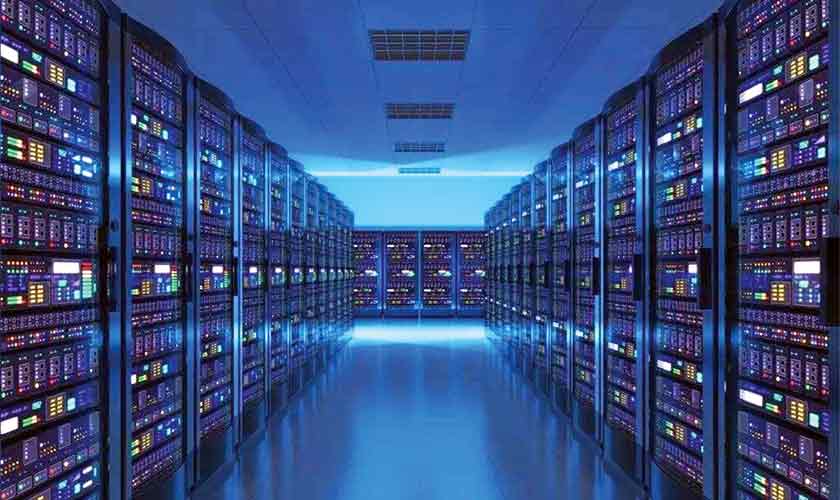
Data centres, which are the backbone of AI systems, consume electricity roughly four times faster than utilities can add new capacity, creating what analysts have called a ‘10-year solution for a 24-month problem’. Nations that cannot secure affordable energy will not participate in the AI future, no matter how brilliant their engineers or how ambitious their plans. AI data centers are growing at 15 percent annually, with AI-specialised servers expanding at 30 per cent annually.
This rapid proliferation creates a multi-dimensional problem. Historically, innovations dispersed energy demand across households and transport networks. AI, in contrast, concentrates massive consumption in single locations. A single hyperscale data centre consumes as much electricity as a city of 100,000 people. Data centers take 2 to 3 years to build, but grid upgrades require four to eight years, resulting in a demand-supply mismatch. In the US, data centres will account for nearly half of all electricity demand growth between 2024 and 2030. By decade’s end, America will consume more electricity processing data than manufacturing all energy-intensive goods combined including aluminum, steel, cement and chemicals.
Meanwhile, analysts warn that energy security is increasingly becoming a concern as AI expansion intensifies. Recently, China stockpiled about 1.2 to 1.3 billion barrels of oil, accumulating 900,000 barrels daily, with Russia supplying over 20 percent at discounted rates. The US is taking a different direction, investing in dedicated clean energy infrastructure for AI. Google signed contracts for 500MW of small modular nuclear reactors by 2030. Microsoft has signed a long term nuclear power agreement linked to the Three Mile Island site, supplying around 800MW of power later this decade. Amazon ordered four small modular reactors. Meta signed 150MW of geothermal energy contracts and requested up to 4 gigawatts of additional nuclear capacity.
Data centres, which are the backbone of AI systems, consume electricity roughly four times faster than utilities can add new capacity, creating what analysts have called a ‘10-year solution for a 24-month problem’
Among emerging economies, India is pursuing the most aggressive strategy of all. Google is investing $15 billion for a gigawatt-scale AI hub in Visakhapatnam, Reliance Industries is building a 3-gigawatt facility in Jamnagar, and TCS's HyperVault secured $1 billion from TPG. The IndiaAI Mission aims to support over 10,000 GPUs, and Deloitte projects the country will need 40 to 50 TWh of additional electricity plus USD 360 billion in investment by 2030. To meet this demand, India is simultaneously expanding coal for baseload security, accelerating renewable deployment, and targeting 100 GW of nuclear capacity by 2047, more than tenfold its current 8.8 GW.
Amid this global race, where does Pakistan stand? The country’s entire gross electricity generation in 2024 was 137.5 TWh, which averages to roughly 15,639 MW of continuous power over the year. This is less than one-third of Pakistan’s 46,605MW of installed capacity, reflecting significant under-utilization. For perspective, US data centres consumed 183 TWh in 2024, more than Pakistan generates to power 241 million people, industry and agriculture combined.
On November 27, 2025, Telenor and Data Vault Pakistan launched the country’s first sovereign AI cloud with 3,000 Nvidia GPUs. Around the same time, the government approved Rs659 billion in guarantees tied to circular debt, indicating the bottlenecks in the energy sector. Pakistan allocated 2,000MW for data centres, crypto mining, including AI workloads. It is an ambitious step, but modest compared to international benchmarks. While Pakistan celebrates 3,000 GPUs as a national milestone, India already has more than 10,000 deployed. Even a single Google nuclear-backed cluster secures 500MW alone. What Pakistan sees as breakthrough, others treat as routine capex.
The deeper issue is that Pakistan is building AI infrastructure on a broken energy foundation. Independent Power Producers have locked the country into capacity payments regardless of generation. These payments reached Rs2.1 trillion in FY2025, constituting a significant portion of the country’s piling debt obligations. Even as demand declined, Pakistanis continued to pay for coal plants running below 20 per cent utilisation.
The power sector’s circular debt has now reached Rs4.9 trillion, rising by approximately Rs66.14 billion per month. Electricity prices have more than doubled since 2022, and it is no wonder that a recent IMF report published in November 2025 describes Pakistan’s energy system as a ‘crime scene’ of patronage and mismanagement. Household consumers, who account for nearly half of national consumption, now spend 17 per cent of income on electricity compared to 5.0 per cent in India and 6.0 per cent in Bangladesh.
Given the pace at which energy capacity must expand, Pakistan is clearly lagging behind, grappling with structural failures as the world rapidly advances. It needs to choose an asymmetric path that solves long-standing failures while adapting to AI’s compressed timelines. The first step should focus on reforming energy economics. IPP contracts must be renegotiated to prevent further mismanagement as the country enters the AI era. Transmission losses of 15-20 per cent must be treated as recoverable generation capacity, equivalent to roughly 19 to 25 TWh of electricity every year at current generation levels. Distribution company privatisation cannot wait five years when AI infrastructure needs stable energy in 2 to 3 years.
The second step is to consolidate AI ambitions with available power. Pakistan must prioritise what brings a high return on low energy. This includes Urdu-language models, agricultural yield optimisation, telemedicine triage and legal and land record automation. These are practical, exportable and life-improving applications. Alif 1.0 and Zahanat AI’s Z1 show that Pakistan can modernise within limits. The real challenge is adoption, literacy and integration into resolution management.
The third step is to expand energy access smartly. The government should reconsider solar taxation. Ending the solar tax would be another step in the right direction. Community microgrids can power households and distributed computing simultaneously, reducing grid burden while generating employment.
Pakistan took 78 years to build 46,605MW. AI requires gigawatt-scale growth in two to three years. The urgency is unprecedented. Powering AI, it appears, is much more challenging than powering homes. Failure to address the energy mismatch now will compound Pakistan’s missed opportunities, locking it out of the future that billions elsewhere are racing to build. AI will not wait for energy reform. And the world will not wait for Pakistan.
The writer is an economist and an educationist.