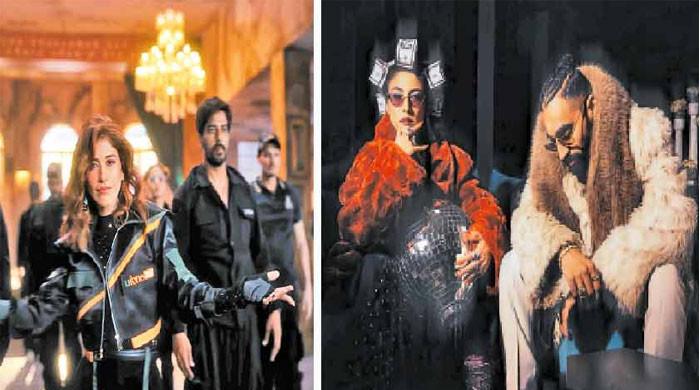
In Pakistan’s entertainment industry, misogyny doesn’t feel the need to hide. It just changes its name.
Misogyny disguises itself as a ‘joke’, labels itself as ‘technical criticism’ or pretends to be ‘blunt honesty’. And it always gets just enough cover to walk away clean. This isn’t because people are confused. It’s because the behaviour is rec-ognised and accepted.
Take a recent back-and-forth between two industry figures. It wasn’t an anomaly. It was the system working exactly as intended. When one pointed out during a talk show a real structural issue, that male actors should be paired with women closer to their own age, she was challenging casting norms so deeply rooted that nobody even bothers defending them anymore. The response she got? A snide remark about her getting sur-geries done.
That tells you everything. Call it a joke if you like. The industry definitely does. But this is actually an example of snide humour used as a shield.
It takes a serious critique and drags it down to a woman’s face or her body, daring anyone who points it out to risk being seen as ‘humourless’. It protects the person talking while leaving the target standing alone.
It also derails the real conv-ersation. What started as a ques-tion about ageism and casting suddenly becomes a debate about tone, intent and whether someone is ‘taking things too seriously’.
The original problem, of who actually gets to be seen, wanted and central on our screens, sim-ply fades away.
Even the apology that followed did exactly what these apologies are designed to do. It fixed the optics without touching the actual issue. ‘Respect’ was restored but the question went unanswered. In an industry that lives and dies by public image, that distinction is everything. The surface is polished because that’s what people see. The broken structure underneath stays exactly as it is.
When bias tries to pass itself off as expertise This cycle keeps going because it knows the right words to use. Back in 2019, when a senior actor dismissed a leading actress on a talk show, calling her ‘not heroine material’ and ‘aged’, the comments were undeniably crude. But the defence that followed was far more calculated. It was called ‘technical criticism’. That’s not just a description. It’s a strategy. It dresses up prejudice as authority, making it hard for anyone to push back without sounding like they don’t understand how the industry works. It frames personal bias as ‘professional judgment’. But it begs the question: ‘technical’ according to whom?
An industry that regularly casts men in their 40s and 50s opposite women half their age doesn’t suddenly care about ‘objective standards’ when jud-ging a woman’s career. That’s not standards. That’s bias with better vocabulary. When the host didn’t step in to challenge those rem-arks, that wasn’t neutrality. It was permission. That’s how prejudice becomes part of the script.
Other actors pushed back, yet the original framing stuck. There’s always a softer set of words ready to shield the spea-ker: ‘market realities’, ‘honesty’ or just ‘opinion’.
None of these words are meant to be accurate. They’re meant to be useful.
They allow bias to move through the industry unchecked, dressing up outdated ideas as common sense. Language, in the end, doesn’t just describe the problem. It protects it.
From implication to exposure If ‘humour’ makes misogyny easier to swallow and ‘expertise’ makes it sound respectable, then some figures simply skip the filter. They don’t bother with subtlety. Whether questioning a woman’s worth, her autonomy or her legitimacy by their own standards of ‘haya’ and ‘wafa’, they say the quiet part out loud.
The pattern that follows is entirely predictable. Women push back. Supporters circle the wagons. A news cycle churns through outrage and counter-outrage. Then it’s over, they’re back and nothing has actually changed. By the time it gets this explicit, it doesn’t even shock people anymore. It just confirms what was already there. The ‘jokes’ and the ‘technical critiques’ have already done the heavy lifting of normalising this mindset. This isn’t a sudden escalation. It’s just the mask coming off.
What makes this particularly telling is how little it costs. Controversy in this industry functions as publicity.
Outrage keeps names in circulation, platforms keep booking such figures and the cycle resets. That’s not an accident. It’s what happens when an industry decides that a man’s provocations are worth more than a woman’s dignity.
Loud, extreme language grabs headlines but it doesn’t break the system that allows it to exist. It becomes a moment on social media, not a turning point for the industry.
Why this keeps working Every version of this behaviour comes with a built-in escape hatch. The ‘joke’ hides behind humour, the critique hides behind ‘expertise’ and blatant hostility pretends to be ‘honesty’. Accountability doesn’t just vanish, it’s redirected. Suddenly, the conversation isn’t about systemic unfairness. It’s about whether a woman is being too sensitive, too emotional or too much.
We, as an audience, have made peace with this. There’s a constant hunger for what gets branded as ‘brutal honesty’, especially when the target is a woman. We get pulled into the performance, the illusion of someone finally ‘saying what everyone else is thinking’. It makes the viewer feel like they’re part of an inner circle brave enough to handle the ‘truth’.
At the end of the day, what some call ‘brutal honesty’ is often just a way to keep the old power structures exactly where they’ve always been. Cruelty is seen as courage. Disrespect is sold as authenticity. And when bias is repeated often enough, it starts to sound like common sense.
Watching it isn’t neutral. It’s an endorsement. When you speak up, the fallout isn’t res-tricted to the same show. It goes viral and is followed by other shows, while the logical counter-argument is almost always lost in translation.
The reality behind the rhetoric ‘Market realities’ is the industry’s favourite defence and also its weakest. Markets aren’t natural forces that happen to us. They are built by every casting choice, every funding priority and every story pushed to the centre. When women past a certain age are constantly left out of leading roles, their absence starts to look like ‘proof’ that they aren’t relevant anymore. The industry creates a gap, points to it and calls it consumer demand.
Meanwhile, men stay in the game without anyone blinking. Their careers are allowed to grow and stay relevant for decades. For them, age is seen as ‘character’ or ‘texture’. This double standard isn’t an accident, it’s backed by money. Projects led by men are treated as ‘safe bets’, their success assumed before a single scene is shot. But stories centred on women, especially above 30, are labelled as risks before they even get a chance. That ‘risk’ is rarely ever questioned. It’s just repeated until it sounds like fact. This isn’t what the audience is asking for. It’s the system deciding for them.
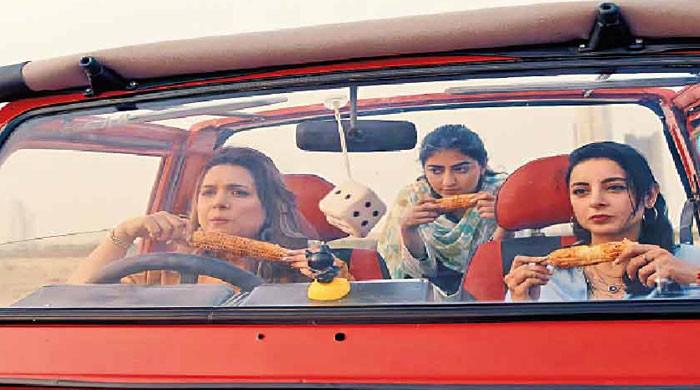
This argument would hold more weight if the industry didn’t already have plenty of proof to the contrary. Directors like Mehreen Jabbar have been doing this for years, building stories around women who feel real and complicated, from Neeyat (2011) and Jackson Heights (2014) to the more recent Farar (2026). These dramas and web-series didn’t just find an audience, they proved that when you write women with depth, people genuinely want to watch. The same is true for women-led series like Churails (2020) and Mrs. & Mr. Shameem (2022). They didn’t just find viewers, they started real conversations that lasted long after the credits rolled.
Case in point: the continued success of actors like Mahira Khan, Sanam Saeed and Samiya Mumtaz, among many others, demonstrates that audiences are more than willing to invest in stories that don’t sideline women. The industry doesn’t lack proof. It chooses to ignore it.
This isn’t a new, ground-breaking discovery either. PTV dramas like Parchaiyan (1976), Ankahi (1982), Tanhaiyaan (1985) and Aahat (1992) consis-tently put women front and centre. Their roles weren’t a favour or tied to specific cond-itions of the market, they were the heart of the story. From Sitara Aur Mehrunissa (1992) to Nijaat (1993) and Tum Hi To Ho (2002), audiences have always been ready for these narratives. Moving away from that balance isn’t because the viewers chan-ged, it’s a deliberate choice made by the industry.
Another convenient boundary
“If ‘humour’ makes misogyny easier to swallow and ‘expertise’ makes it sound respectable, then some figures simply skip the filter. They don’t bother with subtlety. Whether questioning a woman’s worth, her autonomy or her legitimacy by their own standards of ‘haya’ and ‘wafa’, they say the quiet part out loud. The pattern that follows is entirely predictable. Women push back. Supporters circle the wagons. A news cycle churns through outrage and counter-outrage. Then it’s over, the same individuals are back and nothing has actually changed. By the time it gets explicit, it doesn’t even shock people anymore. It just confirms what was already there.”
Whenever anyone calls out these patterns, the industry tends to get defensive. What makes it worse is that it frames their decisions as a moral choice rather than a business one, making the whole thing feel even more loaded. It’s the constant appeal to ‘culture’, ‘tradition’ or what is considered ‘socially acceptable’. But these rules are never applied fairly. They only seem to show up when the conversation is about a woman’s visibility, her agency or her right to be desired on screen. What’s perfectly acceptable for a male character or actor suddenly becomes a ‘moral issue’ when a woman occupies the same space.
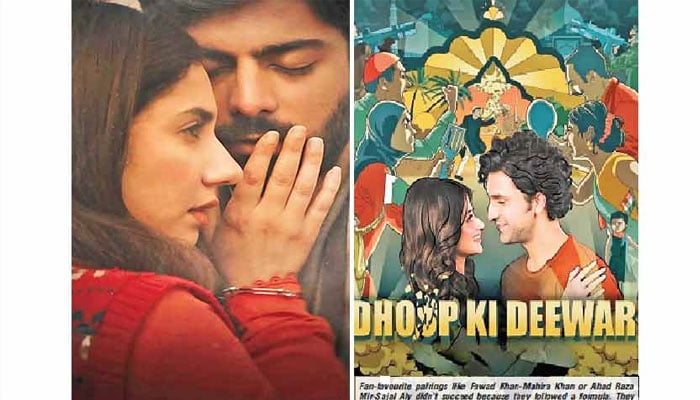
The inconsistency becomes even more obvious when you look at the couples the industry actually gets behind. Fan-favourite pairings like Fawad Khan-Sanam Saeed, Ahad Raza Mir-Sajal Aly or Fawad Khan-Mahira Khan didn’t work because they followed a predictable formula. They worked because the story let both characters stand on their own, giving them the space and importance they deserved.
To be clear: this isn’t about faith or values. It’s about who gets to be the hero of their own story. No one is asking for Game of Thrones or Sacred Games style content. The request is much simpler: give women the same continuity, complexity and presence that men already have. Audiences know how to skip what they don’t want. They do it constantly. But the industry keeps making that choice for them, shrinking its own world in the name of a viewer it doesn’t actually trust.
What other industries have already figured out
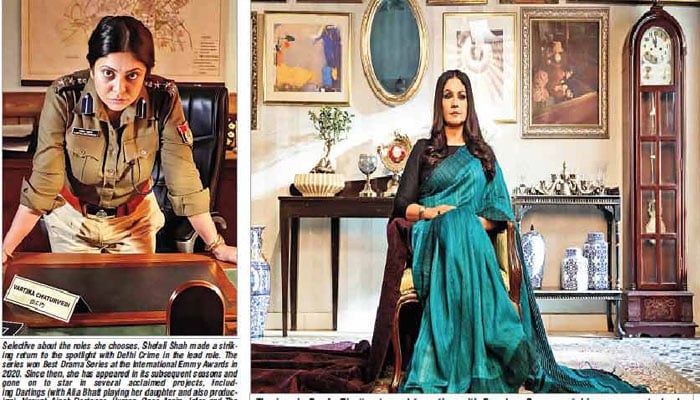
If audiences genuinely didn’t want to see women past a certain age, other markets wouldn’t keep proving the opposite. In India, streaming has rewritten the rules entirely. Shefali Shah leads Delhi Crime with authority, not youth. Raveena Tandon, Madhuri Dixit, Kajol and Pooja Bhatt aren’t comebacks as exceptions, they’re redefining what the centre of a story looks like. Nobody’s asking them to justify being there. These productions don’t hide age behind glamour or nostalgia. They treat it as experience, something that adds weight to a character rather than taking it away.
It’s even harder to justify the industry’s hesitation when the tools to experiment are already present. Platforms like Tapmad and Begin are expanding the digital world, yet the industry treats fresh, progressive stories like a gamble rather than a real opportunity. Instead of using these spaces to move past tired tropes and ageism, anything new is labelled as a trend that doesn’t fit what the market demands.
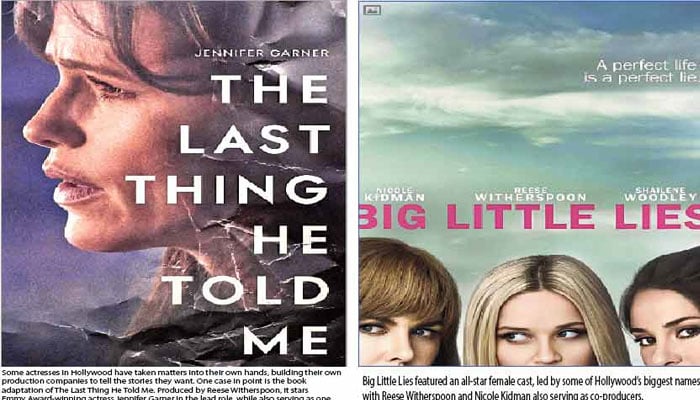
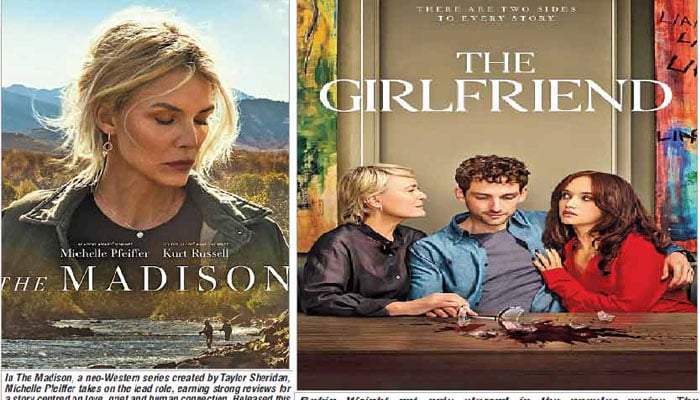
Hollywood didn’t wait for permission, it forced change. Women like Reese Witherspoon took matters into their own hands and built their own production companies to tell the stories they wanted. Now, actors like Nicole Kidman, Michelle Pfeiffer, Robin Wright and Jennifer Aniston lead huge projects where age isn’t a problem that needs to be ‘solved’ or explained. The excuses just don’t hold up anymore. The audience isn’t the one holding things back, the industry is and it’s a choice it keeps making.
What actually needs to change Calling this ‘tolerance’ is too generous. It’s an active choice to keep things exactly as they are. The industry defers to male stars, protects powerful voices and panders to an audience it never challenges. That’s not caution, it’s complicity.
So here is what actually needs to happen. Commission stories where women above 35 are leads, not backstory. Stop book-ing commentators who have built careers on degrading women and calling it ‘discourse’. These aren’t radical demands. They are the bare minimum.
“If audiences genuinely didn’t want to see women past a certain age, other markets wouldn’t keep proving the opposite. In India, streaming has rewritten the rules entirely. Shefali Shah leads Delhi Crime with authority, not youth. Raveena Tandon, Madhuri Dixit, Kajol and Pooja Bhatt aren’t comebacks as exceptions, they’re redefining what the centre of a story looks like. Nobody’s asking them to justify being there. These productions don’t hide age behind glamour or nostalgia. They treat it as experience, something that adds weight to a character rather than taking it away. Hollywood didn’t wait for permission, it forced change. Women like Reese Witherspoon took matters into their own hands and built their own production companies to tell the stories they wanted. Now, actors like Nicole Kidman, Michelle Pfeiffer, Robin Wright and Jennifer Aniston lead huge projects where age isn’t a problem that needs to be ‘solved’ or explained.”
It’s not only about the system anymore. Many of the biggest actors working today are also the producers and decision-makers. When you’re both the star and the boss, you can’t separate performance from power. By greenlighting the same old stories and making the same casting choices, they aren’t just following a script, they’re actively choosing to stay stuck in the past. It’s frustrating to see the industry claim it’s evolving while cons-tantly falling back on the same tired templates.
Change takes time and even if it attracts criticism, that’s how a thought process and with it, a society slowly evolves. At some point, you have to learn to take a chance on different storylines, casting and actors to become competitive in the modern streaming world.
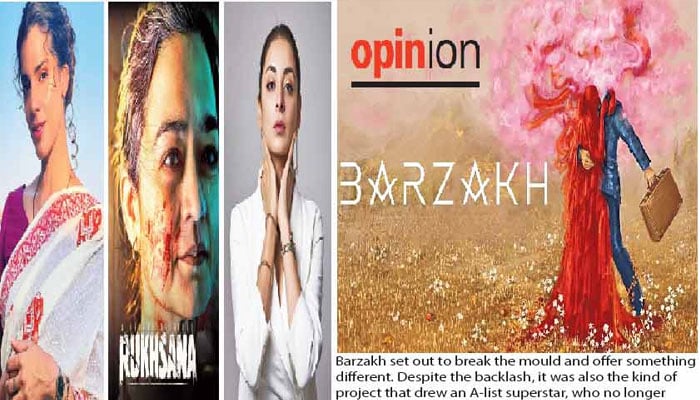
One good example is Barzakh. It did its best to break the mould and offer something different, and although it was met with backlash, it was also the kind of project that convinced an A-list superstar, who no longer appears in drama serials, to star in the series.
Even globally, casting has evolved from an afterthought into a defining creative decision, even becoming a recognised category at the Academy Awards. Who tells a story and how it is told becomes central to story-telling. Pakistan certainly doesn’t lack the talent to do better, what it lacks is the willingness to act on it.
Audiences only want what they’re shown because, frankly, that’s all they’re given.
When you keep feeding the same stories, faces and old power dynamics, it starts to feel like that’s just ‘how things are’. But just because something is repeated doesn’t mean it’s right, it’s conditioning.
Other industries didn’t change because their audiences were better or more evolved. They changed because someone finally decided to break the cycle. The women being sidelined were never the issue. The problem has always been the people who benefit from keeping things exactly as they are and the system that keeps rewarding them for it.