It was not a year of loud revolutions but one of quiet recalibration, as artists reassessed formats, audiences and the idea of longevity itself. From international recognition to grassroots experimentation, the year revealed a scene negotiating its past while steadily shaping its future.
A for Abdullah Siddiqui
After years of shaping hits for others, Abdullah Siddiqui turned inward with a series of closely spaced solo releases including ‘I Don’t Want to Listen to Your Bad Music’, ‘Humanize’ and ‘Mother’. Together, the tracks showcased his range as a songwriter, lyricist and producer, moving between irony, vulnerability and emotional restraint. Rather than a single breakthrough moment, the run marked a deliberate assertion of his voice as an artist in his own right and pointed to a growing appetite for more personal, creator led pop narratives.
B for Bilal Maqsood
Bilal Maqsood’s year was defined by visibility across formats rather than volume of releases. The third season of Pakkay Dost, his widely popular puppet show for children, reaffirmed his ability to connect across generations through storytelling, puppetry and song. Alongside this, his role as
a judge on Pakistan Idol positioned him as a familiar and confident presence within the mainstream music ecosystem. Together, these appearances under-scored a career that continues to evolve beyond the studio while remaining cultu-rally resonant.
C for Cape Monze Records
The Karachi based label remained one of the most consistent forces in altern-
ative music. Prioritising artist development over virality, Cape Monze Records cham-pioned sounds that sat outside mainstream formulas. Key releases in 2025 included ‘Dil Akela’ and ‘Teri Hi Aur’
by Momin, ‘Birds’ featuring Shahzeen Khan by Mouseeki Machine and Usman Sheikh, ‘Dil Nazaray’ by Tarbooze
and ‘Salt’ by Shorbanoor. The label’s steady output reinforced the importance of independent ecosystems built on sonic coherence rather than scale.
D for Dulhay Mian
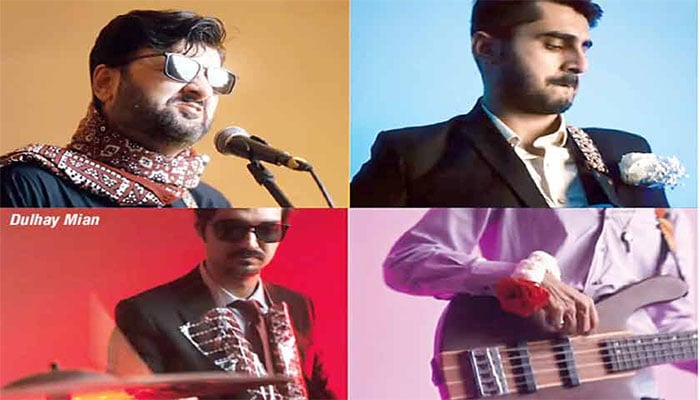
Dulhay Mian emerged as one of the more compelling modern rock acts of the year. Fronted by vocalist and guitarist Nadir Shahzad, formerly of Sikandar Ka Mandar, the band channelled Urdu lyricism and socio-political edge through singles such as ‘Mojza’, ‘Aag’ and ‘Khalil Sahab’. Performances at venues including Indus Valley School Mela and District 19 positioned the band within a growing movement pushing rock beyond nostalgia into contemporary relevance.
E for Euphoria and experimentation
Rather than committing to a single dominant sound, 2025 leaned into experimentation across genres. Artists blended electronic textures with pop structures and softened hip hop grit with melody, creating music that prioritised mood and feeling over rigid categorisation. This balance between emotion and form defined much of the year’s most widely consumed music.
F for Faris Shafi
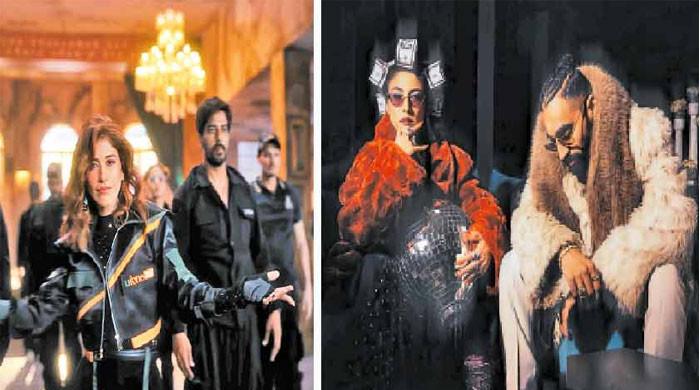
Faris Shafi remained one of the most discussed figures of the year despite a limited release schedule. Each appearance carried weight, reinforcing his reputation as an artist whose influence lies as much in timing and intent as in volume. His feature on ‘Shikari’, a high energy cross border collab-oration with Sultaan and producer Avvy Sra, reaffirmed his lyrical sharpness, while ‘Shayar’ with Zain Zohaib for Velo Sound Station 3 revealed his ability to collaborate across genres without losing individ-uality.
G for Global stages
Pakistani artists appeared more regularly on international line- ups and collaborative projects in 2025. Figures such as Atif Aslam, Arooj Aftab, Talha Anjum, Natasha Noorani, Slowspin, Wooly Aziz and Ali Sethi continued to expand their global presence. These mom-ents felt less about novelty
and more about sustained engagement, suggesting that international visibility is incr-easingly being earned rather than briefly accessed.
H for Hasan Raheem
Hasan Raheem continued to dominate playlists with his accessible pop sensibility. His album Dil Kay Parday exten-ded his emotional range while retaining the melodic charm that has long defined his appeal. The release reaffirmed his position as one of the most reliable voices in contemporary pop.
I for Independent releases
Independent releases became the default rather than the exception. Artists increasingly bypassed traditional label struct-ures in favour of autonomy and direct audience engagement, signalling changing definitions of success that prioritise creative control over infrastructure.
J for Jazba
Emotion emerged as a unifying thread across genres. Whether articulated through heartbreak, nostalgia or quiet defiance, jazba shaped the year’s most resonant song-writing and pointed to a listener shift towards sincerity over spectacle.
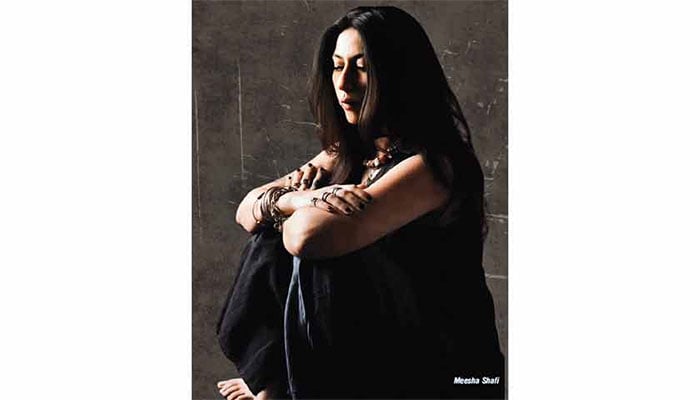
K for Khilnay Ko
After more than a decade in the music industry and several successful singles, Meesha Shafi delivered a striking debut album with Khilnay Ko. It was an album few knew they needed. Built on volcanic emotion, sparse sonic textures and themes that were both personal and universal, the record marked a deliberate shedding of glamour in favour of vuln-erability. Shafi created songs that resonated deeply, becoming anthems for many. It was a raw and radical return to the spotlight, framed as both storytelling and healing. Through lyrical depth and melodic patience, Khilnay Ko stood out as a thoughtful debut in an increasingly fast-paced music economy.
L for Love Language
Love Language positioned Ali Sethi firmly within a transnational musical space. Blending classical influences with contemporary pop, his debut LP explored intimacy and identity with vulnerability and elegance. It travelled easily across cultural and geographic boundaries, reinforcing Sethi’s global resonance.
M for Mehdi Maloof / Misbah
Mehdi Maloof and Misbah continued to shape the year’s sonic character through inten-tional artistic output. Maloof’s releases, including ‘Saamp’ and ‘Chalo Yeh Theek Hai’, leaned into atmosphere and restraint, while Misbah’s ‘25 songs such as ‘Aisay Na Ho’, ‘Dur
Aik Sitaray Pay’ and ‘Satya Nas’ reflected an expanding emotional and sonic range. Together, their work foreg-rounded texture and cohesion over immediacy.
N for Natasha Noorani, Natasha Humera Ejaz
Natasha Noorani and Natasha Humera Ejaz shaped the year through distinct but equally intentional approaches to authorship. Noorani leaned into conceptual exploration, blending archival thinking with contemporary sound design across releases including
‘TUP TUP’, ‘Anjanay’, ‘Global Zakham’ and ‘Chann Pichay’ with Velo Sound Station 3, alongside a steady stream of collaborations. Ejaz focused on lyrical intimacy and emotional clarity through her single ‘Future Zindagi’ and as the
lead curator of SoundScape 2025, developed in collab-oration with the British Council, which studied the intersection of of generational knowledge, craft and presentation in the Pakistani music sector through talks and masterclasses. Together, they reflected the expanding range of women-led expression within the country’s music landscape.
O for Organic growth
Rather than chasing viral moments, many artists prioritised slow, organic growth. Live performances, word of mouth and sustained listener enga-gement took precedence over algorithms, suggesting a maturing relationship between musicians and their audiences.
P for Pakistan Idol
The return of Pakistan Idol reintroduced televised music discovery into the mainstream conversation. While the format remained familiar, its renewed relevance lay in offering visib-ility at a time of increasing digital fragmentation. The show bridged nostalgia with oppor-tunity for a new generation of performers, with a diversity of voices that made favourites difficult to predict as the competition moves towards its final rounds.
Q for Quiet reinventions
Several artists chose subtle evolution over dramatic rein-vention. Small shifts in sound, collaborators or visual language marked thoughtful progression rather than rupture. These quiet reinventions often proved more sustainable than headline-driven overhauls.
R for Regional languages
Music in Punjabi, Sindhi, Pashto and Saraiki continued to circulate confidently across digital platforms. Rather than being positioned as niche, regional language tracks incre-asingly occupied central space in playlists and live sets, reflecting a broader embrace of linguistic plurality.
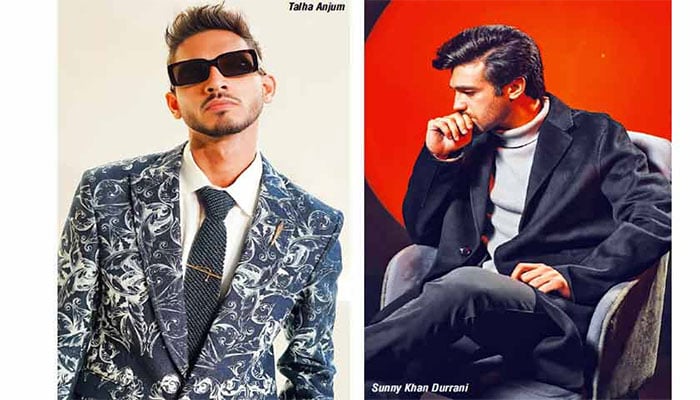
S for Sunny Khan Durrani
In a year crowded with rappers releasing singles and engaging in public feuds, Sunny Khan Durrani stood out through consistency. His fifth album, Shaitaan Ki Saat Shartain, a tightly constructed nine-track project, offered work that looked both inward and outward with intent. One of the most underrated artists of the millennial and post-millennial era, SKD does not rely
on controversy to command attention. He allows the music to speak, taking listeners on a journey that feels unexpected yet deeply considered.
T for Taurus Habib x Grammy / Talha Anjum
2025 marked a significant behind-the-scenes milestone with sound engineer and solo artist Taurus Habib becoming the first Pakistani to win a Grammy for sound engineering for Dune: Part Two. At the same time, Talha Anjum consolidated his dominance at home and abroad through touring, collaborations and consistent releases, retaining his position as Pakistan’s most streamed artist for the second consecutive year. Together, their trajectories reflected a shift from symbolic global presence to measurable participation.
U for Umair
2025 also proved to be a prolific year for producer and artist Umair, marked by the release of his EP String Theory alongside singles including ‘FAST LANE’, ‘come home, I’ll leave the lights on’, ‘Laparwah’ among others. His collaborative footprint spanned JJ47, Talhah Yunus, Hashim Ishaq, JANI, Bilal Ali, Zahid Qureshi, Shamoon Ismail, Afusic, Jevin Gill, Kenny Mason, Smino, Loose Threads, Hassaan Shaheer and many more, reinforcing his role as a connective force within the scene. Across pop, indie and hip hop, Umair moved beyond rigid genre boundaries, producing music that felt instinctive rather than engineered.
V for Velo Sound Station
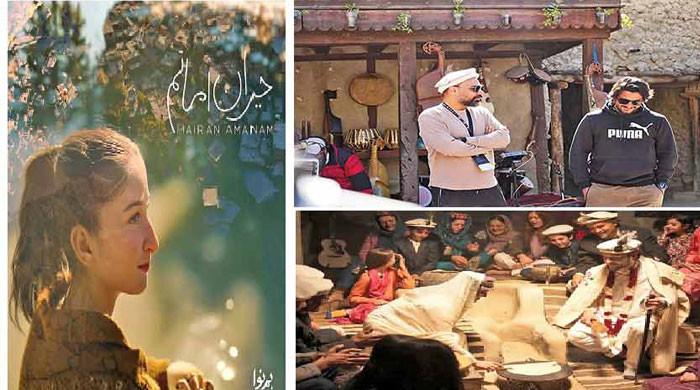
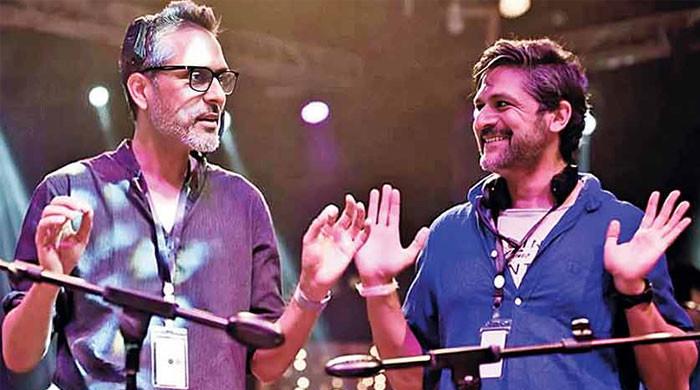
The third season of Velo Sound Station leaned further into collaboration as process rather than spectacle. Pairings prioritised reinterpretation, contrast and live energy, treating each performance as dialogue rather than remake. The artist line-up blended established names with emer-ging-voices, continuing the series’ role as both platform and archive. With Bilal Lashari taking over as director and Fawad Khan returning as an artist, the season carried a clear vision evident in its artist selection, collaborations and cinematic music videos.
W for Women led projects
Women were increasingly visible not only as vocalists but as composers, producers and creative directors. Their projects challenged industry norms while expanding thematic and sonic possibilities. The shift felt incremental but unmistakable.
X for X Factor
Electronic, ambient and hybrid genres found wider audiences through digital plat-forms and live perfor-mances. Artists showed less concern for categorisation and greater interest in atmosphere and texture, enco-uraging greater sonic risk-taking.
Y for Year of the album comeback
After years dominated by singles, albums made a notable return. Artists treated full length projects as statements rather than collections, signalling renewed faith in cohesive storytelling. Releases included thikaana by Maanu, Khat by Farhan Saeed and ASIM ALI by Asim Azhar, among several others.
Z for Zoha Zuberi
Emerging voices such as Zoha Zuberi pointed towards what lies ahead. With a sound still forming but a perspective already distinct, she represented a new generation navigating identity, genre
and independence with quiet confidence through tracks such as ‘gaslit’ and ‘Fasana’.