Print Story
X




CM Punjab Maryam Nawaz’s presence highlights institutional support as PSL-11 embraces simplicity over spectacle
The Pakistan Super League (PSL) has always been a celebration, a carnival of color, noise, and national passion wrapped into a few electrifying weeks of cricket. But as the 11th edition unfolded at Gaddafi Stadium, it did so in a manner that felt almost unfamiliar. There were no fireworks piercing the night sky, no sea of fans draped in team colors, no deafening roars echoing through the stands. Instead, there was silence, deliberate, necessary, and deeply symbolic.
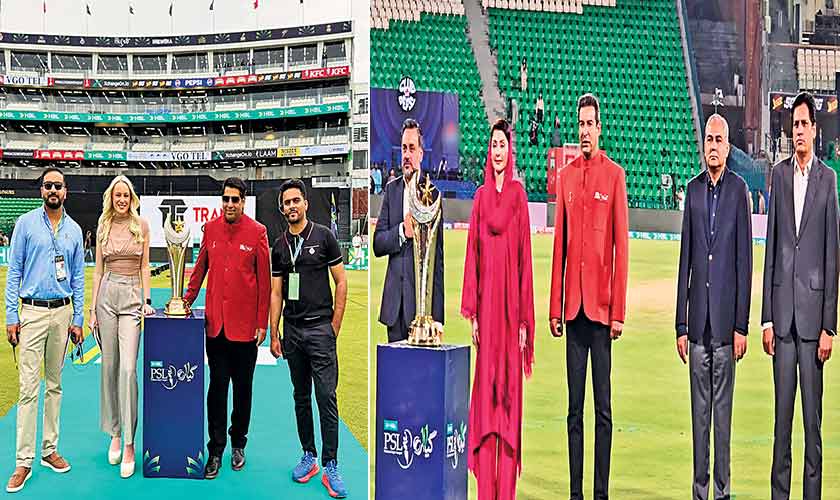
Yet, in that silence, there was also a story worth telling. PSL 11 began not with spectacle, but with simplicity. The opening ceremony was modest, stripped of extravagance, and grounded in purpose. The presence of Maryam Nawaz lent the occasion both dignity and reassurance. Her arrival at the stadium, welcomed by Mohsin Naqvi and other officials, was a reminder that cricket in Pakistan continues to enjoy institutional backing even in challenging times.
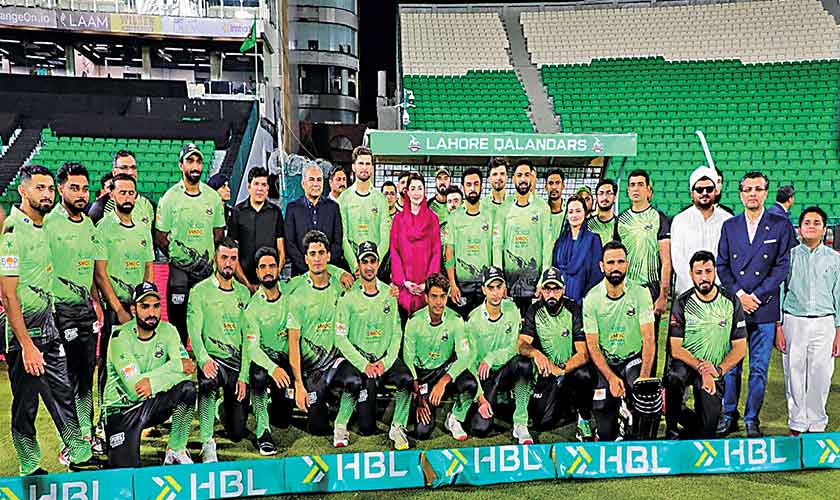
There were no distractions, just the essentials. The national anthem, the unveiling of the trophy by Wasim Akram, and a brief but meaningful interaction between leadership and players. It was a ceremony that did not try to impress with grandeur but instead resonated through its restraint. And perhaps, that was precisely the point.
This year’s PSL arrives under the shadow of a global energy crisis linked to ongoing tensions in the Middle East. Pakistan, like many nations, has been forced to adopt austerity measures, particularly to conserve fuel. The decision to hold matches without spectators and limit venues to Lahore and Karachi is not merely logistical, it is a reflection of a country navigating difficult economic terrain.
At first glance, an empty stadium during a T20 league feels like a contradiction. Franchise cricket thrives on energy, on crowd interaction, on that intangible connection between player and spectator. Without fans, something vital appears to be missing. But sport, like life, adapts.
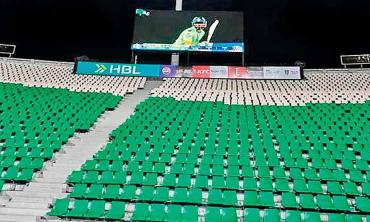
As the opening match between Lahore Qalandars and Hyderabad Kingsmen got underway, the absence of a crowd was impossible to ignore. The green seats of the stadium stood still, unoccupied, almost contemplative. Outside, the usual chaos of matchday traffic and eager fans was replaced by a controlled calm, guarded by security personnel rather than animated by excitement. Inside, however, the game remained alive.
Players competed with the same intensity, bowlers charged in with purpose, and batsmen crafted their innings with precision. If anything, the silence amplified the raw sounds of cricket, the crack of the bat, the appeal of a bowler, the quiet strategy discussions between teammates. It was cricket in its purest auditory form. Still, the emotional gap cannot be denied.
Fans like Meerab, Maria and many others, watching from home, articulated what millions feel: cricket in the stadium is an experience that television cannot replicate. The shared excitement, the spontaneous chants, the collective heartbeat of thousands, these are elements that define the PSL as much as the cricket itself.
Players, too, feel the difference. Babar Azam acknowledged the void, noting how fans bring energy and motivation that cannot be artificially recreated. His sentiment was echoed across teams, including players like Irfan Khan Niazi, who admitted that while the situation is far from ideal, it is one that must be accepted.
And therein lies the essence of this year’s PSL, acceptance, adaptation, and resilience. There is also a subtle, perhaps unintended, shift in focus. Without the noise and spectacle, attention turns squarely to the cricket itself. Tactical innovations, such as the introduction of the two-team sheet rule, signal a league willing to evolve. By allowing captains to adjust their playing XI after the toss, the PSL has taken a progressive step toward balancing the game, a move that could influence other leagues around the world. In many ways, this quieter PSL may prove to be more thoughtful, more strategic, and perhaps even more authentic.
Maryam Nawaz, during her visit, captured a broader vision. Her remarks about youth engagement and the role of sports in fostering peace were not mere formalities. In a country where young people face numerous challenges, cricket remains a powerful unifying force. Her emphasis that youth should hold “bats and balls, not weapons” resonates far beyond the boundary lines. It is a reminder that PSL is not just a tournament, it is a platform.
Of course, the absence of fans also raises important questions about the commercial and cultural dimensions of the league. Franchise cricket is built on engagement, and while digital platforms and broadcast innovations can bridge some gaps, they cannot fully replace the magic of a live audience.
Yet, this temporary shift may also encourage new forms of connection. Fans are now engaging through screens, social media, and virtual communities, creating a different but still meaningful kind of participation. The PSL, in this sense, is evolving with its audience.
There is also a certain poetic irony to this situation. Cricket, often described as a gentleman’s game rooted in patience and nuance, is now being played in near silence, as if returning to its origins, stripped of modern excess. And still, it endures.
As the tournament progresses over the coming weeks, the hope remains that the silence is temporary. That the cheers will return, the stands will fill, and the PSL will once again become the vibrant spectacle it is known for.
But until then, PSL 11 stands as a testament to something deeper than entertainment. It is proof that even without the roar of the crowd, the spirit of cricket cannot be silenced.