Print Story
X




A Sherlock spin-off seeks to humanise the character, approaching him through the lens of adolescence
| T |
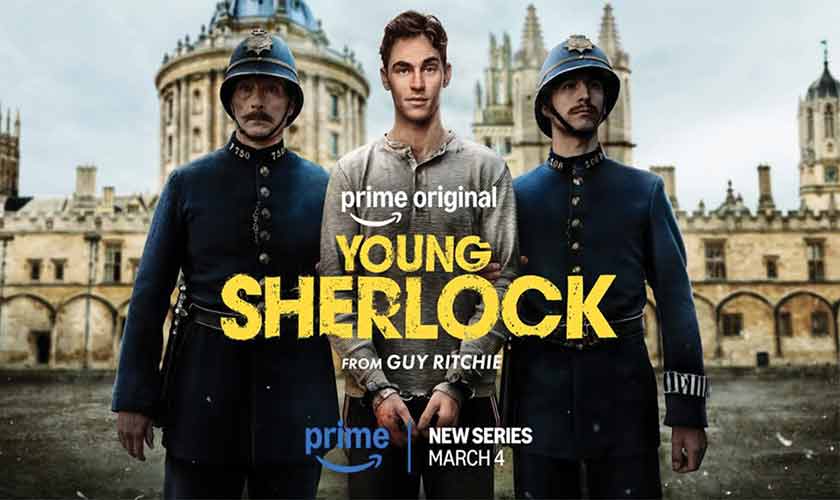
he emergence of Young Sherlock marks yet another attempt to revisit one of literature’s most enduring figures, with a twist that feels both familiar and refreshing. Rather than presenting the fully formed, hyper-rational detective we associate with Sherlock Holmes, this adaptation turns its gaze toward adolescence—toward the making of a mind that would later redefine logic, deduction and emotional detachment.
Young Sherlock is a coming-of-age narrative wrapped in the aesthetics of mystery. Created by Matthew Parkhill and shaped by the stylistic sensibilities of Guy Ritchie, the series attempts something more psychologically ambitious than most adaptations: it seeks to humanise a figure long mythologised as entirely cerebral. Instead of relying solely on external puzzles, it invests in the internal architecture of Sherlock’s mind—his emerging cognitive patterns, his social alienation and the early roots of what might later be interpreted as obsessive tendencies.
At the heart of this reimagining is Hero Fiennes Tiffin, who portrays the 19-year-old Sherlock with a compelling mix of arrogance, vulnerability and intellectual intensity. His performance captures both the promise and instability of a mind still under construction. This Sherlock is not yet the calculating machine audiences are familiar with; he is impulsive, socially awkward and, at times, deeply insecure. From a psychological standpoint, this aligns with developmental theories suggesting that intelligence is not merely innate but shaped through interaction with one’s environment and internal conflict.
The supporting cast adds significant depth and complexity to the narrative. Dónal Finn plays a young James Moriarty, reimagined here not simply as a future nemesis but as an intellectual equal and, intriguingly, a companion. Their dynamic is one of the show’s most compelling elements, offering an early glimpse into a relationship that will eventually fracture into rivalry. Zine Tseng brings nuance and intrigue as Princess Gulun Shou’an, adding both cultural diversity and narrative complexity to the story.
Equally significant is the portrayal of Sherlock’s family, which grounds the series in emotional and psychological realism. Joseph Fiennes and Natascha McElhone play his parents, Silas and Cordelia Holmes, offering insight into the familial influences that shape Sherlock’s personality. Their presence introduces themes of expectation, emotional distance and inherited traits. Max Irons as Mycroft Holmes reinforces the idea of intellectual rivalry within the family. Colin Firth lends gravitas to the wider world Sherlock inhabits.
Set against the atmospheric backdrop of 1870s Oxford, the series begins with a murder that frames Sherlock, forcing him into his first major investigation. What follows is not just a mystery but also a psychological awakening. Each case functions as both a narrative driver and a developmental milestone, allowing Sherlock to experiment with observation, inference and hypothesis testing. The show often visualises his thought processes, breaking scenes into micro-details that reveal how he connects disparate clues—an effective technique that immerses viewers in the mechanics of deductive reasoning.
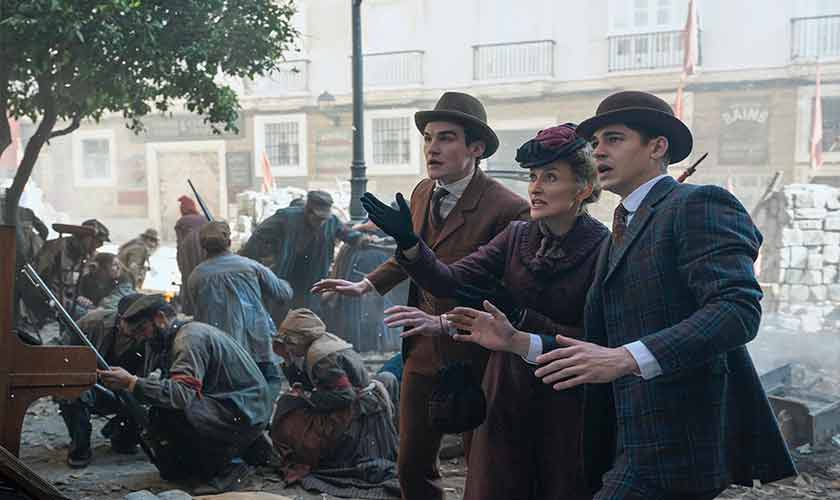
Set against the atmospheric backdrop of 1870s Oxford, the series begins with a murder that frames Sherlock, forcing him into his first major investigation. What follows is not just a mystery but also a psychological awakening.
Visually, Young Sherlock embraces a muted, almost melancholic tone that mirrors its protagonist’s inner world. The cinematography frequently isolates Sherlock within the frame, even when surrounded by others, reinforcing his emotional detachment. This is not merely stylistic—it becomes a narrative device that allows the audience to experience the world through Sherlock’s analytical lens. The pacing, too, reflects his cognition: deliberate, detail-oriented and quietly intense.
One of the show’s most compelling strengths lies in its portrayal of social difficulty. Sherlock’s interactions are marked by impatience, bluntness and a lack of emotional attunement. Rather than presenting these traits as charming eccentricities, the series treats them as genuine obstacles. This approach adds depth to the character and aligns with psychological constructs such as theory of mind deficits or the imbalance between cognitive and emotional intelligence. His brilliance, therefore, does not exist in a vacuum—it is accompanied by struggle, miscommunication and isolation.
At the same time, the series leans into the idea that brilliance is shaped by environment. Sherlock’s schooling, peer relationships and exposure to early cases all contribute to the formation of his intellectual identity. This emphasis challenges the romanticised notion of the “natural genius,” suggesting instead that even extraordinary minds are products of context and experience.
Young Sherlock is not without its limitations. At times, it risks over-romanticising isolation, implying that emotional detachment is a necessary condition for intellectual greatness. This trope, while familiar, can feel reductive. Human cognition is multifaceted and the series occasionally misses opportunities to explore how connection and empathy might also contribute to growth. Additionally, some supporting characters, despite strong performances, are underwritten and function more as narrative foils than fully realised individuals.
Despite these shortcomings, the series succeeds in carving out its own identity within a crowded field of adaptations inspired by Sherlock Holmes series. It distinguishes itself by focusing not on mastery but on formation—not on the legend, but on the making of the legend.
Young Sherlock resonates with contemporary audiences by engaging with themes of identity formation, intellectual pressure and social alienation. These are particularly relevant for young adults navigating their own developmental journeys. Sherlock’s struggles—his need to prove himself, his difficulty connecting with others and his search for meaning—mirror the psychological challenges faced by many.
Young Sherlock is a thoughtful and introspective addition to the Sherlock Holmes canon. Through strong performances, particularly by Hero Fiennes Tiffin, a richly layered supporting cast and a clear emphasis on psychological development, it offers a nuanced exploration of genius in the making. While it occasionally falls into familiar tropes, its ambition and depth make it a compelling watch—one that invites viewers not just to solve mysteries, but also to understand the mind behind them.
The writer has a degree in psychology with a minor in mass communication. She can be reached at [email protected]