Print Story
X




Pakistan has been drawing heavily on an invisible water source to sustain itself
| I |
n accounting of Pakistan’s water economy, the country has developed a dangerous habit: treating withdrawals as growth and deposits as an afterthought. Every year, we pump, divert, drain and consume vast volumes of water and invest far less in the natural systems that refill the account. The result is a national water balance sheet that increasingly resembles one sliding into deficit.
The hidden overdraft
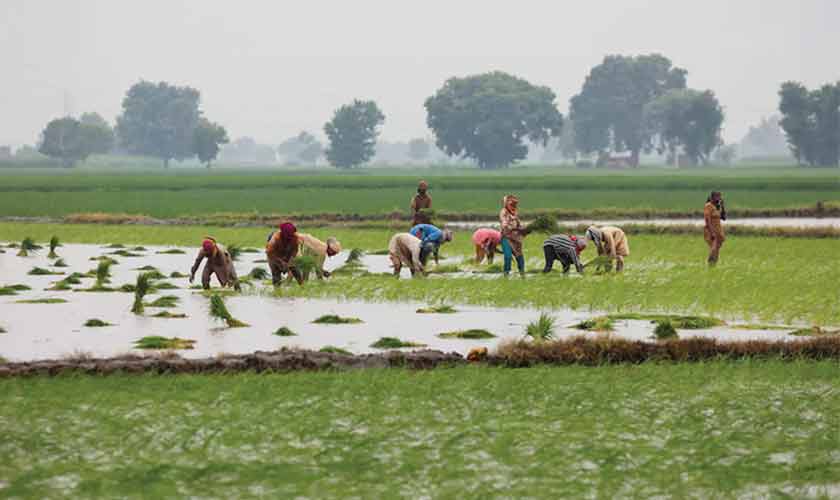
Irrigated agriculture consumes roughly 95 percent of national water withdrawals. Per capita surface water availability has fallen from 5,260 cubic metres per year in 1951 to around 1,000 in 2016. It is projected to drop to about 860 cubic metres by 2025. This marks a shift from water stress to water scarcity.
Yet, the most revealing numbers lie underground.
According to World Bank estimates, groundwater supplies 90 percent of domestic water in rural Pakistan; 70 percent of domestic water nationally; and more than half of agricultural water.
In effect, the country has been drawing heavily from an aquifer or an invisible reserve, to sustain its agriculture, cities and households. Like any overdraft facility, the longer withdrawals exceed deposits, the greater the risk of insolvency.
Global crisis
This imbalance is not unique to Pakistan. Globally, hydrological systems are approaching similar limits. A 2026 report by the United Nations University warned that the world may be entering an era of “global water bankruptcy,” a post-crisis condition in which rivers, aquifers, wetlands and glaciers can no longer recover their previous ecological functions.
For decades, “water crisis” implied a temporary shock from which systems could recover. In many regions, that assumption no longer holds. A bankrupt water economy is one that has already consumed too much of its ecological principal, leading to a more severe condition, creating both insolvency — overspending from natural water reserves — and irreversibility, where ecological damage can no longer be reversed.
The shift from crisis to bankruptcy marks the moment when natural capital has been depleted faster than it can be regenerated.
Pakistan has not reached that point everywhere, but the warning signs are unmistakable. There are more than 1.4 million tube wells currently, many operating without groundwater extraction permits or systematic monitoring. In the Punjab alone, water table in many districts has fallen by roughly a metre a year, according to the Pakistan Council of Research in Water Resources.
The policy architecture to address the problem already exists. Pakistan’s National Water Policy and the National Water Conservation Strategy both call for regulating groundwater abstraction, protecting recharge zones and expanding aquifer recharge through watershed restoration, check dams and improved floodwater management.
However, the gap between policy ambition and implementation remains stark.
Investing in recharge
Globally, the lesson is clear: recharge works best when it is treated not as an isolated engineering trick but as part of a broad shift in water-governance — one that recognises aquifers as not merely geological formations, but as strategic water banks capable of storing surplus flows if managed deliberately.
Against this backdrop, initiatives like Recharge Pakistan represent an attempt to rethink how water security is approached. The project explores how nature-based solutions can reduce disaster risks while supporting groundwater replenishment. Recharge, however, is not merely an engineering challenge; it is also an ecological one.
Research highlights the value of restoring such systems. Studies show that nature-based solutions can deliver up to one-third of the climate mitigation needed by 2030 while strengthening ecosystem resilience.
Rebalancing the water ledger
Water crises now rank among the most severe global risks to economies and societies, with cascading consequences for food security, urban stability and ecosystems. Around the world, rivers are shrinking, groundwater tables are falling and wetlands have declined by at least 400 million hectares since 1970.
These trends reveal a simple truth: the world has spent decades accelerating withdrawals while neglecting the natural systems that replenish water supplies, reducing the capacity to buffer floods and recharge groundwater.
World Water Day should, therefore, not be another occasion for rehearsing familiar anxieties. The real question is not how much water Pakistan has, but whether the country is prepared to rebuild its hydrological balance sheet. Pakistan does not simply need more dams, pumps and emergency rhetoric. It needs a new water ethic—one that treats aquifers as strategic reserves; wetlands and floodplains as national assets; and deposits as seriously as withdrawals.
In a warming world, nations that endure will not be those that extract water most efficiently, but those that learn how to put it back.
The writer is the communications and advocacy manager at Recharge Pakistan, WWF-Pakistan.