Print Story
X




A detective sets out to solve a murder mystery where it seems like the whole town is involved
| R |
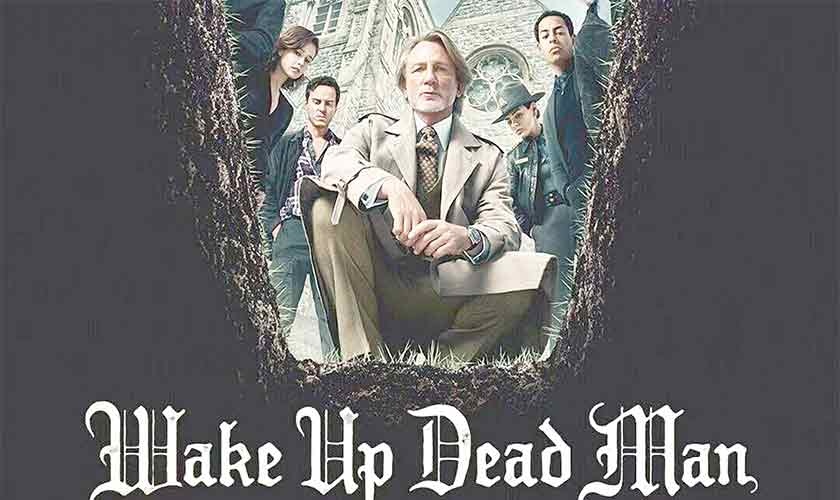
ian Johnson returns with another Benoit Blanc mystery in Wake Up Dead Man: A Knives Out Mystery. The third entry in the franchise continues the director’s fascination with layered whodunnits, eccentric character ensembles and surprising political commentary.
Where the first film was a darkly comic inheritance melodrama and the second a satire of tech moguls and celebrity culture, this episode dives into themes of collective guilt, buried secrets and the myth of an innocent community. Johnson, once again, crafts a world that feels heightened and absurd yet sharply reflective of social tensions.
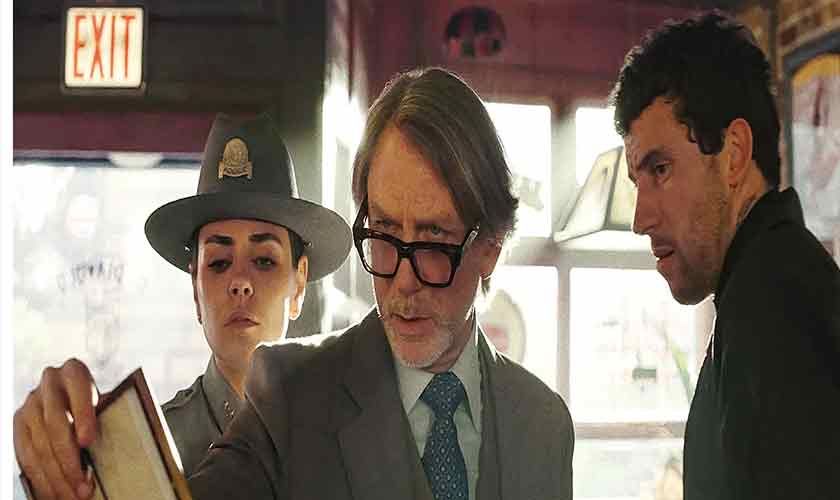
Daniel Craig carries the film as Benoit Blanc with the charisma that made the character instantly iconic. His Southern accent is deliberately theatrical, underscoring the character’s self-awareness. Blanc is a brilliant detective yet Johnson never lets him become the entire focus.
Instead, Blanc functions like a conductor guiding an orchestra of unreliable witnesses and suspicious motives. Craig’s performance is playful yet controlled. He is allowed introspection. The screenplay shows more of Blanc’s internal landscape, hinting at the toll that solving human cruelty takes on someone who still wants to believe in goodness.
The plot revolves around a death in a seemingly tight-knit community. The setting is unlike the lavish estates and sun-drenched islands of the earlier films. It is smaller and more intimate. The scale down of physical space gives the story a psychological intensity.
The narrative examines how a community can present itself as moral and pure while hiding jealousy, history and resentment. Johnson uses familiar tropes of mystery cinema. There is a tragic death, a last will, hidden love affairs and contradictory alibis. Yet the plot constantly questions why these tropes exist and what they reveal about human behaviour.
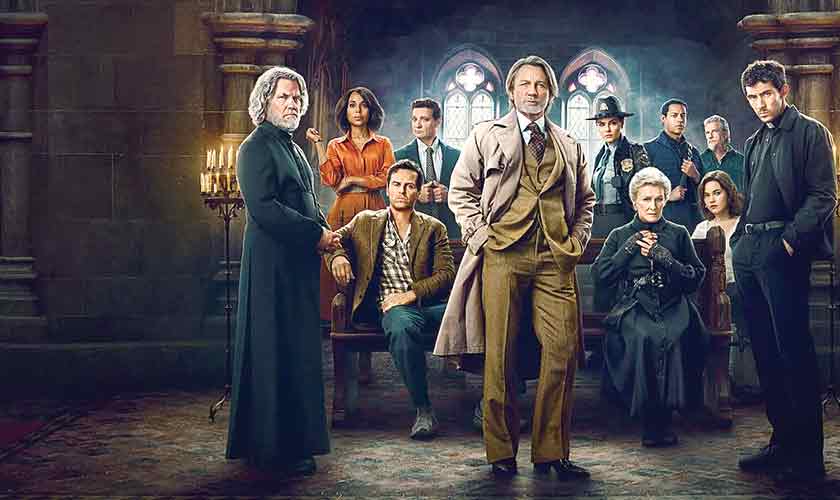
The supporting cast is predictably eclectic. Each performer is given scenes that sketch memorable identities without turning into parody. Johnson’s writing gives, even the most exaggerated characters, emotional stakes. They are funny, but not empty. The ensemble creates tensions that the story thrives on. Suspicion passes through the group like electricity. One moment a character is sympathetic. In the next, the same character appears manipulative or disturbingly detached. Johnson plays with the audience’s ability to empathise. Every confession feels incomplete. Every moment of sincerity is followed by a reminder that people are capable of reinventing themselves for self-preservation.
Johnson, once again, demonstrates his ability to use genre for social commentary. Wake Up Dead Man, available on Netflix, examines how groups maintain power by protecting their narratives. The town at the centre of the story is in a state of collective denial. The death forces the characters to face their own role in the tragedy. Johnson observes the psychology of conformity. People protect the group identity even when it harms them. The tone balances humour with moral seriousness. The characters are absurd, yet painfully familiar. The mystery is a mirror that reflects how individuals hide behind community values to avoid accountability.
Visually, the film is striking due to its simplicity. The cinematography avoids grand spectacle. Instead, it uses tight framing, dim interiors and stillness to create suspense. Every glance and gesture feels amplified. Johnson trusts silence. Scenes linger long enough for discomfort to grow. The result is tension built through human interaction rather than action sequences. The production design supports this approach by filling spaces with symbolic objects. Old photographs, family heirlooms, religious artifacts and local souvenirs feel like clues even when they are not. They create a sense of a town frozen in its nostalgia.
The narrative examines how a community presents itself as moral and pure while hiding jealousy, history and resentment.
The writing is sharp and filled with verbal puzzles. Johnson structures conversations like chess matches. Blanc listens while characters talk themselves into contradictions. The narrative reveals information slowly, allowing the audience to solve the mystery alongside Blanc.
Johnson never uses twists as cheap tricks. Each revelation grows naturally from what the viewers already know. The pleasure comes not only from discovering who committed the crime but also in understanding why. Johnson is less interested in isolated evil than in the circumstances that allow violence to occur. This gives the story its psychological depth. The film understands that silence and complicity shape tragedies long before a crime occurs.
A standout element is the emotional arc of Benoit Blanc. The detective’s empathy is central to the narrative. He is disturbed by acts of cruelty that appear casual to others. Blanc also struggles with the realisation that justice is imperfect.
His role in exposing the truth can help resolve one crime but not erase the historical wounds that made it possible. Craig portrays this conflict with restraint. His sadness feels honest rather than melodramatic. This gives the film its grounding. Blanc becomes the ethical centre of a world ruled by ambiguity.
While the film occasionally leans into symbolic imagery, the overall rhythm is controlled and confident. Johnson knows the audience expects clever reveals and playful dialogue. He delivers both while adding thematic seriousness. The film is entertaining but not escapist. It reminds the viewer that mystery fiction has always been about social anxieties. The desire to uncover the truth reflects a fear of the unknown within the society.
Wake Up Dead Man is a compelling addition to the Knives Out universe. Johnson refuses to repeat himself, instead expanding the emotional scope of his detective story. The film balances satire with empathy and tension with humour. It is a comment on the contradictions of community life and the fragile nature of justice. Daniel Craig shines once again as Benoit Blanc and the ensemble brings richness to the world Johnson constructs.
The most interesting quality of Wake Up Dead Man is how it treats truth as a collective negotiation rather than a single objective discovery. Blanc does not simply expose a hidden villain. He forces people to confront their memories and motivations. The narrative suggests that the truth is not buried somewhere waiting to be found. It is scattered across different versions of the same event. Each character carries a fragment shaped by their emotional needs and moral blind spots. This approach gives the mystery a sense of psychological realism rather than mechanical puzzle solving.
The pleasure comes from not only discovering who committed the crime but also in understanding why. Johnson is less interested in isolated evil than in the circumstances that allow violence to occur. This gives the story its psychological depth.
The film also comments on how communities mythologise themselves. Johnson contrasts the town’s public rituals of unity with its private histories of exclusion. Characters insist that they take care of one another, yet their actions reveal a hierarchy of value. Some lives matter more because they protect the image of the community. Others are dismissed to preserve comfort. The viewer gradually realises that the tragedy is not the work of a malicious individual but the result of a culture that refuses to acknowledge harm.
Johnson’s direction highlights this tension through rhythm rather than spectacle. Scenes unfold with a steady pace that lets small details accumulate meaning. A brief exchange in a hallway, a gesture at a memorial, a hesitation at a family dinner all become pieces of emotional evidence. The viewers are invited to investigate behaviour rather than objects. Instead of relying on dramatic reveals or action heavy sequences, the film builds suspense through observation. This creates an atmosphere where everyday interactions feel dangerous.
If the first Knives Out explored privilege and the second mocked the performance of genius in modern culture, this film studies the violence hidden behind respectability. It argues that cruelty can exist behind good manners and tradition. By the time the final reveal arrives, the viewer has already been asked to consider what justice means in a world where everyone shares responsibility. Blanc does not solve the mystery like a magician. He solves it like a witness forced to understand the cost of truth.
This shift gives the film emotional weight beyond the pleasure of solving a crime. It suggests that the purpose of a mystery is not only to find an answer but to expose the moral systems that allow harm to go unseen. The ending leaves room for reflection, instead of triumph, making the story linger in the mind after the credits roll.
The result is a mystery that entertains and prompts reflection. It invites viewers to enjoy the puzzle while questioning why the pieces were shaped the way they were. The film is both a satisfying whodunnit and a smart analysis of guilt, truth and the stories people tell to protect themselves.
The writer has a degree in psychology with a minor in mass communication. She can be reached at [email protected]