Print Story
X




As it prepares for the GSP+ review, Pakistan calls upon EU to recognise its substantial progress on several human rights issues
| A |
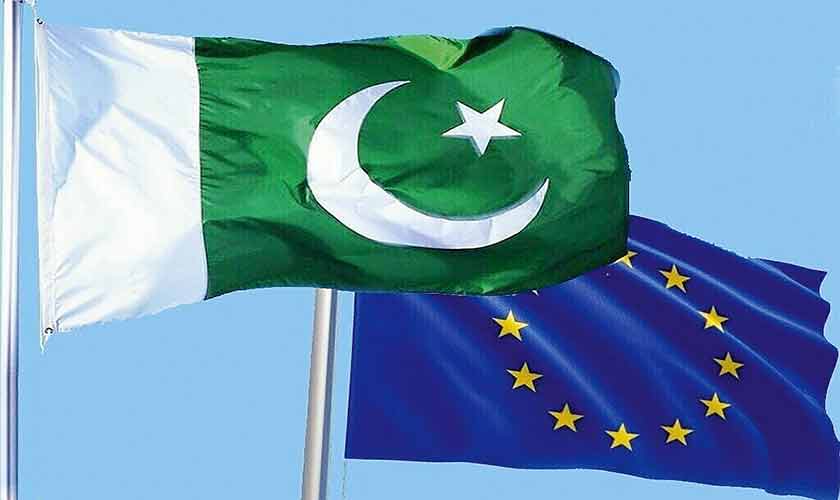
s the European Union prepares to undertake its review of Pakistan’s Generalised Scheme of Preferences Plus status, recent remarks by EU Ambassador Raimundas Karoblis, who stated that Pakistan “needs to do more” to fulfil its commitments, have prompted a renewed debate about the contours of the relationship between Pakistan and Europe. From Islamabad’s perspective, the upcoming review should be conducted on the basis of objective reforms, measurable progress and a recognition that Pakistan has made significant strides in strengthening its human rights and governance frameworks since first receiving GSP+ status in 2012. At the same time, Pakistan expresses concern that human rights are increasingly being politicised and selectively weaponised in Western policy circles, often at the expense of nuanced understanding and fair assessment.
Pakistan’s record over the past decade reflects a sustained commitment to legislative, institutional and policy reforms aligned with EU conventions. The Protection of Journalists and Media Professionals Act of 2021 is a landmark federal law designed to safeguard media freedom. It provides structured mechanisms for the investigation of threats or attacks against journalists through mandated special prosecutors and formalised inquiry commissions. Similarly, the Anti-Rape (Investigation and Trial) Act of 2021 has reformed Pakistan’s approach to gender-based crimes by establishing special courts, standardising forensic evidence collection and ensuring stronger penalties against perpetrators.
The country has also enacted domestic violence legislation at both federal and provincial levels between 2020 and 2022. These laws criminalise domestic abuse, enable protection orders and oblige authorities to provide shelters, legal assistance and rehabilitation mechanisms for victims. Another significant step forward is the Transgender Persons (Protection of Rights) Act of 2018, a progressive law that recognises gender identity based on self-perception while prohibiting discrimination and guaranteeing access to education, employment and public services for transgender persons. Pakistan’s child protection regime has also been strengthened through the Zainab Alert Act of 2020, which created a rapid-response system for missing and abducted children supported by a centralized database. Complementing these legislative reforms is the enhanced role of the National Commission on Human Rights, an autonomous statutory body empowered to investigate violations, review existing laws and advise the government on compliance with international conventions.
While Pakistan acknowledges that continuing challenges remain, it maintains that its progress has been substantial, tangible and in line with its GSP+ commitments. Islamabad also emphasises that the selective framing of human rights narratives in international circuits—particularly within certain segments of Western media, think tanks and advocacy networks—risks overshadowing the country’s achievements. Government leaders worry that human rights discourse is increasingly politicised for geopolitical leverage. This trend, in Islamabad’s view, undermines genuine advocacy and encourages the instrumentalisation of rights-based narratives to exert political pressure.
The country has enacted domestic violence legislation at both federal and provincial levels between 2020 and 2022. These laws criminalise domestic abuse, enable protection orders and oblige authorities to provide shelters, legal assistance and rehabilitation mechanisms for victims.
Pakistan has repeatedly expressed concern that some dissidents, activists and commentators in exile deploy narratives of victimhood to mask anarchist and separatist agendas. Militant networks, including US-designated terrorist organisations such as the Balochistan Liberation Army and the Balochistan Liberation Front, have long attempted to manipulate human rights language to constrain state responses to terrorism. These networks often operate through front organisations, thereby creating sub-kinetic spaces that challenge the state’s legitimacy and ability to respond effectively to militancy. Such platforms propagate narratives of repression while remaining silent on violence committed by militant groups.
While such networks focus on Pakistan, they often remain conspicuously silent about persistent human rights violations occurring in the Western states. Reports by Human Rights Watch, Amnesty International and UN special investigators have documented patterns of systemic discrimination, racial profiling, Islamophobia, police brutality and suppression of dissent across the UK, France, Germany and the United States from 2019 to 2023. Pakistan notes that these issues rarely attract the same intensity of international advocacy or political pressure.
Even more striking for Islamabad is the Western reluctance to confront India’s human rights record. Multiple international reports between 2020 and 2023 highlight state-sponsored persecution of religious minorities, including Muslims, Christians and Sikhs. The killing of a Sikh protester during the farmers’ movement in October 2021, coupled with open calls for genocide of Muslims by extremist groups in India, underscores the scale of abuses that often escape Western sanctions or censure. The 2025 US Country Report on Human Rights Practices recorded severe restrictions on civil liberties in India, including politically motivated charges against activists, journalists and NGOs. According to Indian Human Rights Commission data cited in the report, the country recorded 107 police custodial deaths and 1,372 judicial custodial deaths between January and August 2024, pointing to systemic problems within India’s law enforcement and justice system.
For Pakistan, the Western silence on these developments stands in sharp contrast to the scrutiny directed at Islamabad. Geopolitical and economic considerations—particularly the desire to maintain strategic ties and trade opportunities with India—often overshadow the West’s stated commitment to universal human rights principles. This selective approach raises legitimate concerns about double standards, particularly when economic partnerships and security arrangements appear to take precedence over consistent ethical standards.
As Pakistan prepares for the GSP+ review, it calls upon the European Union to engage with Islamabad on the basis of fairness, factual assessment and recognition of the country’s substantial progress. Pakistan maintains that it remains committed to advancing its reform agenda, strengthening democratic institutions and improving human rights protections. However, it also insists that the credibility of mechanisms such as GSP+ depends on their insulation from lobbying networks, politicised advocacy and selective moralising.
Pakistan seeks a partnership with Europe grounded in mutual respect, transparency and acknowledgment of shared challenges. As the review approaches, Islamabad hopes that the EU will consider its efforts objectively and not be swayed by politically motivated narratives that distort realities.
The author works for The News. He can be contacted at [email protected]