


Print Story
X




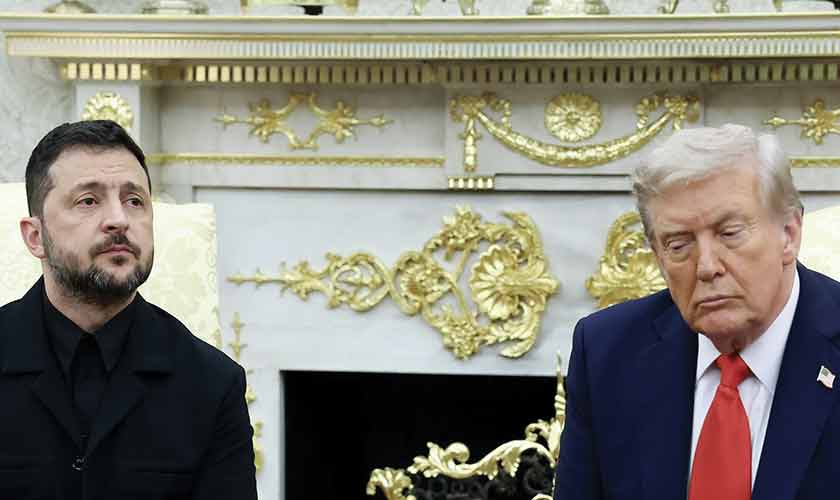
Trump issues ultimatum to Ukraine to accept peace deal or risk losing US support
| 2 |
025 may be referred to as the year of excessive peace-seeking. While self-pronounced peacemakers chase peace, reach deals and claim that peace has been achieved, lives continue to be lost while ‘ceasefires’ are in place. Peace-fire is possibly the defining innovation of 2025.
Here, the point of discussion is the Russia-Ukraine war and the 28-point peace plan currently in circulation. Speaking with Dr Christopher McKnight Nichols, a professor of history and Wayne Woodrow Hayes Chair in national security studies at the Mershon Center for International Security Studies at the Ohio State University, The News on Sunday aimed to show where the promised peace might lead the warring parties post-Alaska.
“We still do not fully know the details of the various plans in circulation. Apparently, there are at least two European versions: a recent 28-point plan and a previous 24-point proposal. Both are reportedly much less pro-Russia than the 19-point US plan,” says Dr Nichols. He mentions that there is division among rival camps in the US foreign policy circles. “It is telling that there are now clearly rival camps in US foreign policy circles. Secretary of State Marco Rubio and his cohort are apparently opposed to Vice President JD Vance and his group.”

Dr Nichols says, “in this moment of pushing an unpopular peace plan in the midst of a seemingly intractable war, the Trump administration’s activities overall appear to signify a real departure from post-WWII traditional American leadership in the trans-Alantic alliance and US-Europe multilateralism..
For Dr Paul Poast, deputy dean of doctoral education at Social Science Division, and associate professor at Department of Political Science at the University of Chicago, the “situation is quite dynamic.” Talking about the revisions in what was initially the 28-point plan, he notes: “That such a revision seems acceptable suggests that Trump’s purpose in putting forward the initial plan was to drive forward the negotiation process. A peace deal is clearly something he wants to achieve. It was a key point during the [re-election] campaign. It is why he rushed to have the Alaska summit. Being a “peace maker” is something he has touted again and again.”
But is there precedent for the US on pressuring an ally toward a politically uncomfortable peace? Dr Nichols says such action is unprecedented in recent decades. “While there is 20th-Century history of American policymakers seeking to mediate foreign conflicts, particularly during and after the Cold War, pushing hard for particular terms in a cessation of hostilities, this is unprecedented. Usually, only when the United States has had boots on the ground and a large stake in the war has the nation pressured an ally toward a politically uncomfortable peace.”
President Trump’s approach raises the question whether it’s a calculated redefinition of US grand strategy. Dr Nichols says, “The pendulum swings of the Trump administration on the Ukraine war, from withholding aid to authorising additional weapons, from siding with Russia to siding with Ukraine, to seeking the Nobel Peace Prize for President Trump if he can claim ‘ending the war,’ epitomise the halting and inchoate nature of current American foreign policy… There is no doubt that these actions have undermined alliances and are fundamentally reshaping NATO’s cohesion and Europe’s security architecture… broadly, to be more European, less dependent on the US and less willing to concede to American (or other international) demands.”
Dr Nichols says that President Volodymyr Zelensky “has played his relatively weak hand very well, thus far.”
“He (Zelensky) most recently said that his nation could support most of what is in the now composite 28-point peace plan for ending the war with Russia, with more assurances and key details firmed up and rejecting or amending sections he viewed as too pro-Russia.”
Clearly, Zelensky will negotiate with all parties but is unlikely to give up much, if any, territory or sovereignty, particularly as long as NATO and European nations more generally, continue to support the Ukrainian cause.
Dr Nichols points out that in the latest talks there are no Russian representatives. “High-level Russian officials have been downplaying or outright rejecting a number of key principles in the current plans. Peace plan counter-proposals reportedly drafted by a combination of the UK, Germany and France have included Ukrainian demands and exclude recognition of Russian-held regions. They also raise the question of Ukraine’s permitted army size. Perhaps most controversially, and in opposition to stated US demands, these leave open the possibility of Ukraine joining NATO in the future.”
Without a clear, coherent set of guiding principles in US foreign policy, says Dr Nichols, it is hard to know how signals from Trump or his administration may be interpreted. “Now that we see at least two camps emerging related to Ukraine and peace, it is hard to know how Ukraine might misread or over-read the signals. Clearly, Zelensky will negotiate with all parties but is unlikely to give up much, if any, territory or sovereignty, particularly as long as NATO and European nations more generally, continue to support the Ukrainian cause.”
Dr Nichols says there is a real Munich problem here. “It seems that appeasement of Putin and Russia is off the table. However, the Trump administration keeps putting it back on. Zelensky remarked that the ‘main problem’ is the Russian demand for legal recognition of the territory Russia has seized.” Ukraine’s position has consistently been that it will not concede and withdraw from Donbas. Another “sticking point” is Crimea. “Russia also controls large portions of Kherson and Zaporizhzhia and apparently wants to keep at least in part,” he states.
Initially, Trump had said Ukraine had until November 27 to accept the deal or risk losing US support for both a peace process and aid. However, he has now dropped that deadline.
Dr Nichols says: “There are historical lessons of both kinds; the urge to achieve peace at any cost (a la Munich in 1938 permitting German annexation of part of Czechoslovakia against the will of Czechs) and in terms of pushing an unpopular peace or armistice (consider the armistice between North and South Korea that did not result in permanent peace).”
Dr Poast says the current situation is complicated. “One thing Trump has done is push the European countries to be stronger security providers to Ukraine… Ukraine is not as dependent on US support now as it was a year ago. While there are some European countries that would like to see Ukraine accept a deal sooner rather than later (Hungary comes to mind), the key European supporters of Ukraine (such as France and the UK) are unwavering. To be clear, the US is still providing support, but it will not be as disastrous for Ukraine if Trump did cut off Ukraine aid (which I actually don’t see him doing anyhow).”
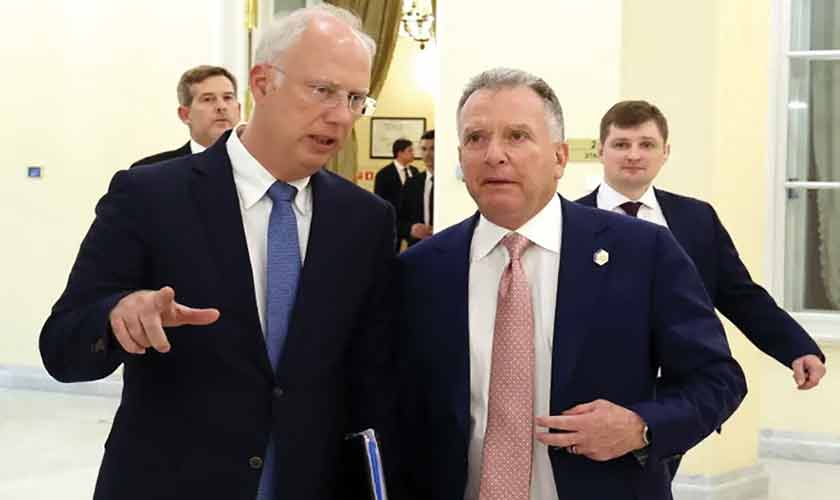
Dr Poast says that the current situation gives Kyiv room to push back on the US plan and that it has already started doing so.
Dr Nichols says Europe is right to view the Trump administration’s back-and-forth and efforts to push a peace plan as yet further signaling of a more transactional and highly conditional US role. “This fits with the recent tariff and trade wars and other bellicose language emanating from the US. The result, in my view, will be the continued fracturing of NATO and an American-European alliance system and the reasonable questioning by allies and adversaries alike of the durability of US support and alliance. The rising percentages of GDP that European nations are allocating for defence and the efforts to stand together to facilitate a Europe-led or at least Europe-oriented peace plan underscore this changing multipolar reality,” he says.
The writer, a communications professional, is currently the manager at the Centre for Excellence in Journalism, IBA Karachi. She can be reached on X: @mariaamkahn


