Print Story
X




The playwright who offered a model beyond politics and aesthetics
| W |
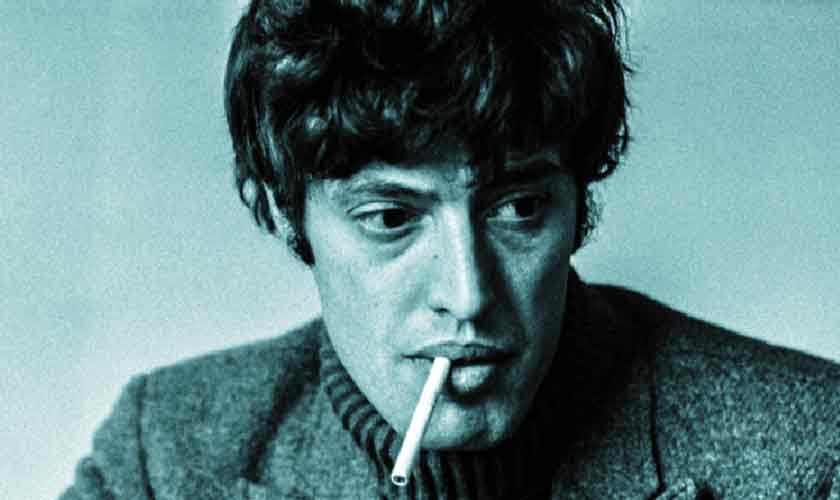
hen Tom Stoppard died last week, theatre practitioners across Pakistan felt a particular pang of loss. For decades, Stoppard had been an unspoken guide for the country’s theatrewallas, a writer whose intelligence, wit and humanity offered a model for what theatre could be, even in a fractured and restricted cultural landscape.
It is difficult to pinpoint exactly what in Stoppard’s work resonated so deeply here. Pakistani theatre has long been divided between two camps: those who view the stage as a platform for political or social transformation, and those who defend theatre as an aesthetic pursuit, valuable for its own sake. The first group often reduces artistic expression to a vehicle for ideological messaging; the second risks floating into frivolity. Stoppard, somehow, inhabited a third space. Without preaching, and without diluting artistic seriousness, he demonstrated that theatre could be intellectually rigorous while still remaining humane, playful and emotionally honest.
Stoppard’s own biography resists the neatness often expected of literary giants. Born in Czechoslovakia, he fled with his family as the Nazis advanced, eventually settling in England. English was not his first language, a fact rarely remembered, given the elegance and precision with which he later wielded it. He would eventually be compared to Joseph Conrad and Vladimir Nabokov, two other masters whose adopted English startled those who believed that great literature could come only from native speakers.
His earliest professional steps were not on the stage but in journalism. He wrote criticism, reviewed plays and developed an ear for dialogue through radio, a medium he adored for its intimacy and form. This background shaped the hallmark qualities of his work: a supple command of language, a taste for paradox and an ability to slip meaning into humour so lightly that audiences never felt lectured to. He was the master of the understated line, the quiet philosophical question, the joke that arrived half a beat early and lingered in the mind long after the play ended.
This craft, honed through years of writing for newspapers and radio, became his greatest asset. Stoppard could carry audiences with him without ever intimidating them. He perfected a technique that allowed him to present arguments, ethical tensions and political anxieties without appearing to take sides, a refusal, not of engagement, but of the blunt certainties that often flatten artistic work.
A sudden success and a global reach
His breakthrough was abrupt. Rosencrantz and Guildenstern Are Dead, staged at the Edinburgh Fringe by the Oxford Theatre Group, made him “fabulously famous” overnight. From there, he maintained a steady path: challenging, refined and never complacent.
Shakespeare in Love, his Oscar-winning screen-play, introduced Stoppard to an international audience far wider than the theatre alone could reach. Film, unlike theatre, is not geographically bound; it travels across borders and appeals to audiences who may never have entered a performance space. Cinema’s glamour, scale and reach gave Stoppard a new platform. Shakespeare in Love blended theatrical sensibility with cinematic delight so seamlessly that even viewers unfamiliar with his earlier work felt its charm.
In Pakistan, this mattered more than one might expect. Cinema here had been disrupted by the VCR revolution; the form’s larger-than-life impact lost to small screens in living rooms. Yet viewers internalised cinema’s grandeur, imagining it even when watching pirated tapes on modest televisions. Stoppard’s film tapped into that subconscious memory of spectacle and drama, allowing his influence to seep into spaces where his plays had never been performed.
Stoppard’s range was formidable. His work include Jumpers, Travesties, Night and Day, Hapgood, Arcadia, The Invention of Love, The Coast of Utopia, Rock ’n’ Roll, Velvet Revolution, The Real Thing and Leopoldstadt. Many of these plays wrestle with politics, philosophy and history, always with an unmistakable Stoppardian lightness, a refusal to flatten complexity.
He was showered with honours: a CBE, membership in the Order of Merit and a knighthood. But accolades, while impressive, do not fully capture his cultural presence.
Although often thought of as an apolitical aesthete, Stoppard’s civic commitments were clear and grew more visible over time. As the Guardian noted, he supported Václav Havel’s Charter 77 in Prague and worked actively on human rights issues through PEN International. Plays such as Every Good Boy and the superb television piece Professional Foul (1977), dedicated to Havel, tackled political repression head-on. Squaring the Circle (1984) celebrated the Polish Solidarity movement through a drama of geometry and dissent.
Yet he never let political engagement overshadow artistic discipline. He relished teasing dogmatic critics with provocative lines such as: “Personally, I would rather have written Winnie-the-Pooh than the collected works of Brecht,” or, “Skill without imagination is craftsmanship; imagination without skill gives us modern art.” These statements were less about mockery than about asserting that art must remain alive, surprising and deeply felt.
For Pakistani theatre-makers, working in a landscape marked by censorship, political polarisation and chronic underfunding, Stoppard represented the possibility of a middle path. He proved that one could be intellectually serious without being didactic, politically aware without being doctrinaire, playful without being trivial.
He showed that theatre does not have to choose between message and beauty. It can hold both, delicately, intelligently and with compassion.
Tom Stoppard may have spoken in a language he did not learn at birth, but he left behind a theatrical language that speaks across borders, across constraints and across the uneasy divides of art itself.
The writer is a Lahore-based culture critic