Print Story
X




Rural Sindh does not just vote for a political party but for survival and protection. PPP offers just that
| I |
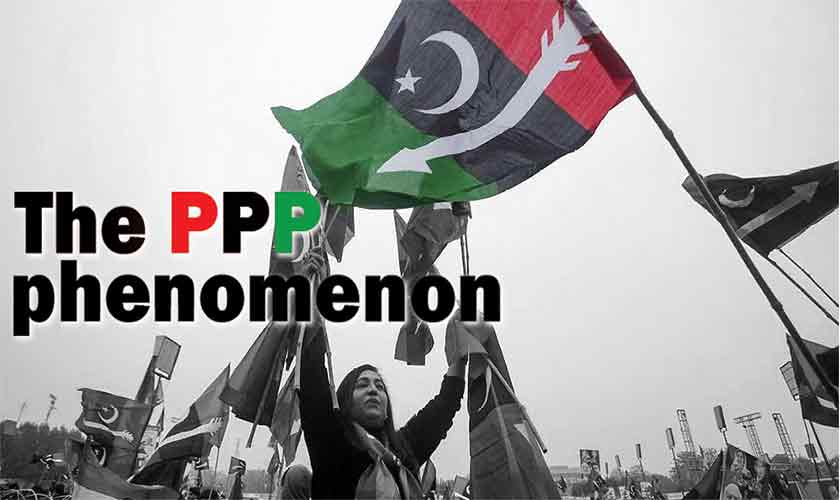
t is one of Pakistani politics’ longest-running paradoxes: a party repeatedly accused of poor governance, nepotism, corruption and systemic mismanagement continues to rule one of its largest provinces, uninterrupted, for nearly two decades.
Every electoral cycle, journalists and analysts pose the same question: why does Sindh consistently vote for the Pakistan Peoples Party?
Outside Sindh, many assume the answer lies in nostalgia for the Bhutto legacy or the emotional weight of his martyrdom. Bhutto lives, they say, and the emotional currency still flows from Larkana to Thatta, from Badin to Sanghar, from Dadu to Thar.
But this is just one layer of a deep, more complex, political architecture.
Rural Sindh has not just been voting for a political party. It has also been voting for continuity, survival and protection. The PPP, unlike any other player in the province, has built a resilient ecosystem that offers precisely that.
Bhutto legacy, a living political asset
No party in Pakistan has ever weaponised its foundational mythology as effectively as the PPP. Zulfikar Ali Bhutto, the party’s founding leader, remains a towering figure in Sindh’s collective memory. For many in rural Sindh, he was not simply a prime minister, he was also the first leader who spoke to them, not at them. His roti, kapra aur makan slogan, nuclear sovereignty and dignity of the common man are still played politically.

Benazir Bhutto cemented this legacy. Her two short-lived governments (1988-1990 and 1993-1996) were not free of controversy, yet she symbolised hope against authoritarianism—a woman from Sindh leading in Islamabad. Benazir’s image—Bhutto’s daughter—the educated, determined woman, retained emotional pull across generations.
Over the last 17 years, however, the party has been steered by a leadership fundamentally different in style and approach.
Asif Ali Zardari, and later Bilawal Bhutto-Zardari, inherited the structure but have repurposed it to serve an electoral machine: pragmatic, transactional and survivalist. Many critics see this shift as a departure from ideological PPP—a clear drift from “people’s politics” for which the party was known for.
Yet, the electoral story remains unchanged. Sindh keeps voting for the PPP.
A system, not a party
One must look beyond rallies and slogans and examine power at the village and district level to understand the phenomenon. In rural Sindh, land ownership, police influence, water distribution and access to jobs remain concentrated in a few hands. The PPP did not invent this system; it integrated itself into it more effectively than any rival.
Over the years, the party has built alliances with landed elites, entrenched bureaucratic allies and local power brokers. These networks run deeper than manifestos and campaign speeches, shaping the lives of ordinary voters. A watercourse, a district hospital, a school posting or that of a SHO or a government job — these are the real currencies of politics in rural Sindh.
A retired provincial bureaucrat, speaking on the condition of anonymity, summed it up bluntly: “You don’t vote PPP to get a hospital. You vote PPP so the SHO doesn’t harass you, your son and your family.”
In such a political economy, opposition parties rarely stand a chance. Without administrative backing, local patronage networks or security for voters willing to defect, challengers often abandon their efforts or eventually negotiate their way into PPP folds. What appears to outsiders as a “landslide dominance” is an ecosystem of negotiated survival.
Collapse of political rivals
Sindh once had formidable challengers: the Pir Pagara dynasty in Khairpur and Sanghar; the Magsi, Jatoi, Mirani and Khuhro clans in Larkana and Kamber-Shahdadkot; Mirzas in Badin; Jatois in Shikarpur, Dadu and Naushero Feroze; Mahr families in Shikarpur; Sherazis in Thatta; and Sujawal, Arbabs in Tharparkar.
Today, almost every major challenger has either been defeated, weakened or absorbed into the PPP. Where once there were two or three competing power blocs in every district, now, there is a single dominant network.
Political scientists call this electoral functionality: not the absence of opposition, but the superior capacity of one machine to operate every election cycle, mobilising voters, delegating resources and sustaining loyalty.
Where rivals have relied on episodic anger or anti-corruption narratives, the PPP has relied on permanent day-to-day relationships with the state machinery. In much of rural Sindh, the state has been annexed to the party. This gives PPP the institutional intimacy with the voters.
A new loyal class
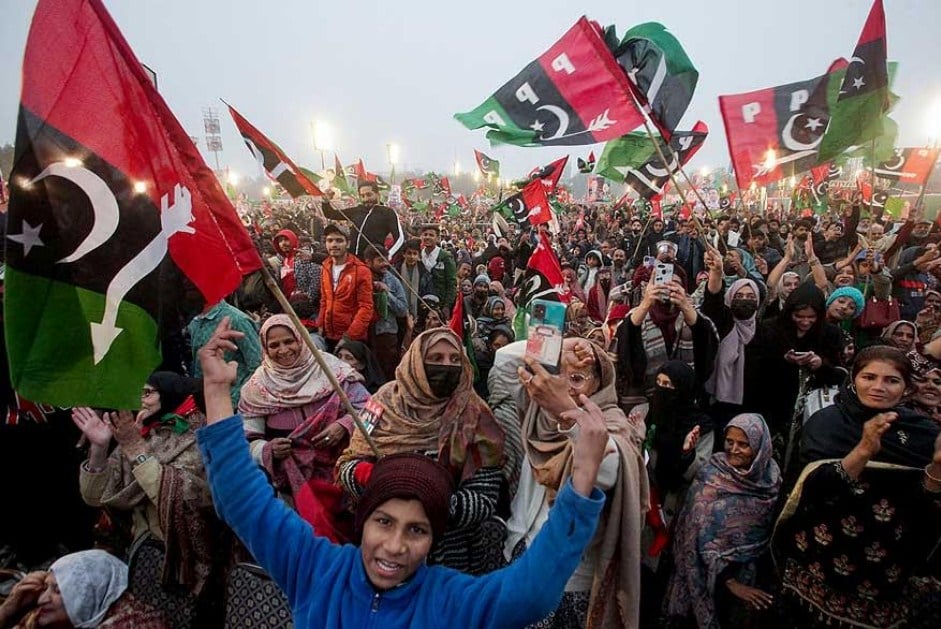
Despite perceptions to the contrary, the PPP’s leadership model has changed. While the old feudal gatekeepers remain, the party has deliberately elevated a second tier of politicians from lower-middle and middle-class backgrounds. These individuals are not hereditary power brokers—they are political loyalists who owe their rise solely to the party leadership.
They carry two advantages.
One, they resemble the ordinary voter. A former small businessman, trader, teacher or contractor is more relatable than a 600-acre landlord.
The other is that they are dependent on the party. They cannot survive politically outside it, making them disciplined, loyal and often, ruthlessly efficient.
Their loyalty is not romantic, ideological or rooted in Bhuttoism—it is transactional.
This new political class enforces continuity, organises voters and translates patronage into political security. Where the old waderas commanded respect, this new cadre commands access: to provincial ministries, police hierarchies, developmental funds and bureaucratic circles.
For many rural constituencies, this model has normalised a bargain: vote for predictability.
Psychology of the voter
It is tempting to depict Sindh’s electorate as blindly loyal or ignorant. That caricature misses the most profound element: voters are not choosing change because they fear disruption more than continuity.
For a rural family whose income depends on a canal outlet controlled by a local landlord, a police inspector’s goodwill or a bureaucrat’s signature on a job appointment, electoral change equals danger. Stability may be unjust but instability is terrifying.
Political theorist Ayesha Jalal once described South Asian politics as the art of negotiating survival rather than the pursuit of ideological emancipation. In rural Sindh, that dynamic is acute. The voter’s logic is not who will build a hospital for me, but who will not destroy my life.
The PPP has mastered this psychology: it does not promise prosperity, it implies survival.
A legitimacy crisis
The PPP remains electorally strong but politically insecure. To its critics, it has traded Bhutto’s ideological promise for a managerial syndicate: bureaucrats, contractors, political middlemen and patronage officers. The party’s rhetoric still invokes revolution but its governance increasingly mirrors the very elite structures it once vowed to dismantle.
Young Sindhi university graduates, urban professionals, farmers exhausted by declining irrigation, teachers without promotions—voice a quiet resentment. They do not yet form a coherent political movement but their disillusionment is real and spreading.
“The PPP still wins elections in Sindh. But it is no longer winning hearts,” says a Hyderabad-based academic, Professor Yaqoob Chandio.
That is the party’s real vulnerability: crack the network or give the voter an alternative ecosystem of protection and the electoral map may finally change.
The question is no longer whether the PPP’s rule will end but whether Sindh’s social and political conditions will ever allow an alternative to its meaningful emergence.
Till then, the ballot remains predictable, and the province, despite its frustrations, keeps choosing what it knows best.
The writer is a staff reporter for The News.