Print Story
X




Mapping the failure of child abuse prosecutions in Pakistan
| T |
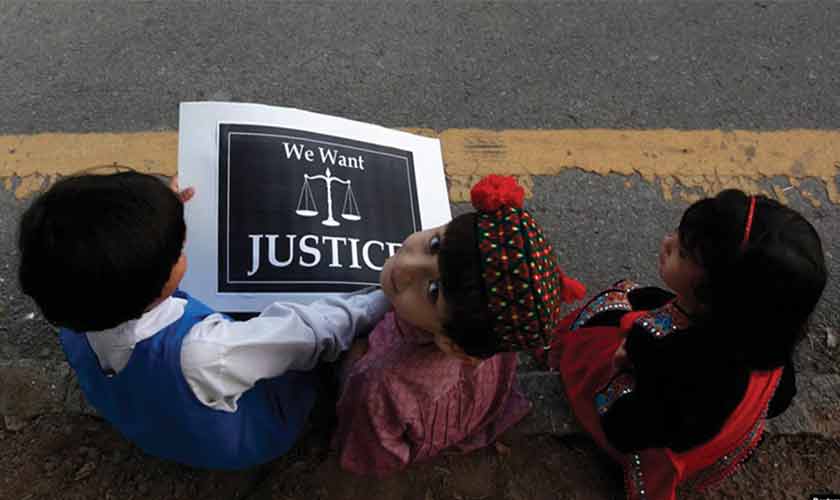
he recurring headlines from Karachi and parts of the Punjab regarding child abuse follow a familiar, tragic rhythm: a horrific incident is reported; public outrage erupts; and a clamour for ‘stricter laws’ dominates the conversation. This legislative reflex is becoming increasingly detached from the reality of the courtroom.
Pakistan is no longer suffering from a lack of legal protection; it is suffering from an implementation vacuum. While the statutes have evolved, most notably with the passage of the Juvenile Justice System Act, 2018, the machinery of prosecution remains tethered to an archaic, paper-based past that is fundamentally ill-equipped to handle the demands of modern justice systems.
The Juvenile Justice System Act, 2018, was hailed as a paradigm shift. It moved beyond the punitive, colonial-era focus on incarceration and toward a framework rooted in rehabilitation, diversion and the “best interests of the child.” It introduced safeguards against the arrest of minors; mandated specialised investigative officers; and created a roadmap for social reintegration. On paper, it is a robust, rights-based instrument that aligns Pakistan with international obligations like the UN Convention on the Rights of the Child.
The Zainab Alert, Response and Recovery Act of 2020, birthed from the national trauma of a singular, horrific case, promised a streamlined, high-speed ‘amber alert’ style mechanism for the recovery of missing children. Zainab Alert was a critical step in acknowledging that the state’s previous inertia was fatal. It mandated immediate FIR registration and created a dedicated agency for recovery.
Yet, like the JJSA, Zainab Alert exemplifies the implementation vacuum. It provides a megaphone for the state to scream for help when a child goes missing but it lacks the forensic brain to translate that recovery into a conviction. We have become significantly better at notifying the public when a child is taken, yet remain woefully incapable of collecting the evidence required to ensure that the individual who took them does not walk free again. The alert goes out but the evidence gathered during the critical first hours is often compromised, leaving the prosecutor with a high-profile case and a hollow legal file.
Years of implementation reveal a sobering truth—both laws operate in a procedural void. They assume the existence of a high-performance state infrastructure; specialised child-friendly police units; trained forensic examiners; and digitised court reporting that simply does not exist at the district level. When the state attempts to invoke these Acts in cases of abuse, it often finds itself struggling to meet the basic evidentiary requirements of the law, not because the law is weak but because the evidence is fragile.
The greatest failure in the current prosecution of child abuse is the ‘medico-legal trap.’ In the Pakistani legal system, the medico-legal certificate (MLC) is the primary bridge between a clinical observation and a court verdict. Under the current system, however, these certificates are often drafted by district-level medical officers who lack specific paediatric-forensic training.
When an abuse case reaches a court, the MLC is often the first document a defence attorney will target. Because the collection of biological evidence—DNA, trace fibres or serology—is frequently conducted by untrained personnel without a rigorous, standardised chain-of-custody, the evidence is inherently prone to contamination.
Locard’s Exchange Principle dictates that a perpetrator will always leave a trace. In Pakistan, that trace is often lost to sloppy collection, improper storage or a lack of access to high-end labs like the Punjab Forensic Science Agency.
If the court process requires a child to relive their abuse through multiple, insensitive cross-examinations and the state cannot offer a secure path forward, the legal system effectively discourages the pursuit of justice.
If the forensic foundation is weak, the entire legal edifice built by the JJSA 2018 collapses. Courts, rightfully cautious of wrongful convictions, often treat forensic reports as mere corroborative evidence rather than conclusive proof. This forces prosecutors to rely heavily on witness testimony, specifically the child victim’s account. In a culture where family pressure and social stigma are potent, this creates a system of attrition. When a family is coerced into compromise or pardon—and there is no independent, undeniable scientific evidence to sustain the state’s case—the law loses its power. The JJSA’s vision of protection is thus undermined by the system’s inability to produce a hard case.
The deficit is not merely biological; it is also digital.
The JJSA 2018 was drafted in a pre-AI and hyper-digitised era. As grooming and exploitation increasingly move to encrypted messaging apps and social media, our legal response remains largely analogue. The Prevention of Electronic Crimes Act, 2016, operates in a silo, rarely integrated into the routine, child-centric investigations mandated by the JJSA.
When a child is victimised online, the window for preserving data is measured in hours, not days. Our current procedural chain, where evidence requests must move through bureaucratic layers, means that by the time a warrant for digital records is processed, data has often been purged. We have laws that criminalise the act of abuse but we lack the institutional mechanisms to capture the digital footprint required to prove it.
Perhaps the most painful discrepancy between law and reality is the fate of the child after the intervention. The JJSA emphasises social reintegration, yet the state provides almost no dedicated, long-term foster care or state-funded psychosocial support. A child removed from an abusive environment is often placed in an “observation home” that functions more like a detention facility than a sanctuary.
This creates a systemic perverse incentive: witnesses, including children themselves, often drop out of the legal process because the system meant to save them is itself traumatic. If the court process requires a child to relive their abuse through multiple, insensitive cross-examinations and the state cannot offer a secure path forward, the legal system effectively discourages the pursuit of justice.
The time has come to stop measuring progress by the number of bills passed in the National and Provincial Assemblies. If we want to dismantle the cycle of abuse in Pakistan, we must shift our focus from the statute to the science. We need to mandate the creation of child-friendly forensic units in every district, where medical examiners are cross-trained in child psychology and forensic evidence collection. The law must move toward a strictly regulated, electronic chain-of-custody for all abuse-related evidence, making it immune to tampering by local influence.
The JJSA must be amended or supported by clear procedural rules that mandate the integration of cyber-forensic experts in the earliest stages of child-abuse investigations. We must incentivise a judicial culture that values high-quality, scientifically sound forensic reports over fragile, often-retracted testimonies of traumatised minors.
Pakistan’s legal landscape is currently littered with well-intentioned, beautifully drafted laws like the JJSA 2018. They represent our collective conscience but are failing to shield our children. Justice for a child in Pakistan should not be a contest of leverage or a game of attrition. It must be a process of scientific certainty. Until our courtrooms and investigative units prioritise forensic integrity over subjective testimony, our child protection laws will remain what they currently are: well-meaning proclamations trapped in an archaic, crumbling machine.
The writer is an advocate and managing partner at the Lex Mercatoria law firm. He is a visiting faculty member at TMUC and CEO at ZAK Casa Enterprises.