Print Story
X




Aqeel Javed Butt is not just a coach or an administrator; he is a custodian of a fighting spirit
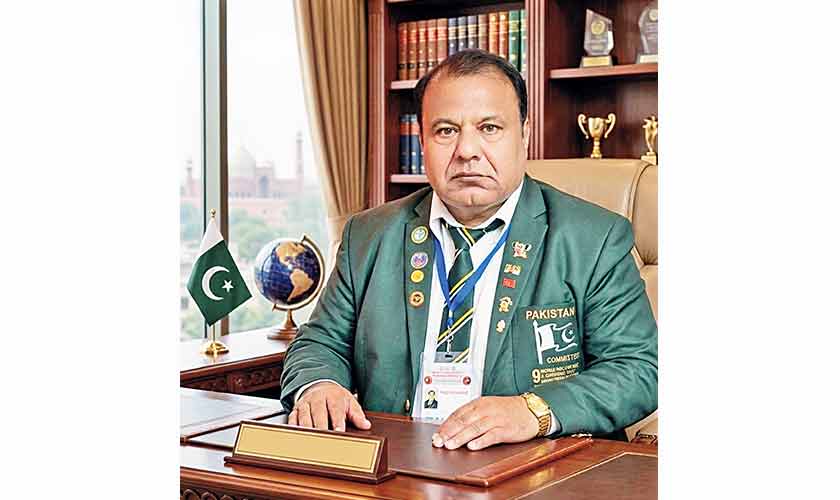
Hidden in the unassuming shadows of Lahore’s Punjab Stadium and the FIFA House, the National Weightlifting Club does not announce itself with grand arches.
Instead, it announces itself with the rhythmic, percussive clank of iron meeting steel. For nearly four decades, this sound has been the heartbeat of a revolution led by one man: Aqeel Javed Butt. A police inspector, a former champion, and a visionary administrator, Butt has served as the unyielding guardian of Pakistan’s strength sports, building a legacy from the ground up with little resources but an abundance of passion.
Butt’s journey into the world of iron was perhaps predestined. Born in Nairobi in 1966, he is a direct descendant of wrestling royalty. His father, Haji Muhammad Javed Butt, was a champion in Kenya, and his family tree is intertwined with the legends of the kushti world. His great-uncle was the famed Khalifa Ghulam Mohiuddin Pehlwan, a contemporary of the Great Gama. Butt often recounts a legendary match where his uncle was thrown down seven times, only to stand back up seven times. “The spectators did not cheer the thrower,” Butt recalls. “They cheered the man who refused to stay down.” That philosophy-resilience over defeat-became the cornerstone of Butt’s life.
After migrating to Lahore in 1970, Butt channeled this inherited grit into weightlifting and powerlifting. In 1986, his coach founded the National Weightlifting Club. What started with second-hand equipment has since transformed into a “mini Olympic House,” a sanctuary that has produced champions across various disciplines. Later a few years he joined that club and Butt is now no stranger to the podium himself; he was crowned the “Strongest Man of Pakistan” in 1999 and was the first Pakistani to bench press 200kg. Yet, his true impact lies in his selfless mentorship.
The club operates on a simple, radical principle: no one is turned away. Whether it is a teenage girl attempting her first dead-lift or a modest policeman dreaming of glory, Butt provides free coaching. This inclusivity has nurtured world-class talent, including Olympian javelin thrower Arshad Nadeem and tennis star Ushna Sohail, who utilized the club’s facilities to hone their physical prowess.
However, Butt’s most revolutionary contribution is arguably his work in women’s sports. At a time when women lifting weights was considered a social transgression in Pakistan, he pioneered the formation of the Women’s Powerlifting Team. He organised the country’s first national women’s championship in Lahore, funding it out of his own pocket when sponsors and officials backed out. He faced skepticism from society and pushback from parents, but he persisted. Today, because of his groundwork, female powerlifters from Pakistan compete on the global stage, recently returning with medals from the World Strength Lifting Championship in Kazakhstan.
Balancing a 37-year career in the Punjab Police-retiring as an Inspector without ever serving in a police station-with his duties as a federation founder and coach required immense discipline. Butt served as the captain of the national powerlifting team and founded the Pakistan Strength Lifting Federation, constantly fighting for institutional support and scientific training for his athletes.
As he enters his 60s, Butt’s focus remains unwavering. He continues to advocate for consistency in infrastructure and the recognition of strength sports. To the next generation, his advice is simple yet profound: forget the medal, learn to love the process, and lift for the athlete you will become tomorrow. Aqeel Javed Butt is not just a coach or an administrator; he is a custodian of a fighting spirit, proving time and again that the strongest act is not just lifting the weight, but refusing to let it crush you.