Print Story
X




World Cup 2026 is proving that no team can rely on reputation alone
The first-ever 48-team FIFA World Cup, jointly hosted by the United States, Canada and Mexico, has delivered exactly what many football romantics hoped for and what many traditionalists feared, a tournament where the gap between football’s aristocrats and emerging nations is shrinking at a remarkable pace. From packed stadiums and record-breaking attendances to stunning performances by underdogs, the opening phase of the competition has offered a glimpse into football’s rapidly changing global landscape.
While the tournament remains in its early stages, several trends have already emerged that could shape the destiny of the world’s biggest sporting event.
The first and perhaps most striking story is the rise of the so-called minnows. Critics of FIFA’s expansion to 48 teams predicted a competition full of one-sided matches and embarrassing scorelines. Instead, the opposite has happened. Nations once considered outsiders have arrived prepared, tactically disciplined and completely fearless. Cape Verde stunned European champions Spain with a scoreless draw, while DR Congo frustrated Portugal in a 1-1 result that felt more like a victory for the African side than a draw. Egypt denied Belgium a winning start, and several debutants have shown that qualification for the World Cup is no longer enough, they have come to compete.
For decades, football powerhouses relied on superior depth, experience and technical quality. Those advantages still exist, but the difference is no longer overwhelming. Today, players from smaller football nations are developed in elite academies across Europe, South America and North America. They arrive at the World Cup with tactical education, professional conditioning and international experience. As a result, traditional giants can no longer afford slow starts.
Spain and Portugal provide the perfect examples. Before the tournament, both were widely considered serious title contenders. Yet their opening performances raised uncomfortable questions. Spain struggled to break down Cape Verde, while Portugal looked surprisingly ordinary against DR Congo. Neither result was disastrous, but both served as reminders that reputation alone wins nothing at a modern World Cup.
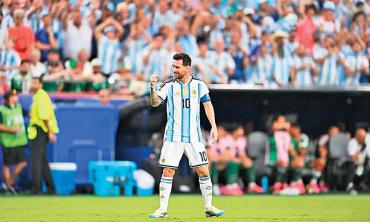
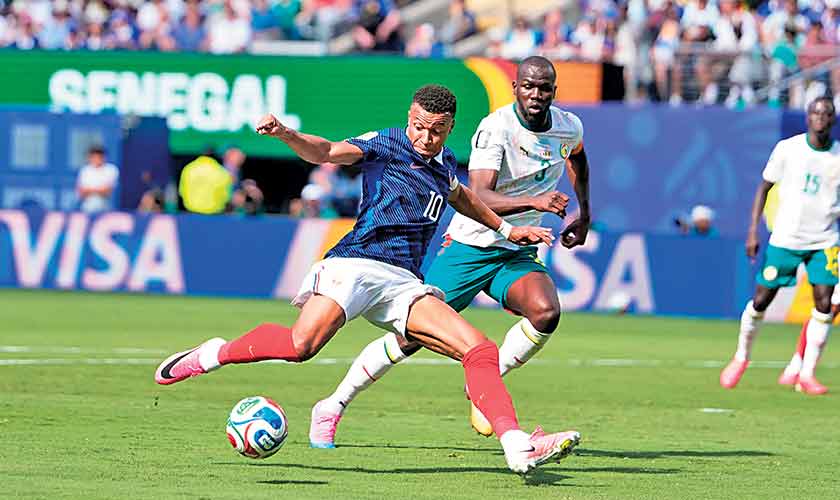
In contrast, a handful of teams have announced themselves with authority. Argentina continue to look like a team that knows exactly how to navigate major tournaments. Lionel Messi, even at the twilight of his legendary career, remains a decisive figure capable of changing matches with moments of brilliance. France have displayed their usual combination of pace, power and technical excellence, while England’s convincing victory over Croatia suggested that Thomas Tuchel’s side possesses both confidence and attacking firepower. Norway, inspired by the relentless Erling Haaland, have also impressed and appear capable of becoming one of the tournament’s surprise packages.
Based on performances so far, the five players who have made the strongest early impression are Lionel Messi of Argentina, Kylian Mbappé of France, Harry Kane of England, Erling Haaland of Norway and Jude Bellingham of England. Messi’s influence has been particularly remarkable, while Mbappé continues to demonstrate why many regard him as the face of modern football. Kane’s goals, Haaland’s physical dominance and Bellingham’s all-round midfield brilliance have added further excitement to the tournament.
When discussing potential champions, however, performances must be weighed alongside history, squad depth and tournament experience.
At this stage, Argentina, France and England appear to possess the strongest combination of current form and championship pedigree. Argentina have the winning mentality that comes from recent international success. France possess arguably the deepest squad in world football. England, meanwhile, look tactically sharper and more mature than in previous tournaments.
Germany cannot be ignored because of their tournament heritage, while Brazil remain dangerous despite not yet reaching their highest level. Spain and Portugal still have enough quality to recover, but both need immediate improvement if they are to justify pre-tournament expectations. Away from the pitch, FIFA World Cup 2026 has already become a commercial and organizational phenomenon.
The tournament has shattered attendance records. On June 16 alone, an astonishing 281,223 spectators attended four matches, surpassing the previous single-day World Cup attendance record established during USA 1994. After only six days of competition, more than 1.3 million fans had entered stadiums across North America, with average attendance exceeding 65,000 spectators per match. The tournament is already on course to break the all-time cumulative attendance record in World Cup history.
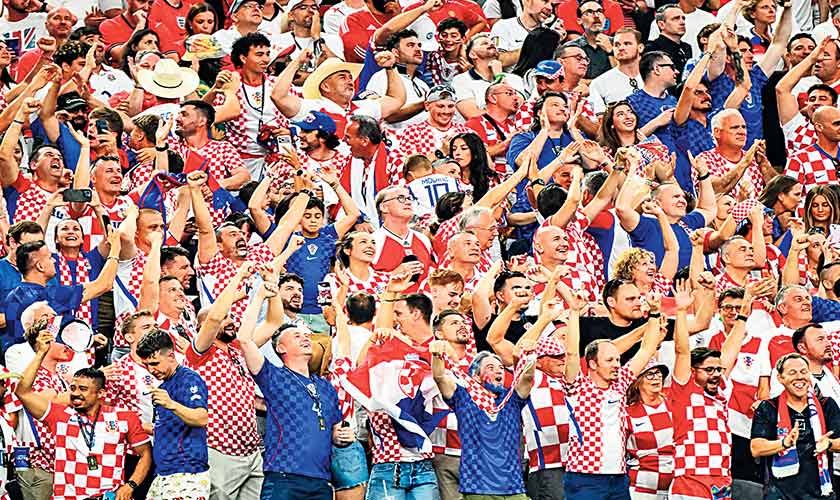
The stadium atmosphere has been spectacular. From Mexico City to New York, from Toronto to Dallas, supporters have created a festival that reflects football’s truly global appeal. The multicultural nature of the host nations has added a unique flavour to the competition, with fans from every continent contributing to an unforgettable spectacle.
Yet the tournament has not been without challenges. Supporters have reported concerns regarding transportation between host cities, rising accommodation costs, long travel distances and logistical complications associated with a tournament spread across three countries. Some players and coaches have also raised questions regarding pitch conditions at certain venues. While none of these issues threaten the tournament’s success, they highlight the complexity of organizing the largest World Cup in history.
Overall, the opening week of FIFA World Cup 2026 has delivered a powerful message: football’s future is becoming more inclusive, more competitive and more unpredictable.
The giants still possess the resources and pedigree to lift the trophy. But the underdogs are no longer content merely to participate. They are challenging, competing and believing.
That may ultimately become the defining legacy of World Cup 2026, not simply the goals, the records or the attendance figures, but the emergence of a genuinely global game where every nation feels it belongs on football’s grandest stage.