Print Story
X




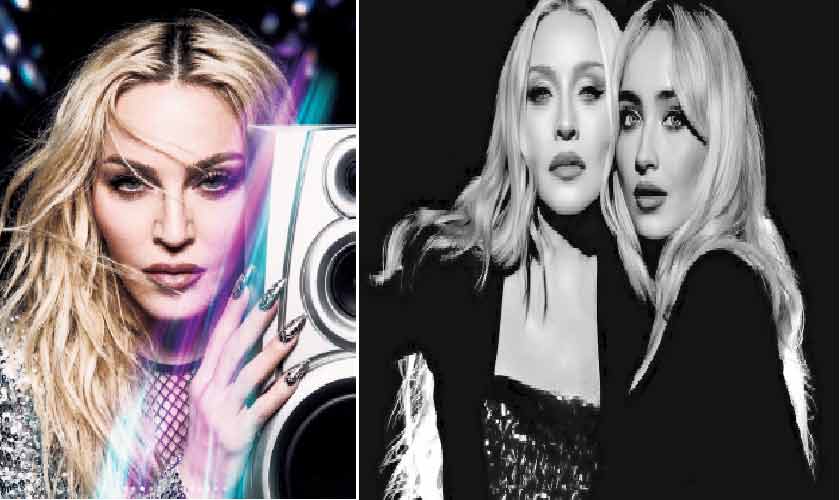
With Confessions II – The Film, the Queen of Pop makes the kind of comeback befitting her legacy, blending nostalgia, a host of celebrity cameos and new music into a deeply personal visual statement.
| F |
ew artists have mastered the art of reinvention quite like Madonna. For more than 40 years, she has blurred the boundaries between music, fashion, film and performance, redefining herself while setting the standard for generations of artists who followed her. Among such names, the most obvious is Lady Gaga but she’s also inspired the likes of Britney Spears, Christina Aguilera, Sabrina Carpenter and many others.
Her latest project, Confessions II – The Film, is another reminder that she has little interest in doing things the conventional way. Rather than unveiling a straightforward music video, Madonna has created a nearly 14-minute visual experience that introduces her forthcoming album Confessions II.
Blending several new songs into a single cinematic narrative, the film moves through themes of identity, transformation and self-discovery, feeling as much like an art installation as an album teaser. Adding to its intrigue is an eclectic cast of familiar faces. Benedict Cumberbatch, Richard E. Grant, Gwendoline Christie and Julia Garner all make appearances, joined by supermodel Kate Moss and actress Debi Mazar, one of Madonna’s oldest friends. Footballers Cole Palmer and João Pedro also make an appearance, while the film closes with a line delivered by Madonna’s daughter, Lourdes Leon, giving the production a quietly personal touch. Pop star Sabrina Carpenter also features prominently through their collaboration ‘Bring Your Love’, signalling a meeting of two generations of pop icons.
Despite its star power, the film never descends into a simple collection of celebrity cameos. Each guest becomes part of Madonna’s dreamlike universe, drifting through nightclub settings and highly stylised sequences that explore fame, desire, memory and the many versions of self that emerge over a lifetime.
That sense of reflection extends beyond the visuals. The film pays homage to New York’s legendary Danceteria nightclub, where Madonna’s career first began to take shape, while also honouring influential figures from her early years, including DJ Mark Kamins and her late friend Martin Burgoyne. For long-time fans, there are plenty of rewards too, with subtle references to iconic moments from ‘Express Yourself’ and ‘Desperately Seeking Susan’ folded naturally into the imagery.
The music itself offers a glimpse of the album’s wider scope. Tracks including ‘Bring Your Love’, ‘Love Sensation’, ‘I Feel So Free’, ‘Danceteria’, ‘Good for the Soul’, ‘One Step Away’ and ‘Read My Lips’ unfold as part of a continuous experience rather than one-off singles, reinforcing Madonna’s commitment to presenting the project as a complete artistic statement.
Taken as a whole, Confessions II – The Film feels far removed from the traditional music video format. Instead, it plays like an experimental short film that revisits the themes that have shaped Madonna’s career from the beginning: sexuality, freedom, resilience and the endless pursuit of reinvention.
At a time when so much of pop music is driven by algorithms and viral trends, Madonna continues to favour ambition over immediacy. The celebrity appearances may attract the headlines, but they are only one part of a deeply autobiographical work that looks back on her legacy while pointing confidently towards the future.
If Confessions II – The Film is any indication, Madonna has no interest in simply celebrating her past achievements. Instead, she continues to reinterpret and reinvent them, reminding audiences why she occupies such a singular place in popular culture. More importantly, the project feels like a genuine creative spark rather than a nostalgic exercise.
She also sends out a strong message through the audio-visual spectacle. She sings about the dancefloor, which she notes is seen as superficial, but as Madonna explains, “The dance floor is not just a place. It’s a threshold. A ritualistic space where movement replaces language.” Movement can heal and Madonna knows it better than anyone else in the music industry. So, to the woman who managed to make fans out of individuals we follow today as artists, welcome back, we’ve been waiting for the last 7 years.
As someone who has been following her career for decades, I can honestly say that I am most excited for a new Madonna album in a very long time.
If you’re a Lady Gaga fan, play her single ‘Born this way’ and then play Madonna’s ‘Express Yourself’. You will never see Gaga in the same way again.