Print Story
X




The path ahead lies in aligning the power system with the realities of an increasingly decentralised energy future
| A |
mid the ongoing global energy transition, mainly driven by the rise of distributed energy resources, Pakistan is charting a decentralised path, where a bottom-up solar revolution is reshaping the power system. There has been a notable rise in distributed energy with solar (estimated at 18-20 GW by the government and up to 33 GW by Policy Research Institute for Equitable Development) and a battery boom already under way.
There is no doubt that this transition has improved access and affordability. It is now supplying an estimated 20 to 25 percent of electricity demand and has reduced dependence on imported fuels by nearly 40 percent. Nonetheless, its rapid expansion has generated new concerns for the existing power grid.
The challenge is no longer choosing between grid electricity and distributed energy but making both work within a system that remains reliable, affordable and financially sustainable. This requires redefining the grid from a one-way supply network into a more flexible system that can integrate distributed generation, storage and changing demand. Pakistan’s real reform challenge is how Pakistan manages this transition to strengthen, rather than strain, the power sector.
Yet much of the debate still treats distributed solar as a billing issue, centred on unit rates, export compensation, fixed charges and retail bills, when in fact it is signalling a much deeper shift in how the power sector must function.
The real challenge is not the growth of distributed energy, but whether grid planning, regulation and tariff structures can evolve in time to integrate it efficiently while preserving reliability, utility sustainability and equity across consumers.
The recent regulatory shift from net metering to net billing reflects a growing recognition of emerging technical, financial and equity concerns for the existing system. Under net metering, ‘prosumers’ could export surplus electricity at retail tariffs while drawing from the grid during peak hours, essentially treating it as a virtual storage. This framework played a key role in accelerating early solar adoption. However, it also introduced key concerns regarding cost recovery, cross-subsidisation and operational strain on distribution networks, including power quality concerns and the increasingly visible ‘duck curve.’
The shift to net billing seeks to better align export compensation with the actual system value of surplus generation in a grid where daytime solar abundance does not coincide with peak demand. Framing the issue purely as net metering versus net billing risks oversimplifying a deep structural challenge.
As distributed solar and self-generation continue to expand, the key concern lies between a rigid, cost-heavy utility model and a rapidly evolving demand profile. Net billing may partially address immediate imbalances, but it does not resolve the underlying misalignment in tariff design, cost allocation and system planning.
Lower export tariffs combined with rising fixed charges may unintentionally promote a transition to self-consumption among affluent households and commercial users. As battery costs continue to decline, solar-plus-storage systems are becoming increasingly viable, enabling partial - in some cases near-complete - grid defection. This could enhance resilience among consumers but poses a risk of further eroding the utility revenue base, shifting system costs onto remaining grid-dependent consumers and deepening existing inequities if not addressed through comprehensive reform.
Early indications are already visible. Pakistan imported around 1.25 GWh of lithium-ion battery storage packs in 2024, equivalent to nearly 4.7 percent of that year’s 25.6 GW peak demand, according to the Institute for Energy Economics and Financial Analysis. If deployed at scale under regular charging and discharging cycles, this storage capacity alone could meaningfully reduce annual electricity demand from the grid.
This trajectory increases prices for consumers still dependent on the grid, reduces the base for fixed-cost recovery and exacerbates financial fragility. Even modest shifts to self-generation steadily reduce utilisation of infrastructure designed for predictable demand.
Pricing adjustments alone cannot resolve the structural mismatch between legacy tariff models and an increasingly decentralised electricity market. A tariff structure accurately reflecting grid reliance and ensuring cost recovery is required.
The power sector’s viability rests on aligning tariff policy with evolving consumption patterns and the rising role of distributed generation. Tariff policy must evolve alongside consumption. The increase in protected and lifeline consumers, from 9.4 million to 21.5 million in four years, exposes slab-based limits. Behind-the-meter solar reduces recorded consumption without reflecting income vulnerability. When such households occupy subsidised brackets, fixed costs are shifted to fully grid-dependent users, undermining both equity and revenue.
A more durable approach lies in cost-reflective tariff structures that clearly separate fixed system obligations from variable energy consumption. Capacity and network costs should be recovered through a defined fixed charge linked to grid reliance. Energy tariffs should vary by time of use, lower during solar-rich hours and higher during peak periods to reflect system constraints and readiness costs. Such time-of-use pricing can better align demand with solar generation, reduce evening peak stress, improve system efficiency, strengthen distribution company revenues and minimise embedded cross-subsidies through clearer price signals.
Social protection requires a shift toward vulnerability-based targeting grounded in energy-poverty indicators, focusing on genuinely energy-poor households, including those without grid access. Subsidy design should reflect geographic constraints, structural access limitations and actual need rather than electricity consumption alone. Policy choices between cash transfers and asset-based support should be guided by evidence-based analysis, stakeholder consultation and long-term fiscal sustainability. Such an approach can better protect vulnerable consumers while strengthening energy equity and energy justice and easing both fiscal and system-level pressures on the power sector.
Solar electricity is generated when the sun shines or the wind blows, not necessarily when it is needed. Midday surpluses, curtailment risks and steep evening ramps are structural features of this transition.
As its share rises, distributed solar hollows out average daytime demand (with an annual reduction of around 10 TWh already reported in official estimates). Evening peaks continue to persist after sunset, driven by residential and commercial consumption. The grid remains reliant on conventional generation to meet these peaks, highlighting the need for complementary measures such as energy storage, flexibility markets and demand-side management.
At the network level, grid constraints may prevent distributed resources from achieving their full value. These resources cannot be fully leveraged if the distribution network lacks adequate capacity and real-time coordination.
Surplus daytime solar often remains underutilised or cannot be shifted toward evening peaks, constraining both reliability and economic value. Traditional grid planning approaches struggle to capture the true hosting capacity of modern networks; greater use of real-time data, monitoring and advanced control can unlock additional solar capacity while maintaining system stability.
In this context, grid flexibility is critical. The system must be able to balance variable renewable output (solar and wind), shift demand in real time and deploy storage to maintain reliability without over-reliance on conventional generation. Without such flexibility, variability in renewable supply can quickly translate into system volatility. The challenge is therefore not only to add more generation, but to make the system capable of accommodating a more dynamic and decentralised electricity landscape.
Market design must evolve accordingly. Batteries are already advancing alongside the solar surge; by storing surplus daytime generation and supplying it during evening peaks, they ease the duck curve and reduce strain on conventional power plants. Behind-the-meter battery systems stabilise local networks and optimise self-consumption. Grid-scale batteries can provide frequency support, manage congestion and supply firm peak capacity. To realise these benefits, market design must explicitly value flexibility: ancillary services should be transparently priced and open to storage. Capacity payments should reward responsiveness rather than installed output alone.
Utilities should transition from selling power to managing the system, with compensation tied to reliability, efficient integration of distributed resources and operational performance. This transition, already emerging in several advanced power systems, can be supported through smart grids, digital monitoring and dynamic pricing that enable consumers to participate more actively while preserving system stability.
Peer-to-peer electricity trading can support this transition if grounded in robust regulatory and settlement frameworks. Licensed digital platforms can allow ‘prosumers’ to sell surplus locally, encouraging balancing and reducing unnecessary reverse flows. All transactions must clear through the distribution network with transparent wheeling charges. Smart meters, verified credentials and regulator-supervised settlement mechanisms are essential to ensure accurate measurement and consumer protection.
Such models can unlock value from distributed assets, support community micro-grids and ease pressure on transmission infrastructure, provided it operates within grid codes and financial discipline rather than an informal market detached from system obligations.
Virtual power plants (VPPs) can provide an additional means of large-scale resource aggregation. VPPs provide despatch-able capacity and grid support by combining distributed solar, battery storage and flexible demand, helping the power system to manage variable solar output while reducing stress on conventional infrastructure. However, two important aspects influence their practical impact.
First, VPPs function primarily as rapid-response resources, delivering value during periods of system stress or contingency conditions rather than through continuous market participation. This reflects the economic choices of distributed resource owners, who often prioritise self-consumption and resilience, making event-driven dispatch more attractive.
Second, the potential of VPPs is constrained by the capability and digital readiness of the distribution network. Legacy infrastructure, limited smart meter penetration, and outdated planning frameworks often limit the reliable aggregation and real-time coordination of distributed resources at scale.
Targeted pilot projects can help assess the viability of VPPs, particularly in high density distributed solar zones. Linking these pilots to the evolving Competitive Trading Bilateral Contracts Market can provide practical evidence on how aggregated distributed resources may participate in future market transactions under clear operational limits and grid compliance requirements. Such pilots can guide policymakers and utilities in designing frameworks that integrate distributed generation more effectively while preserving system reliability and market discipline.
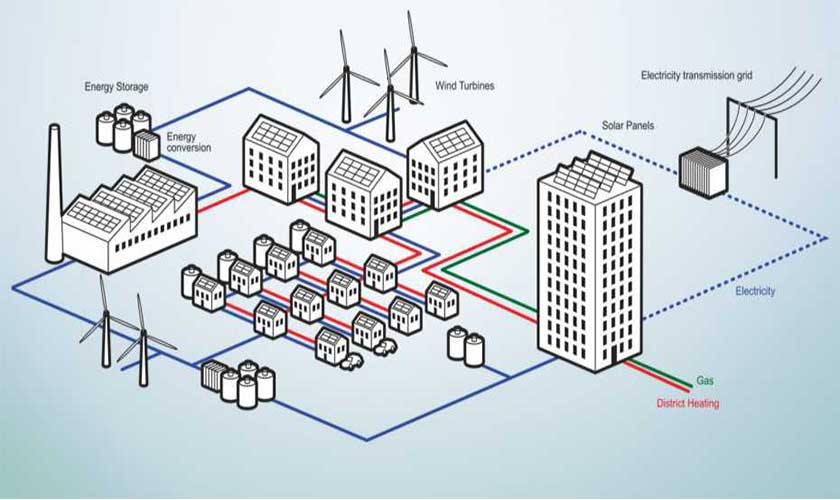
The path ahead lies in aligning the power system with the realities of an increasingly decentralised energy future. The core objective is to build a hybrid system in which centralised generation and distributed energy operate in coordinated balance rather than competition. This requires an integrated reform agenda grounded in grid modernisation, tariff restructuring, enabling new market actors and development of flexibility markets, deployment of storage, digital system oversight, modernising distribution models and performance-based regulation.
The objective is not to slow the growth of distributed energy, but to ensure its effective integration into a financially viable and operationally resilient power system. Pakistan’s energy future is not a binary choice between centralised and distributed models; it is inherently hybrid, and its success will depend on how effectively this transition is governed and managed.
Shafqat Hussain Memon is an academic and energy researcher based in Jamshoro.He can be reached at hussainshafqat.memon @gmail.com
Toqueer Ahmed Jumani is an assistant professor in electrical engineering at A’Sharqiyah University, Ibra, Oman.