Print Story
X




| W |
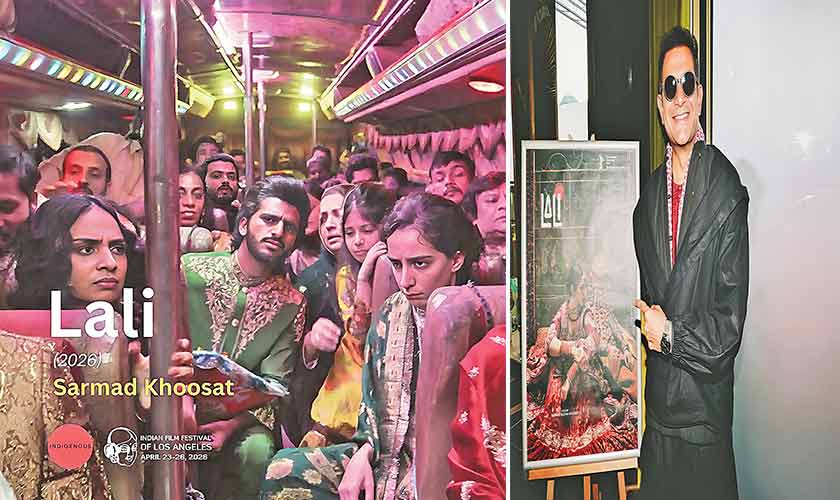
hile Asim Abbasi’s leap into BBC television is a huge breakthrough, Sarmad Sultan Khoosat’s work with Lali represents something equally powerful: the steady rise of Pakistani films in the world’s most prestigious film festivals.
Earlier this year, Lali made history as the first fully Pakistani production to premiere at the Berlin International Film Festival, a massive moment that put the film right at the centre of cinema’s most influential institutional spaces. Since Berlin, the movie’s journey has only grown, travelling to North America for a screening at the Indian Film Festival of Los Angeles (IFFLA) and sharing its story with a completely new audience.
Co-written with Sundus Hashmi and starring Mamya Shajaffar and Channan Hanif, the Punjabi-language film has already drawn attention for its eerie mix of folklore, superstition and psychological unease. It is darkly funny and beautifully shot, taking a sharp look at marriage, societal expectations and the masks people wear. That kind of unpredictable tone has become Sarmad’s signature style as a filmmaker.
What makes this film so powerful is that it refuses to water itself down just to be easier to watch. It demands that audiences meet it on its own terms and sit with the discomfort one feels, much like films such as Joyland, In Flames and Wakhri. These are movies deeply rooted in local Pakistani anxieties, strict social rules and everyday cultural contradictions. Yet they connect with global audiences precisely because they don’t try to change themselves into something universally safe or predictable.
Sarmad’s growing influence on the industry shows in other ways too. His recent appointment to the grand jury for the Rung Film Fest 2026 places him among the leading regional voices who are actively shaping the conversation around contemporary South Asian cinema.
His earlier films, Kamli with a women-centric cast and Zindagi Tamasha, which is set around a family under suspicion over societal norms, further established his reputation as a strong storyteller with something to say.
When you look at all of these milestones together, you can see Pakistani filmmakers are no longer appearing as exceptions on the international festival circuit. They are becoming a core part of an evolving global cinematic conversation.