Print Story
X




From couture illusion to conversations about representation, this year’s Met Gala turned the red carpet into something between a fashion performance and a full-blown cultural argument.
| T |
he Met Gala is back, and this year felt like a high-stakes cultural debate. On May 4, the steps of the Met were taken over by a brief that demanded more than just “looking pretty.” The theme, Fashion Is Art inspired by the Costume Institute’s ‘Costume Art’ exhibition, challenged everyone to treat their clothes as a statement, a sculpture or even a provocation. Some stars absolutely nailed the assignment. Others just showed up in a nice dress and called it a day. But a few looks sparked conversations that continued long after the carpet was rolled up.
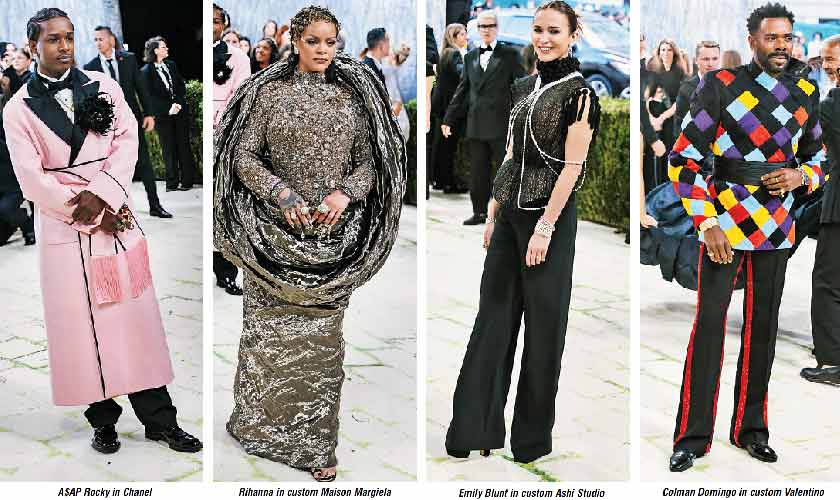
Rihanna, in custom Maison Margiela, reminded us all why this is basically her house. The look was dramatic without being messy and she had this “I’ve never been underdressed in my life” energy. A$AP Rocky kept it cool in Chanel, wearing sharp tailoring with that effortless “I just threw this on” vibe that most people can only dream of. Together, they made a striking pair.
Emily Blunt went full theatre in Ashi Studio, but the real star was the jewellery. She was draped in a Mikimoto pearl necklace across her shoulders and arms, worth nearly half a million dollars. With thousands of Akoya pearls, a massive 21.85 carat morganite and nearly 46 carats of diamonds, it looked like a second outfit made of light. It was, in the most literal sense, wearable art.
Colman Domingo, one of Hollywood’s most electrifying actors with a penchant for eclectic dressing, wore custom Valentino and it was a masterclass in how to be theatrical without being ridiculous. Elegant, colourful and genuinely exciting without looking like he was trying too hard. Cara Delevingne in a Ralph Lauren ensemble offered a polished, modern aesthetic, while Nicole Kidman showcased old Hollywood glamour in Chanel. Anna Wintour maintained her signature authoritative style in an embroidered Chanel couture gown.
The night’s wildest swing, however, came from Bad Bunny. He arrived in custom Zara, which alone would have been enough to get people talking, but the real story was the prosthetic makeup that had aged him by about forty years. Wrinkles, age spots and altered bone structure: the full transformation. It was a weird, committed take on fashion and mortality. Whether you loved it or hated it, you couldn’t look away, which I guess was exactly the point. The fact that he paired it with a high-street label rather than a couture house only sharpened the artistic point he seemed to be making.
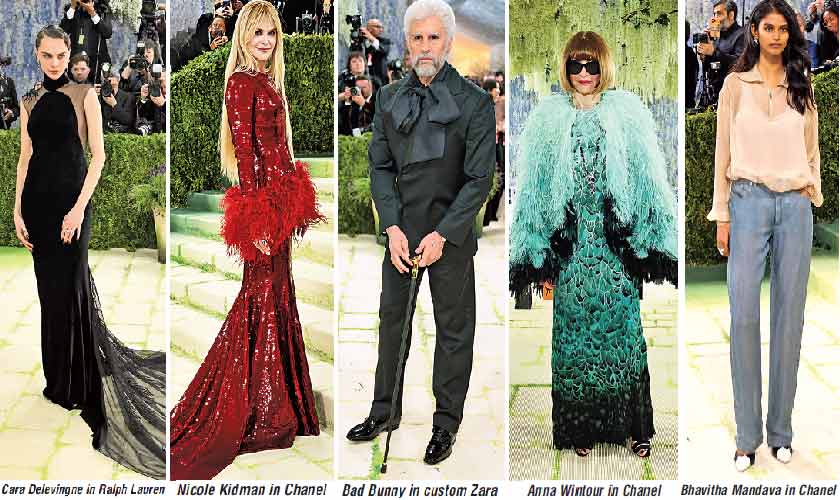
The most talked-about moment belonged to Bhavitha Mandava, the first Indian ambassador for Chanel. At first glance, she looked like she’d wandered onto the carpet in a zip-up hoodie and jeans. Social media reacted quickly and not kindly, with critics questioning why Chanel’s first Indian ambassador had been styled in “laundry day” chic while other ambassadors and attendees were given grander, more obviously spectacular moments. The twist came when the details emerged. The jeans were not jeans. They were silk muslin trousers, hand-painted and constructed over hundreds of hours using trompe l’oeil techniques designed to look like faded denim. Chanel explained that the look was a tribute to the outfit she was wearing when she was discovered in a New York subway back in 2024. The “ordinary” outfit was the point. The illusion was the art. The debate didn’t end there, though. It turned into a bigger conversation about who gets to make a grand entrance, who gets assigned the “quiet” story and whether there is a double standard for South Asian women in fashion. Mandava herself stayed measured throughout. She later said the look was deeply personal, a way of honouring the story of how she came to be here at all.
At the end of the day, the theme was Fashion Is Art and the mission was accomplished. Art isn’t just supposed to be pretty, it’s supposed to lead to intelligent discourse with multiple views that differ from your own. By that measure, this year’s gala did exactly what it set out to do.