Print Story
X




Unchecked urbanisation is accelerating Pakistan’s climate crisis
| O |
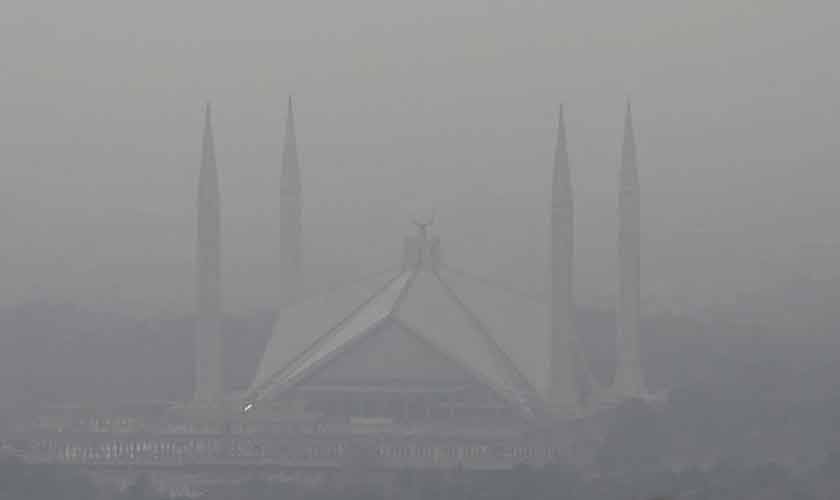
nce celebrated as Pakistan’s serene capital nestled against the Margalla Hills, Islamabad is rapidly losing its natural environment with expanding housing schemes, unchecked urbanisation and shrinking green spaces altering the city’s climate.
In recent years, parts of Margalla foothills have been increasingly converted into residential sectors and commercial housing projects, raising concerns among residents and environmental experts who say the city is becoming hotter, more polluted and increasingly vulnerable to climate related disasters.
This trend is not limited to Islamabad alone.
Across Pakistan’s major urban centres including Karachi, Lahore, Faisalabad and Multan, agricultural farms and green belts are rapidly giving way to concrete structures and expanding neighbourhoods, significantly affecting local climates and ecological balance.
“This is not the city that we used to live in, enjoying its green and pleasant environment,” says Ahmad Saleem, a resident of Islamabad. “Increasing urbanisation, amid population mismanagement and limited development, in rural areas has landed the city in a mess. It is adding to climate change, urban flooding and erosion of greenery.”
Residents blame the city administrations for poor planning, weak enforcement of land use laws and failure to protect green spaces despite repeated warnings from experts.
A comparison of Pakistan’s major cities with their condition two decades ago shows how rapid and largely unplanned urbanisation has transformed urban environments. Experts say cities are not only becoming warmer, they are also witnessing alarming reduction in vegetation cover.
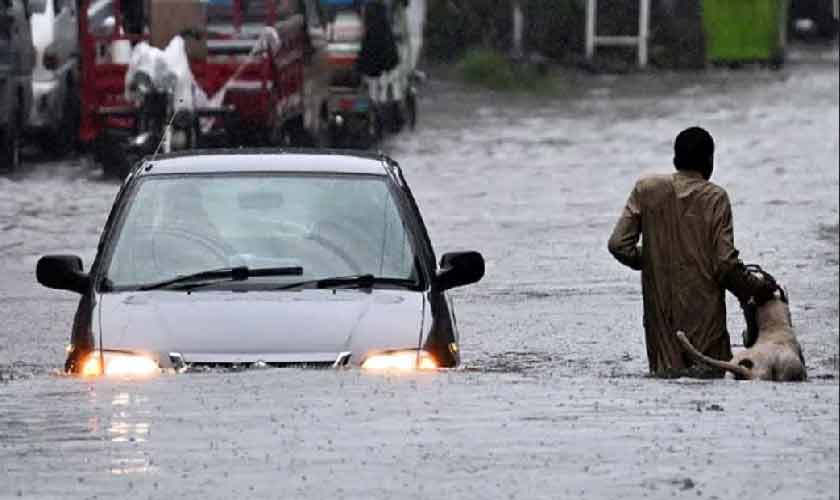
A recent study by the International Growth Centre warned that Pakistan’s cities are facing escalating climate-change threats ranging from extreme heatwaves to urban flooding, posing risks to economic stability and public health. The study stressed that targeted climate adaptation measures, green infrastructure and data driven planning were urgently needed to build resilient urban centres.
The study also highlighted worsening air pollution in Pakistani cities, describing it as a major health and economic crisis. According to the findings, poor air quality contributes to over 200,000 deaths annually and costs Pakistan up to 6.5 percent of its GDP due to healthcare expenses and productivity losses.
For many residents living in urban centres, rapid urbanisation has become deeply concerning. It is closely linked to population pressure, environmental degradation and intensifying climate change impacts.
According to Pakistan Bureau of Statistics, nearly 40 percent of the country’s population now lives in urban areas. Projections suggest that this figure could rise to 59 percent by 2050, further intensifying pressure on already overstretched cities.
Citizens are urging governments to adopt comprehensive urban development policies that incorporate environmental sustainability and climate adaptation strategies.
“If housing societies and urbanisation are considered necessary, there must be laws making it mandatory for these societies to plant a large number of trees,” says Saira Ali, a university student in Lahore. “Authorities can link issuance of no objection certificates for housing societies with plantation requirements.” She also stresses the need for strict land use regulations to preserve green areas and agricultural land while promoting green infrastructure.
Environmental experts believe that urban development is closely related to economic growth and ecological sustainability, making cities major battlegrounds in the fight against climate change.
“Islamabad was planned as a green and breathable capital. Over the last 10-15 years, we have allowed it to move closer to the pattern visible in other Pakistani cities: more concrete, more vehicles, more construction dust, more commercial pressure and fewer natural buffers,” says Dr Abid Qaiyum Suleri, the Sustainable Development Policy Institute executive director.
Dr Suleri, a resident of Islamabad himself, says trees, green belts, natural streams and the Margalla ecosystem were not merely decorative but part of essential public health infrastructure that helped keep the city cool, absorb pollutants, reduce flooding and improve quality of life.
“The city has not entirely lost its green identity but that identity has been weakened,” he adds.
“Once natural infrastructure is replaced by asphalt, plazas, housing schemes and parking lots, the cost appears in hotter streets, poorer air quality, more respiratory stress, more cardiac risk and rising pressure on families and hospitals.”
He says Islamabad’s worsening environmental situation should not be viewed through the lens of global climate change alone; local planning failures, he says, have significantly contributed to the crisis. According to him, road expansion, unchecked construction, waste burning, diesel emissions, tree cutting and weak enforcement mechanisms are amplifying the effects of global warming on ordinary citizens.
“Older residents of Islamabad remember cooler evenings, cleaner air, clearer views of the Margallas and more shaded roads,” he says. “Today, many sectors face heavier traffic, higher temperatures, dust from construction sites, pressure on green belts and rapid expansion into areas that were never meant to carry the density.”
He notes that children suffering from asthma, elderly people with heart and lung diseases, outdoor workers, traffic police officials and schoolchildren are among those most affected by worsening environmental conditions.
“Pakistani authorities appear to treat trees as beautification. That is a serious mistake,” Dr Suleri says. “In a warming country, a mature tree is a heat shield, an air filter and a water management asset. A plantation drive cannot compensate for the careless removal of mature trees. We need tree protection, not only tree plantation.”
While Lahore faces a severe smog crisis every year, he says, Islamabad still has time before environmental degradation becomes irreversible.
The International Growth Centre study also recommends the use of data-driven planning, Geographic Information Systems and real time monitoring systems to help authorities predict risks, improve urban planning and strengthen disaster management capacities.
Nature based solutions including urban forests, green roofs and restoration of wetlands are increasingly being viewed as effective and cost-efficient strategies for reducing urban heat, managing storm water and improving air quality.
“The solution is not to stop development. The solution is to discipline development,” Dr Suleri says. He calls for a public tree census; legal protection of mature trees; strict control of dust and emissions; preservation of green belts; and climate sensitive urban zoning.
“Without this,” he warns, “we will keep paying for poor planning through hospital bills, lost productivity and declining quality of life.”
The writer is a staff reporter. He can be reached at [email protected]. His X handle: @waqargillani.