Print Story
X




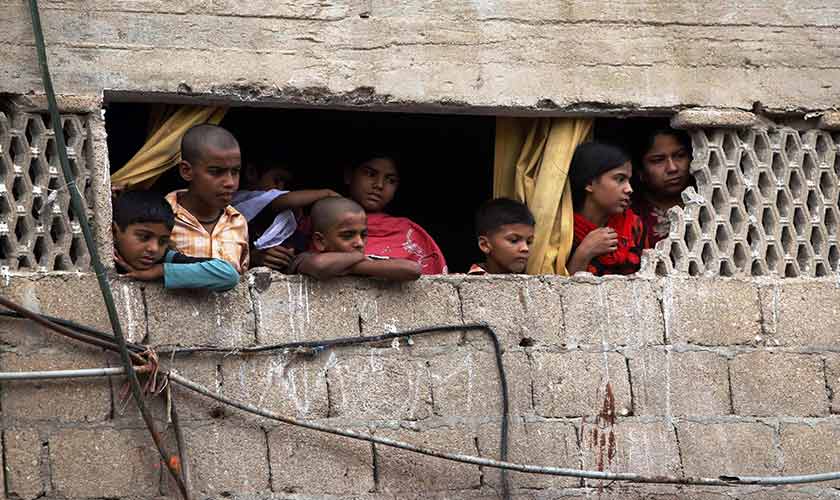
Housing is one of the most essential components of urban life. For many, it remains a distant dream
| A |
fter food and clothing, shelter and housing are the most important human needs. For the poor, especially those living in Pakistan’s big cities, access to housing involves difficult choices. It may be noted that urban poverty has risen sharply during the recent years. A study by the Social Policy Development Centre found that urban poverty in 2024-2025 stood at 42.1 percent. With the impacts of war in the Persian Gulf and the exponential rise in fuel prices, the urban poor have been the worst hit.
Disappointingly, the overall response of the state apparatus to enable the urban poor to live a decent life has been minimal.
Housing, one of the most essential components of urban life, remains a distant amenity. After the 18th Amendment, the provision of housing is a provincial subject. For accessing housing, land is the foremost pre-requisite. There are neither specific provincial policies providing for the poor to facilitate land supply for urban housing nor a mechanism to appraise and upgrade the informal abodes they tend to live in.
Our cities have seen many ruthless evictions from informal settlements without the provision of alternate housing or a rehabilitation plan to support the affected. The recent evictions from Rimsha Colony in Islamabad are one such episode. The displaced residents say this settlement came into existence when, fourteen years ago, they were allowed to develop a settlement at the location. Residents of many other informal settlements housing the city’s poorest citizens fear a similar fate.
The urban poor have fewer options by definition than the privileged.
In the recent past, evictions have also taken place from several locations in Karachi. Abodes existing along river banks, nullahs (natural drains) and expanded corridors of movement were systematically marked and demolished. Hundreds of households along Karachi Circular Railways corridor and Gujjar Nullah were declared ‘illegal.’
Official quarters have not addressed the issue of legitimate right of the affected people to a decent shelter. It is most disappointing to note that the Judiciary and Executive appear keen to provide a way out when land is illegally occupied by the affluent. A project consisting of plush apartments in the heart of Islamabad still stands because the country’s elite have stakes in that enterprise. The palatial residence of a former prime minister was similarly ‘regularised’ after paying paltry charges in 2020. No such relief is extended to the downtrodden.
While allocation of land for housing the urban poor is a non-existent option, land is routinely made available to ‘connected’ realtors to dispose of for profit.
Many years ago, a real estate enterprise acquired thousands of acres along the M-9 Motorway in suburban Karachi. Land sales were undertaken on commercial (profit-making) basis, despite the fact that very low prices were paid to the provincial government. In another instance, along the same corridor, farming communities were ruthlessly dispossessed during planning and development of a private real estate venture.
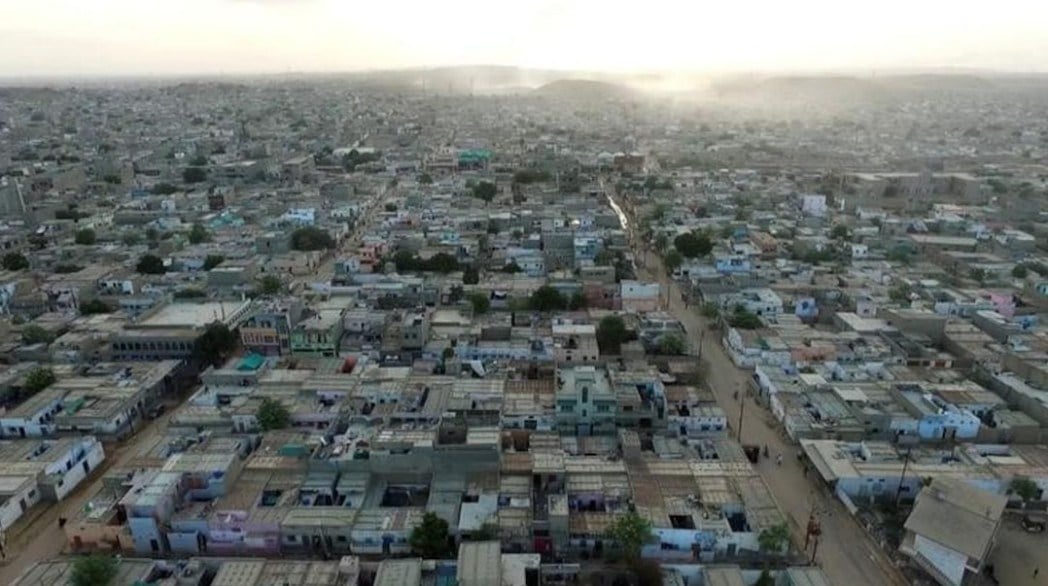
Our cities have seen many ruthless evictions from informal settlements without the provision of alternate housing or a rehabilitation plan to support the affected.
The current patterns of land supply have created a visible disparity between the privileged and non-privileged classes. Land was procured, developed and sold under priorities and conditions laid down by the public sector agencies in liaison with powerful interest groups. These groups attempted to maximise their respective profits by influencing the decision-making in their own favour. The unprivileged were left to fend for themselves in informal locations as per the availability of land.
Many negative repercussions have developed in the course. The high-income groups reside in the inner city ring of Karachi, within a ten kilometres radius. Larger squatter settlements and low-income localities are far away. This forces the poor to commute long distances to their places of work in dilapidated transport systems. They require policy support from those at the helm of the affairs.
Technical assessment of informally developed high rise structures can be done across all katchi abaadis. These structures can be categorised for possibilities of retrofitting, rehabilitation, demolitions and re-development. If a comprehensive katchi abaadi regularisation and rehabilitation programme is developed in a poor friendly manner, there will be millions of beneficiaries.
More than half of Karachi’s population resides in poorly planned settlements. Other large cities in the country are also experiencing similar challenges. All these can be addressed by adopting a poor friendly approach to land use planning and settlement regularisation.
Parks, playgrounds and open spaces are frequent casualties in our urban development. The urban poor and working classes suffer the most in the absence of public parks, playgrounds and open spaces as these amenities are the only option of daily respite from a tough day’s work. Women and children benefit from such spaces where they exist close by and are accessible.
Dense squatter settlements often lack parks. Where they exist, they are likely to be ill kept. Similarly, passive green belts are conveniently destroyed when a new corridor of mobility is built. Green cover in cities can only be ensured through strict protection of trees and green belts. The impacts of heatwaves—the new norm in our cities—can only be mitigated once we have at least ten percent of total urban land allocated and maintained as tree cover.
There are many tried and tested techniques for restoring passive green belts. Urban forests must be planted on a wider scale. Micro environments truly benefit with the insertion of intense green spaces in very small urban patches. In addition, natural public locations—beaches, river banks, peri urban forests and natural parks—must be protected as per prescribed guidelines.
The writer is an academic and researcher based in Karachi.