Print Story
X

| A |
s Humnava’s first season continues after ‘Hairan Amanam’ and ‘Noor-e-Nazar’, ‘Qataghani’ arrives as its most rhythm-driven release so far. More of an atmospheric experience than a traditional single, the track reinforces the platform’s ambition to bridge cultural gaps and build a cross-cultural sonic landscape.
Co-founded by Zulfiqar Jabbar Khan (Xulfi) and Muhammad Ibrahim, Humnava brings together artists from different regions to collaborate and co-create, with ‘Qataghani’ fitting naturally into that vision rather than just a standalone drop.
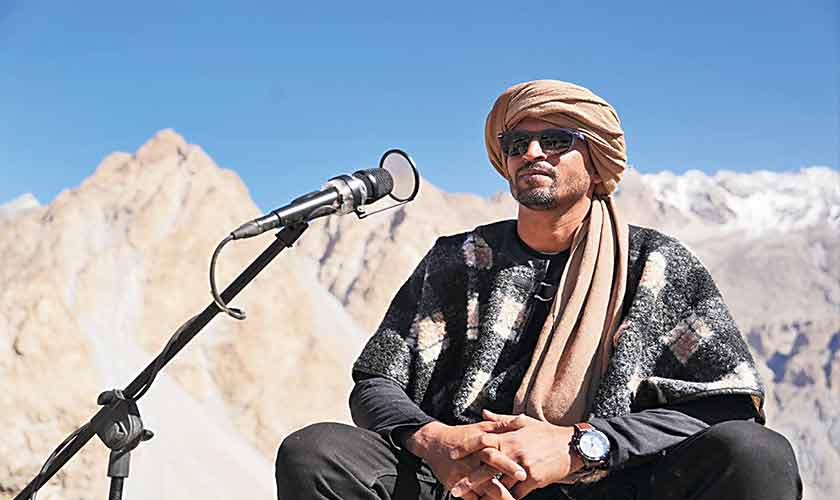
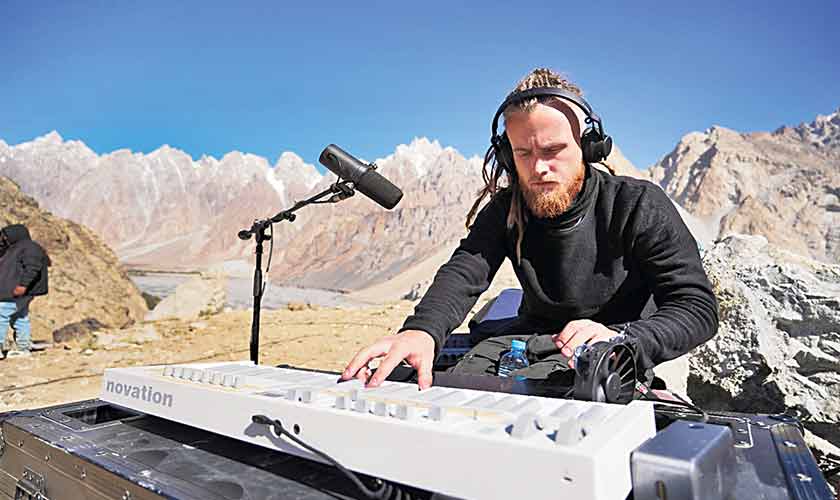
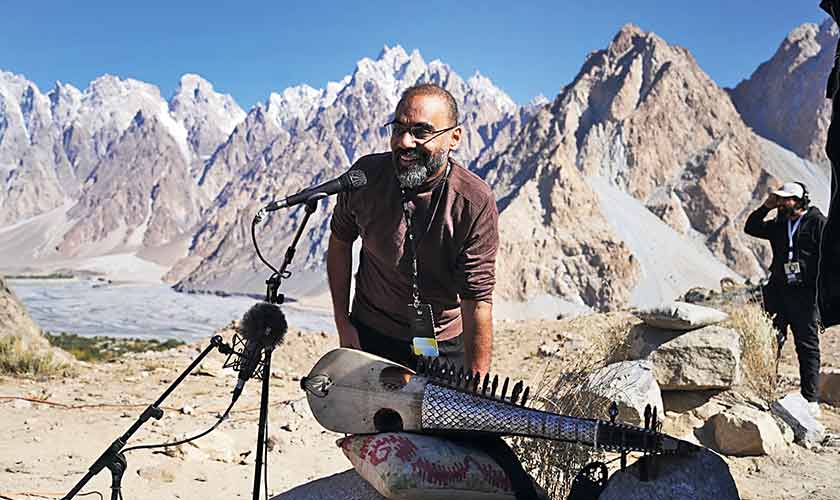
The song avoids melodic con-vention for a rhythm-first approach, using sonic texture to build a tangible, physical energy. By recording at the Passu Cones in Hunza, the production team effectively turned the landscape into an instrument, capturing a sense of openness that studio walls simply cannot replicate. With Xulfi at the mixing desk and Mike Hinton handling mastering in London, the final song achieves a rare balance: it is expansive and raw, yet possesses the technical polish required for international appeal.
There is an undeniable visceral quality to ‘Qataghani’, one that Xulfi noted: “‘Qataghani’ has a certain force to it that you don’t really try to control, you surrender to it. It felt physical, instinctive and alive.”
One of the most compelling aspects is the collision of sonic worlds. A rubab quartet from Hunza comes together with Dorian Jonas Goetsh’s electronic sensibility without feeling like a forced experiment. Chants slip into the rhythm, percussion carries both traditional and electronic pulses and the synth bass adds depth without taking over.
Vocally, Bakrin Timlfati’s presence is more tonal than lyrical. The voice functions as part of the composition rather than its centre, echoing Central Asian traditions where vocalisation feels ritualistic.
With contributors from Pakistan, Germany and beyond, the track feels like a genuinely shared effort rather than a spotlight for any one artist.
Ultimately, it is an immersive piece, the kind of track you step into rather than simply play and one that is already drawing attention beyond Pakistan’s borders.
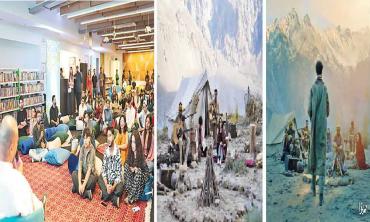
Just recently, Zulfiqar J. Khan (Xulfi) and Sherry Khattak, the project’s co-curators, sat down with Oxford researchers and participants from the fields of music, culture and the humanities for a webinar that went beyond a mere project briefing. The discussion explored the why behind Humnava, the long-term vision and what it means to build something like this in Pakistan right now.
Questions ranged from the role of the creative arts in shaping societies to the promise of creative economies, the building of soft power and the challenges of sustaining a music industry in Pakistan.
What remained in the end, was a shared belief that music brings people closer, opens doors and creates connections that might never have happened otherwise.