Print Story
X




A vivid tragedy ends up being reduced to a cruel statistic
| “I |
know I will be killed, but for the sake of my father’s honour, I am going with my husband and not to a shelter home.”
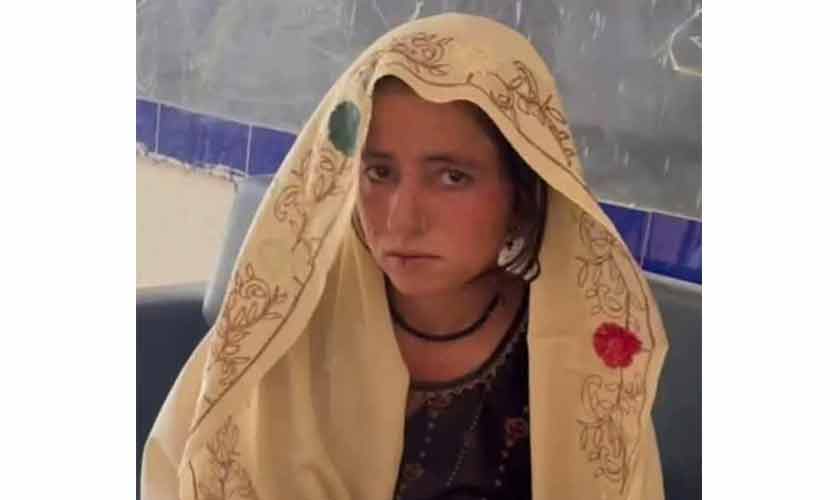
This was the last recorded statement of 24-year-old Gulan Bharo — a mother of two boys, who would soon become yet another victim of the so-called honour killing in Sindh.
Gulan, a resident of Shahbux Bharo village near Rohri in Sukkur district, had already survived an attempt on her life by her husband, Sikiladho Bharo. Fearing for her safety, she had sought state protection and recorded her statement before a court on April 24, clearly stating that her husband posed a serious threat to her life.
In that statement, she expressed her wish to remain under the protection of her father, Imdad Bharo, and refused to return to her husband’s house or to live at a shelter home. Authorities later claimed that her father had assured her safety. That assurance proved tragically hollow.
A video recorded at Jhangro police station showed Gulan with visible marks of violence on her face, hands and legs, evidence of the abuse she had endured. In another video, her voice trembled with fear but remained firm in resolve.
“I have escaped from the claws of death. My husband wants to kill me. I have been living away from him for two years and do not want to return. I crossed the Indus River, faced hardships and dangers. I walked through thorns. I only want protection and custody of my sons.”
Despite the warnings, when she was produced before a court, her father and uncle filed an application stating that she wished to go home with them. On her father’s request, she agreed. Soon afterwards, she was allegedly handed over to the very man she feared. She was then taken to a deserted area and shot dead.
Her body was recovered on Sunday and taken to Rohri Taluka Hospital the following day. Police have since taken her husband into custody and an FIR has been registered at Jhangro police station. For many, this feels less like justice and more like a familiar tragedy.
Honour killings continue to claim lives across Sindh with alarming regularity. In 2026 alone, more than 30 women have been reported killed. While arrests are often made, many perpetrators eventually find relief through informal jirgas. Every killer pays a certain amount to the victim’s family and avoids the legal punishment. The jirga system is still active in Sindh despite a court verdict against jirgas. Many owners of large landholdings refuse to accept court orders.
“This is our custom. I killed my wife without a regret. She deserved such a death. I have gained more respect,” says Sikiladho, Gulan’s husband.
“Atrocities against women in Sindh are signs of a larger social issue, not isolated crimes motivated by individual psychology. These behaviours are a reflection of long-standing disparities in gender roles, power and the legal system.”
Gulan’s story is not an isolated tragedy. Just weeks earlier, Rubina Chandio from Khairpur was killed in the name of honour —by her own uncle.
These incidents raise urgent questions: how many more women must die despite seeking protection? How many warnings must be ignored before the system responds effectively?
Gulan Bharo had asked for protection. Most of the women who want to marry of their own will, are on the radars of powerful landlords of the area.
“Atrocities against women in Sindh are signs of a larger social issue, not isolated crimes motivated by individual psychology. These behaviours are a reflection of long-standing disparities in gender roles, power and the legal system. Brutality starts to lose its shock value and instead gets normalised—quietly tolerated, if not outright accepted—when violence against women happens regularly and state institutions are unable to respond adequately. In such an environment, silence replaces outrage,” says Dr Ghazala Panhwar, a sociology professor at the University of Sindh, Jamshoro.
The primary goal of the criminal justice system is to deter future crimes by instilling fear. Here many women are compelled to forgo their rights, not express their opinions and become less visible in order to survive. Their lives are always at risk. This is about systemic failure, not just criminal activity. When justice is postponed or denied, violence gets ingrained in social behaviour. Law enforcement and the justice system must take decisive action to break the cycle of violence and save innocent lives, Dr Ghazala says.
The legal protection against ‘honour’ crimes is quite strong. After recent amendment, the criminal code affords no protection to the killer. However, the law is not acted upon in its letter and spirit. Honour killing is now an offence against the state, not merely a personal dispute. It carries mandatory life imprisonment and death sentences. There is no mandatory pardon so that even if the legal heirs of the victim pardon the killer, the court must still punish the culprits with mandatory imprisonment for life under Section 311 of the PPC. Following the High Court of Sindh’s observations, police in Sindh have been directed to name the station house officer as the complainant in FIRs to ensure that the state prosecutes the case, thereby preventing closure under family pressure.
Gulan Bharo is not the first woman killed in the name of honour. If the judicial system does not take this issue seriously, more women will be killed by their husbands and blood relatives. Their voice should be heard. They should be protected from the parallel system that continues to kill them.
Akhtar Hafeez, short story writer, blogger and journalist, is a lecturer at the Government College, Hyderabad. Can be reached at akhterhafez@gmail.com.