Print Story
X




No reform at higher levels can yield meaningful or lasting impact without strengthening the primary education system
| P |
akistan stands at a defining crossroads in its educational journey. After successive governments have made visible progress in expanding school enrollment, the country faces an alarming challenge—learning poverty. This condition, where children attend school but fail to acquire basic literacy and numeracy, is not merely an educational concern; it is a national emergency with profound implications for economic growth, social cohesion and long-term development.
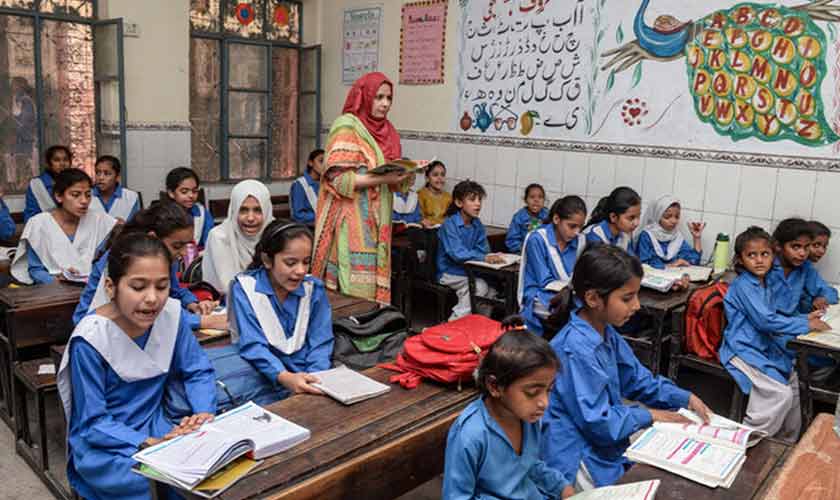
Pakistan’s education system is vast. There are more than 170,000 primary schools and nearly 50,000 secondary institutions. Primary school enrollment has reached approximately 94 per cent. At first glance, the figure appears encouraging. However, the progress masks a troubling reality: more than 58 per cent of Grade 5 students are unable to read a Grade 2-level text. Findings from national assessments, including ASER surveys, show that this learning gap has persisted over time, particularly in rural and underserved areas.
In the global context, the situation is even more concerning. The World Bank estimates that about 57 per cent of children in low- and middle-income countries suffer from learning poverty. Pakistan’s rate exceeds 75 per cent. At the same time, between 22 and 26 million children remain out of school—the second-highest number worldwide. This dual burden—children out of school and those in school but not learning—reflects a systemic failure that threatens the foundation of national progress.
At the heart of this crisis are structural weaknesses in how education is delivered. Public schools largely rely on rote learning, prioritising memorisation over comprehension. Classrooms tend to be teacher-centered, with limited student engagement and minimal use of modern teaching tools. Curricula are often overloaded and disconnected from real-life applications. Assessment systems reward recall rather than understanding. As a result, students are ill-prepared for higher education or the demands of a modern economy.
Teacher capacity is another critical issue. Recruitment processes are often inconsistent, professional development opportunities limited and accountability mechanisms weak. Many teachers are overburdened and lack access to modern pedagogical training. Governance challenges—such as administrative inefficiencies and resource misallocation—further compound these problems. Pakistan has also been slow to integrate digital technologies into education, especially in rural areas where access remains uneven.
This situation contrasts sharply with the experience of countries like Singapore, South Korea, China and Japan. These nations, once facing similar challenges, have made sustained investments in foundational learning. Singapore reformed its curriculum to emphasise conceptual understanding and critical thinking, supported by rigorous teacher training. South Korea elevated the status of teachers while ensuring strong accountability. China expanded digital learning ecosystems, integrating advanced technologies into classrooms. Japan promoted holistic education that combines academic rigor with character development and collaboration. Education systems in the United States and the United Kingdom have increasingly adopted inquiry-based learning, continuous assessment and personalised instruction supported by technology.
In Pakistan, the constitution recognises education as a fundamental right (Article 25-A), yet persistent gaps in both access and quality highlight serious shortcomings in implementation. The learning poverty crisis is not just a policy failure—it reflects a lack of sustained national prioritisation.
It is important to recognise that all major global powers and advanced economies of the world invest heavily and strategically in education. Their economic strength, technological leadership and institutional stability are directly rooted in sustained investment in human capital. No nation has achieved enduring prosperity without prioritising education at every level.
The government must make education the highest national priority, with a particular and exclusive focus on primary education as the foundation of the entire system. Leading nations of the world have consistently demonstrated that sustainable development begins with strong early-grade learning outcomes. Countries that dominate the global economy today invested first and foremost in universal, high-quality primary education before expanding higher and technical education. Pakistan must adopt the same strategic vision, ensuring that every child acquires foundational literacy and numeracy as a non-negotiable national priority. No reform at higher levels can yield meaningful or lasting impact without strengthening primary education,
For Pakistan, the stakes are high. As a country facing persistent threats of extremism, terrorism and emerging forms of digital and informational disruption, national security is no longer defined only by military strength. True sovereignty in the 21st Century depends upon an educated, aware and resilient population. Without investing in the intellectual development of its children, even a strong defence capability cannot ensure long-term stability.
Education, therefore, is not merely a development goal; it is a question of civilisational survival. It is a safeguard against extremism, a barrier against social fragmentation and the most powerful instrument for national cohesion and progress.
Addressing this crisis requires a comprehensive reform strategy. First, curriculum reform must prioritise foundational literacy and numeracy in early grades, ensuring content is simple, relevant and application-oriented. Second, teacher recruitment and development must be on merit, with continuous professional training and performance-based incentives. Third, digital transformation must become central to educational planning, ensuring equitable access to modern learning tools. Fourth, assessment systems must shift toward competency-based and formative evaluation models that measure understanding rather than memorisation. Finally, governance reforms must ensure accountability, transparency and active community participation.
The stakes are extraordinarily high. Learning poverty is not just an educational deficit—it is a threat to national survival and progress. A country that fails to educate its children cannot compete in the global knowledge economy, sustain economic growth or preserve internal stability.
With bold reforms, sustained investment and national consensus, Pakistan can transform its education system into a foundation of strength, resilience and prosperity.
The time to act is now.
The writer is a former chairman of the Department of Entomology at University of Agriculture, Faisalabad.