Print Story
X




Supporting local economy requires innovative solutions
| T |
harparkar, a fertile desert, has an untapped economic resource: camels. Indigenous Thari camel breeds are known for remarkable resilience and adaptability to extreme heat, scarce water and poor grazing.
Thar’s camels are not traditional livestock; they are biological assets uniquely suited to arid climates. Their capacity to thrive where cows and buffalo struggle makes them invaluable in hot and dry climates.
Camels from Thar are already known to attract buyers from across Pakistan. Demand for resilient camel breeds, including Thari and Laari, remains strong. These animals attract buyers even from outside Sindh.
Pastoral communities in Tharparkar have perfected camel husbandry through centuries of desert living. From seasonal grazing patterns to ethno-veterinary care passed down through generations, this local knowledge is priceless. These practices support sustainable herd management without the use of GPS. Desert people can trace camels simply by observing their footprints. They also maintain strong maternal care practices during droughts and use feeding regimes that maximise natural forage resources. Such expertise can form the backbone of comprehensive modern breeding programmes that are culturally sensitive and integrate the latest technologies.
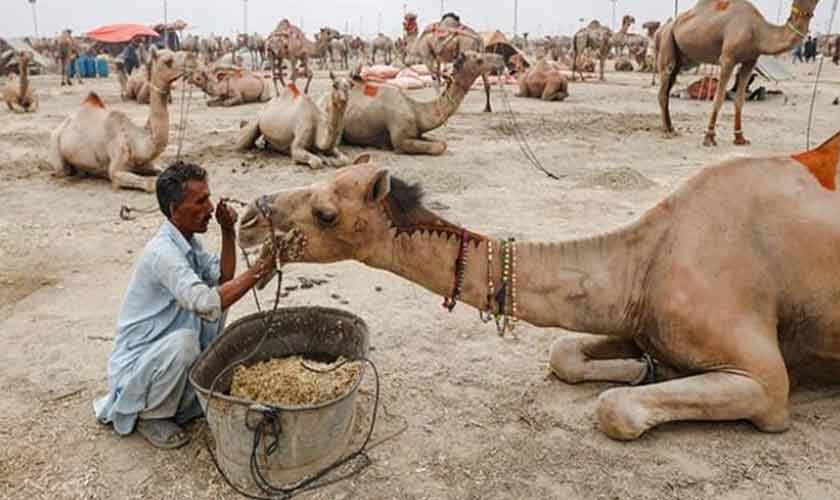
At community fairs and camel markets in Sindh’s desert towns, camels are assessed for strength, endurance, milk yield and disease resistance. These evaluations, though informal, reflect a deep understanding of genetic and performance traits.
Cross-breeding is a missing strategy in Thar. People rarely consider cross-breeding, artificial insemination or other genetic improvement strategies.
Camel breeding today is no longer limited to traditional selection. In some parts of the world, particularly Turkey and Kazakhstan, hybrid camels have been developed to combine resilience with enhanced milk and wool production. Such cross-breeding has produced animals with substantially higher milk yields and improved wool production. Some of the hybrid camels in these programmes have shown up to 69 percent higher milk production and nearly double the wool output compared to conventional breeds.
For Tharparkar, similar opportunities can be created through breeding programes supported by international collaboration. The corporate sector can establish business hubs in Thar that merge desert-hardened Thari genetics with elite dairy- and meat-oriented camel breeds. This approach can support the local economy while generating high margins through the export of camel-based products and livestock resources.
Tharparkar needs to connect with modern practices in artificial insemination and genetics. This can support Thar in building a stronger local economy and achieving its development goals. AI allows controlled, high-quality genetic material to be introduced into local herds without the need for expensive animal transportation. With proper veterinary training, semen banks and clear genetic selection criteria, elite camel lines from other countries — especially those excelling in dairy or racing traits — can be effectively integrated into Thar herds.
Combined with mobile veterinary services and remote health monitoring, potentially backed by international expertise, AI can dramatically accelerate genetic improvement without losing local adaptation. This is precisely the approach used in advanced livestock sectors to boost productivity while addressing climate challenges.
Many Thari families today keep camels, mainly as a symbol of wealth and social status. When household expenses arise, they sell two or three camels from the herd and manage their yearly needs through that income. After natural breeding, the herd size gets restored.
There has been limited focus on developing camel breeds for milk production, cross-breeding for improved productivity or utilising products developed from camel wool and skin. These potential income streams remain largely untapped.
Tharparkar needs to focus more on increasing milk production, improving meat output and developing value-added products with global demand to create opportunities in international markets that can directly support the local economy of Thar.
Camel products are increasingly recognised worldwide for their unique nutritional and health benefits. Camel milk, for instance, contains higher levels of Vitamin C and iron than cow milk and is gaining recognition as a “superfood” in health-conscious markets.
In Europe and the Middle East, camel milk is being processed into powdered milk, cheese and specialty products. This trend presents a strong export opportunity. With the right infrastructure, quality control systems and processing facilities, Thar can process and export camel milk to international buyers seeking organic dairy alternatives.
Camel meat is prized in many cultures and commands premium prices in festive and specialty markets. With proper cold-chain infrastructure and quality control systems, frozen camel meat could be exported to demand hubs in the Gulf and beyond.
Like Thar, camels are an important part of life and culture in several Arab countries. They are not only economically valuable but also hold strong cultural and traditional importance. In Dubai and Abu Dhabi, camels are also reared for racing events and tourism activities.
While most Gulf countries raise their own camels, there is still strong demand for dromedary camels, especially those suitable for racing, breeding and milk production.
This demand, if tapped through formal export channels and local partnerships, can boost Tharparkar’s economy —like the export of livestock from Australia, which has created new revenue streams for Australian producers in the past.
The time is ripe for foreign companies to invest in Thar and create opportunities for global collaboration. Tharparkar first needs strong sensitisation and awareness regarding the true potential of camel farming. People must understand that camel rearing is not just a traditional practice but also a modern business opportunity.
The district needs to establish camel breeding and training centres in key hubs. Investment in camel breeding farms and artificial insemination laboratories in Tharparkar can create employment opportunities for local youth. These facilities can be co-managed with international partners.
Training programmes in animal health, feed management and genetics cam help build the capacity of local people and empower a new generation of skilled livestock specialists in Thar.
Sindh currently lacks sufficient milk pasteurisation plants, meat processing units and cold storage hubs. Establishing such facilities will significantly transform the value chain. These systems will help store milk at the local level, reduce waste and maintain quality standards.
With proper processing and storage infrastructure, Thar and other districts of Sindh could access export markets that offer higher prices while ensuring food safety and compliance with international standards.
Thar can also adopt cooperative export models. Halal-certified camel product cooperatives could help local farmers pool resources and negotiate better prices. Such models have proven effective in other livestock sectors, enabling small producers to access global markets under a unified brand.
Thar can also explore eco-tourism and cultural exchange. Camels are a strong symbol of desert life. Sustainable tourism experiences — such as camel safaris, cultural festivals and desert culinary tours — can attract international visitors while promoting the heritage of Tharparkar. Income generated from such activities can support local earnings alongside livestock trade.
Partnerships in research and development can also play a key role in supporting Thar. Institutions in countries with advanced camel industries — such as research centres in major camel-producing nations — could partner with Pakistan to carry out joint genetic studies, breed improvement programmes and product innovation initiatives. Such collaborations will directly benefit Thar by providing knowledge, technology and resources that help camel herders improve productivity and income.
Thar needs a strong strategy and innovative ideas for economic uplift and community transformation. Responsible export growth can turn Tharparkar, a remote desert district, into a regional economic hub. Employment opportunities in breeding farms, processing units, veterinary services, export logistics and tourism could reduce rural poverty. Young people — especially women and men from pastoral families — could find meaningful work without having to migrate away from their homes. These practices can be fully managed locally, allowing families to earn income even during off-rain seasons or periods of declared drought.
By promoting international partnerships that respect indigenous knowledge, encourage sustainable breeding practices and support ethical commerce, Tharparkar can achieve both economic prosperity and cultural pride.
With smart strategies, Tharparkar can unlock economic opportunities like never before. Through exports to Gulf markets, joint research and investments in local infrastructure, livelihoods can improve while global ties strengthen. Camel farming in Tharparkar, rooted in tradition yet open to innovation, has the potential to transform the desert into a hub of prosperity.
The writer is based in Umerkot. He has more than 14 years of experience in the development sector. He can be reached at [email protected].