Print Story
X




A conversation with Dr Madeline Clements on why preserving women-led publications matters now
In 2024, a group of women researchers from Karachi and Lahore came together with the Pakistan Association of Women Publishers and Editors to trace women-led publications of Pakistan that had never been formally archived. The main aim was to preserve this material, a record of how women helped shape the literary and social life of Pakistan, and to make it accessible to a wide range of readers and writers.
They found that most of these magazines were preserved entirely through individual effort. It was not always straightforward to get permissions to access those. This raised a larger question: how important is it to preserve this material now and what do future generations stand to lose if it is not?
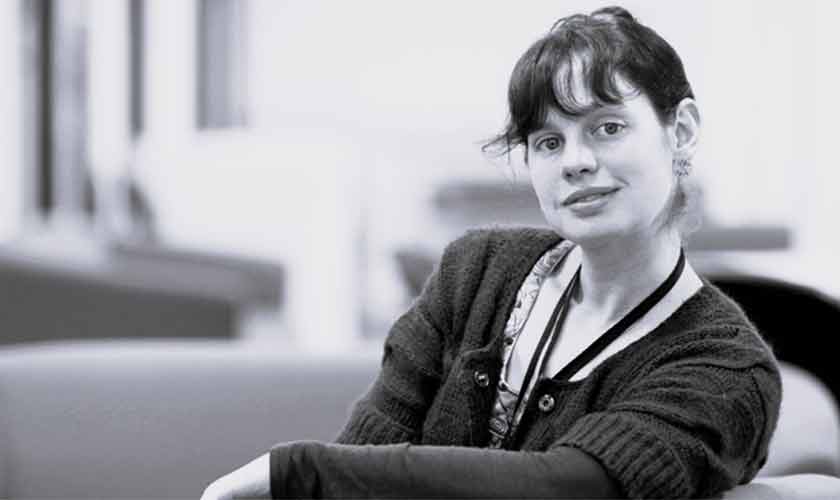
The research was conducted by Tazeen Hussain, Veera Rustomji, Hira Azmat and Mahnoor Jalal under the guidance of Mehvash Amin of The Aleph Review and Niilofur Farrukh of the Karachi Biennale Trust. Dr Madeline Clements, a senior lecturer in English studies at Teesside University, UK, oversaw the project. An account of their experience has now appeared in the Editing Women in the Archives Handbook (2025).
In this interview with The News on Sunday, Dr Madeline Clements talks about why women-led magazines in Pakistan matter; why so many of them were never properly archived; and what that means for the future. Excerpts:
The News on Sunday: Why did it feel necessary to begin this archival work now?
Madeline Clements: The project was largely inspired by research conducted by two young women at the International Islamic University in Islamabad, who wanted to understand why publications, largely literary magazines published by women, didn’t last very long.
Following their report, we decided to bring together women publishers and editors working in literary and art publishing for a workshop at The Last Word Bookshop in 2022 to discuss these challenges. During our discussions, one need became particularly clear: documenting the work women have done, especially in magazines. One of the key aims was to preserve these publications so that future editors and writers would have a history to look back on. Other needs also emerged from the workshop - such as mentoring - but archiving remained one of the important priorities.
TNS: You’ve said that some publications either pulled out at the last moment or didn’t respond. Why was that?
MC: One word that comes up again and again, whether in the handbook or in conversations, is ‘gatekeeping.’ It could have been a reluctance to share material with a project funded externally. There may have been concerns that the material would be digitised and then placed behind a paywall or restricted institutional access. But that isn’t the case. It might be fear of criticism also. Perhaps it was about producing something in the moment and not necessarily anticipating that it would be looked at ten years later. What might that expose that people don’t want exposed? I don’t know.
Where we’ve worked with physical copies, they’ve largely been returned to the people who lent them to us. These materials have now been digitised and made accessible, with the website expected to launch in the coming weeks. The basic idea has always been to make these publications accessible without requiring institutional mediation.
What we have done is that, despite having permissions from the majority of copyright holders of these publications, we have ensured that we have what’s called a takedown policy. So if any writer thinks they weren’t directly approached for permission, or permission was only taken from the owner of the magazine, the individual may have an objection. It’s their right to ask for content to be taken down.
Perhaps once people see how the site works, they’ll understand and appreciate our aims.
TNS: This archive focuses on art and literary publications. Are these materials treated differently from more overtly political publications?
MC: In my context in the UK - and this runs not just across writing on South Asian or post-colonial contexts but more generally - a lot of the academics I work with who study literature have what you’d call a historicist perspective. I’ve got a colleague who works on end-of-the-century fantasy women’s writing. She is always digging through archival databases to look at magazines, publications, political cartoons and so on, reviewing the work of the women writers she studies, to place them in the context of what the conversation was at the time around the kinds of radical ideas these women were producing.
I think this is an increasingly recognised area of importance: looking back at magazines and journals from the mid- to late-Twentieth Century, to better understand the time and context in which literature in book form was being produced, and to grasp that history from a wider cultural perspective.
But contemporary political debates, perhaps inevitably, take centre stage above these more marginal, historical perspectives and conversations, including at literary festivals. Somewhere in the corner, there are panels like ours on editing women in a small room. Then, if you look at book lists, it’s often the latest book, offering an opinion on the direction Pakistan is heading in, that gets foregrounded.
To some extent, this also shapes how the West views Pakistan and the lens through which Pakistani writing is read. There has been, in some quarters, some backlash against Pakistani writing in English, particularly around big-name novelists, because of a perception that it conforms to what the West wants to hear about, whether that’s the War on Terror or similar themes.
By preserving these magazines, we preserve not just cultural history but also social and political history.
So I think that’s all the more reason to give importance to capturing this kind of cultural fabric from earlier decades and to say, look how important this is. I remember early conversations with Mehvash and Niilofur, where we felt that by preserving these magazines, we were preserving not just cultural history but also social and political history.
TNS: How do donors influence what gets preserved and how cultural history is presented in Pakistan?
MC: With donors and funders, there comes a need to respond to their agendas. External funders are often driven by the UN Sustainable Development Goals, which have specific priorities in relation to the kinds of change that need to be effected, particularly around gender equality.
I think, obviously, it’s really important to have projects that support the preservation and continuation of all sorts of rich aspects of culture within Pakistan. Generally, not always, but if it’s done well, it tends to promote understanding and allows for insight into other perspectives.
But I guess it is also about how it’s done. I recently visited the National History Museum, where they were very clear about including the stories of minorities in Pakistan’s history. At the National History Museum, Lahore, for example, they have [highlighted] a Christian photographer who photographed Jinnah. That can be a very positive thing, but it depends on how it is handled.
TNS: How do you balance the need for institutional support while remaining independent?
MC: This is something we have been thinking about a lot. I’ve been trying to understand how we collaborate and who we can collaborate with in order to achieve the aims of the project. We at PAWPE and the Editing Women in the Archives project are independent in that sense, but at the same time, unless we have funding from my university or some kind of sponsorship, we don’t have economic power. We’re not an institution. If we want the archive to grow and endure, we may need to partner with a larger organisation. But that comes with its own constraints.
Libraries can sometimes do more. The Women’s Library at the London School of Economics, for instance, has several copies of SHE. They have digitised them, and they are fully accessible online. So there are reasons to partner with institutions like libraries, especially because they have experience in navigating rights and permissions. But there are also challenges, particularly when working across contexts like the UK and Pakistan. I have to comply with regulations expected by my university in the UK, but also be mindful of practices in Pakistan, where expectations around access and permissions may differ.
TNS: What happens when cultural projects depend on just one person?
MC: I think what we’ve seen is that many of these publications begin as passion projects, often run by individuals rather than institutions. They’re often not big, well-funded magazines; they rely on people working outside their regular jobs, often voluntarily, funding things themselves and doing most of the work on their own.
So they run for a few years, four or five, sometimes longer; and then they stop. And that’s often because something changes in that person’s life, and they simply can’t continue. It raises questions about whether there is a system in place to pass things on, to train others or to sustain the work beyond an individual. PAWPE colleagues and researchers I’ve worked with – and this issue extends beyond Pakistan; I remember recent conversations through another project, World Making Words, with Indian publishers – have observed that often there isn’t. The work remains tied to a single editor or founder. When they step back, things shrink or disappear.
Even in terms of archives, material can become fragmented or lost, pieces disappear, links break, or content isn’t properly preserved. So I think something entirely dependent on one person becomes a problem. There isn’t always a clear structure for continuity. That is why conversations around mentoring and collective support become important; thinking about how to create systems where knowledge, resources and editorial practices can be passed on.
Ultimately, it also comes down to questions of legacy and letting go. If this kind of work is going to last, there has to be an openness to handing things over, to allowing new editors and publishers to take it forward in their own way, even if that means doing things differently.
TNS: Looking back, what was it that most surprised you about women’s publishing in Pakistan?
MC: Oh, well, I guess two things particularly spring to mind. With the Simorgh publications, it was about understanding how Neelam Hussain, coming from a literature background, worked with people like the artist Lala Rukh on projects that trained women in practical skills and also facilitated activism. For example, they ran a screen-printing workshop in the 1980s that gave women both a skill and a means to produce political posters, to articulate their own political positions.
The second was the layering within magazines. You move through this glossy fashion content and then suddenly encounter a bold editorial. A few pages later, there are celebrity photo shoots and then an article on transgender communities. There was this diversity of content, from short stories and art reviews to recipes, alongside more hard-hitting discussions. I’m aware that these magazines were aimed at a particular audience, largely middle-class, English-speaking women, so it’s not that they were reaching across all classes.
But it is a starting point. We would love to include Urdu magazines, as well as magazines in other languages spoken in Pakistan. It would also be interesting to bring in publications by women from different regions of Pakistan in the future.
*The Handbook is available to download from the PAWPE website and is also accessible through the EWA archive.
The interviewer is a staff member.