Print Story
X




Held under the theme ‘From Potential to Performance’, the conference brought together a mix of policymakers, economists, cultural figures and global academics.
| G |
lobal politics is having a difficult moment. Bet-ween rising tensions and a diplomatic scene that feels as if it is moving in fits and starts, most countries are simply trying to keep up.
Pakistan, perhaps surpris-ingly, has found itself closer to the centre of events than most people realise.
Following direct Iran–US talks hosted in Islamabad this past week, Pakistan’s mediation role has continued, with a dele-gation travelling to Tehran for further discussions, a diplomatic role you don’t often hear about in the usual news cycle. That perception is perhaps what the Pakistan Conference at Harvard 2026 set out to challenge, and for the most part, it made a credible attempt.
While finance ministers and policy experts gave the event its intellectual weight, it was the artists and cultural figures who gave it a heartbeat.
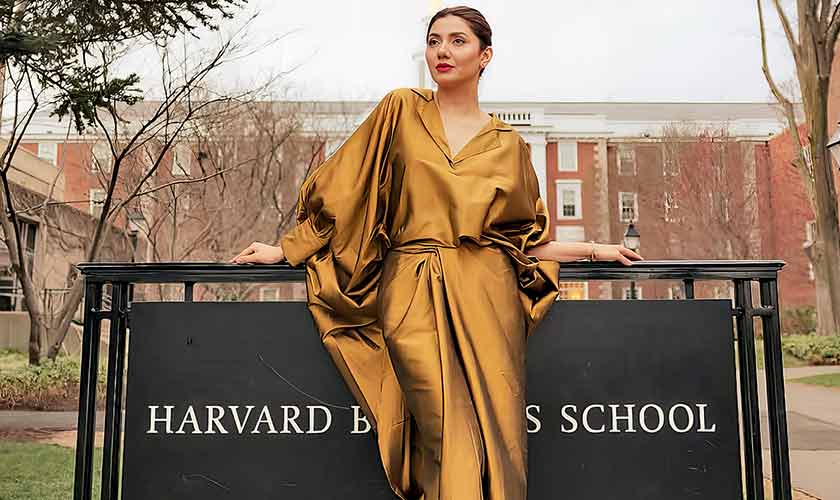
Actor and Global UNHCR Goodwill Ambassador Mahira Khan’s closing keynote was the moment most people had come for. Delivered in a conversation format rather than from a podium, it was quieter than expected and more effective for it. She made it clear that she was not there simply as a celebrity but as a representative of Pak-istan and that distinction felt important. Identity and what one actually does with it, kept surfacing as a theme throughout the conference.
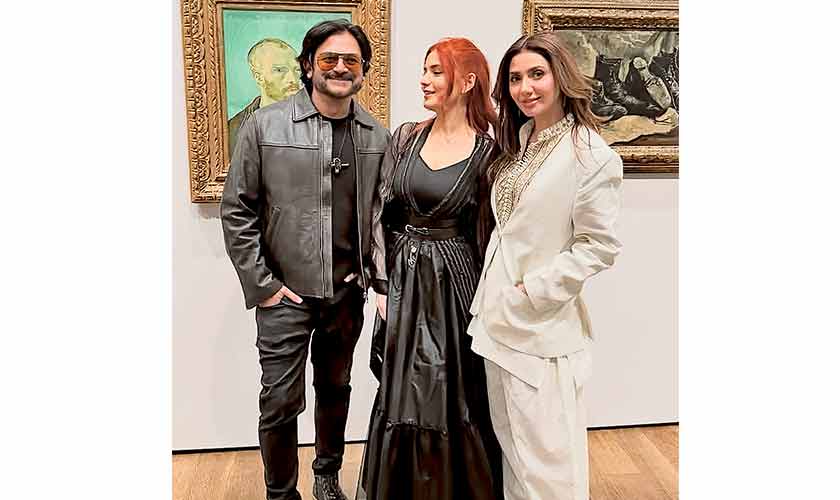
An earlier panel, moderated by singer, songwriter and activist Momina Mustehsan, focused on culture as a form of influence.
Singer and musician Faisal Kapadia and entrepreneur and fashion designer Faraz Zaidi joined the conversation.
Together, they spoke about the power of Pakistani music, film and fashion to cross borders with an ease that policy rarely achieves. The message was clear: culture remains our most effec-tive bridge.
Fashion designer, entrepre-neur and philanthropist Hassan Sheheryar Yasin (HSY) appro-ached things from a different angle altogether. Fashion, as he framed it, is not decoration. Speaking on the academic stage, he talked about carrying “not just our craft, but our potential, our resilience and the voices that shape the US and Pakistan,” while also touching on women’s empowerment and disability advocacy. It was a reminder that a needle and thread can carry as much weight as a policy paper.
The harder conversations were not avoided either. Finance Minister Muhammad Aurangzeb was refreshingly clear-eyed about the need for structural reform, a broader tax base and an eco-nomy driven by exports rather than dependency.
Former Foreign Minister Hina Rabbani Khar brought the geopolitical thread back into focus, speaking to Pakistan’s long and complicated history as a mediator in regional conflict.
Taken together, the confer-ence did not really offer a neat conclusion. Instead, it felt more like an honest picture of a country that contains multitudes and knows it. Pakistan isn’t just a place of untapped potential, but one still trying to figure out what to do with what it already has.
Celebrity optics and the weight of policy are not natural companions. Yet sometimes a familiar face can help bring attention to conversations that might otherwise remain confined to news programmes and policy papers. And if anyone can do it, it is Mahira Khan.