Print Story
X




The 11th Lyallpur Punjabi Literary Festival featured a series of panel discussions on language, colonialism and technology
| A |
t a time when cultural identities are increasingly shaped by globalisation, technology and shifting political realities, the 11th Lyallpur Punjabi Literary Festival was a powerful reminder of the enduring relevance of language, heritage and collective memory.
Bringing together scholars, writers, artists and thinkers, the festival offered a rare space where the culturally rich past of the Punjab intersected with contemporary debates from climate change and artificial intelligence to education and identity politics.
The LPLF 2026 positioned Punjabi not just as a language of nostalgia, but also as an, evolving force capable of engaging with the complexities of the modern world.
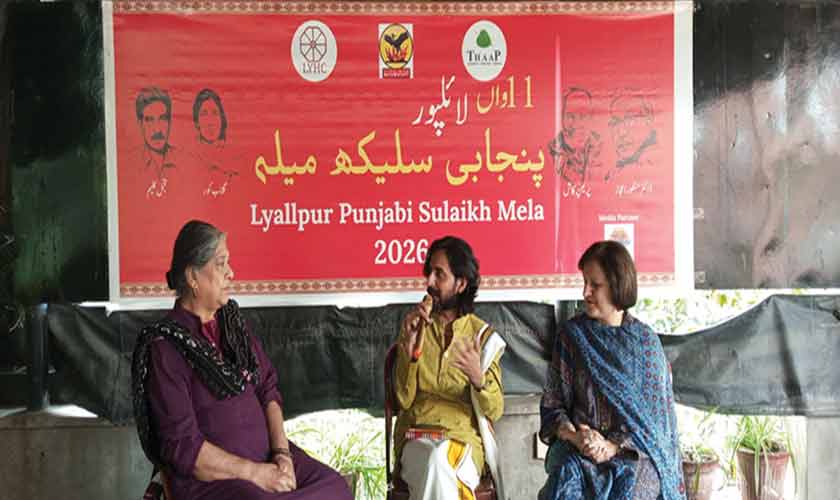
The LPLF team sought to balance the preservation of tradition and the willing embrace of innovation. Its social media campaign used artificial intelligence to generate avatars of iconic personalities associated with Lyallpur. These included writer Afzal Ahsan Randhawa, musician Nusrat Fateh Ali Khan, Bhagat Singh and Major Ishaq.
The 11th edition was dedicated to four people: scholar Dr Manzoor Ejaz, short story writer Prem Parkash, poet Tajammal Kaleem and Gulab Kaur, the only female member of the Ghadar Party.
The festival commenced with an inaugural address by Dr Tohid Chattha, followed by a presidential address by Prof Parvez Vandal. Taimoor Afgani’s rendition of Heer Wris Shah set an evocative tone for the proceedings.
The first session featured a discussion on the book Patna Di Taru by Samina Asma. In conversation with Dr Abdul Aziz Malik, the author said that her stories were rooted in lived experiences, particularly the injustices faced by women. She remarked, “Sometimes you don’t write a story—the story writes itself through you.” Referring to her work inspired by the suffering in Gaza, she said that it was not a premeditated effort but an emotional response. Speaking about the title story, she said it highlighted the resilience of women. Even seemingly fragile or mentally distressed women, she said, grow wise and strong when they embrace motherhood.
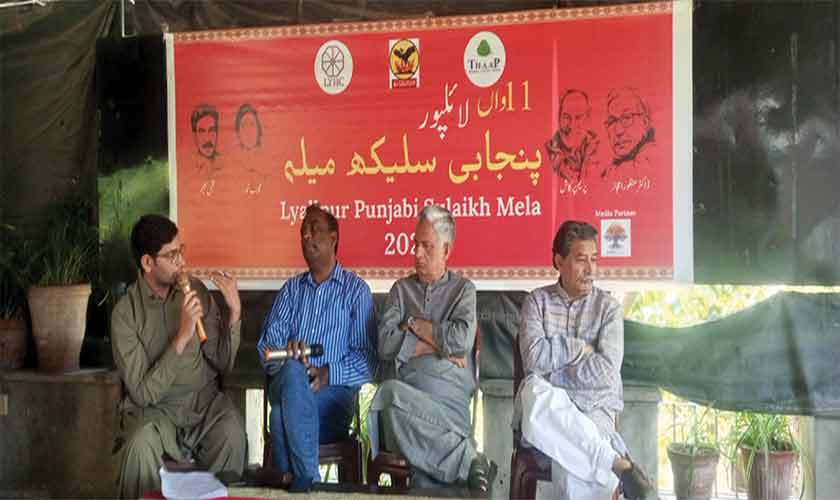
The session titled Celebrating Peace explored the meaning of peace in a conflict-ridden world, particularly from Punjab’s historical and cultural perspective. The panel included Dr Yaqoob Bangash, Dr Imdad Hussain and Iqbal Qaisar.
The speakers said that societies that endure conflict understand the value of peace the most. Drawing parallels with the devastation caused by Mongol invasions in the Punjab, they said widespread destruction of life, property and natural resources gave rise to a spiritual and philosophical tradition rooted in humility, coexistence and humanism. This legacy, reflected in the teachings of celebrated ascetics, they said, continues to shape Punjab’s cultural identity.
Responding to contemporary criticism of the Punjab, the panellists said that the Punjabis were cultivators of life. “They produce food, not weapons.” Archaeological findings from ancient sites like Harappa have revealed grains and agricultural tools, rather than instruments of war. Despite repeated invasions - from Mongols to British colonialists – the Punjab has been a victim rather than an aggressor.
The discussion also highlighted the importance of “inner change” emphasised by Punjab’s spiritual tradition. The speakers called for incorporating local knowledge systems into research and educational curricula and for developing practical mechanisms to safeguard peace. They warned that without such frameworks, voices advocating peace remain vulnerable in a world where conflict often dominates.
The session concluded with a strong emphasis on adapting Punjab’s ancient wisdom to contemporary realities. Promoting peace within the Punjab, they argued, was not only essential for regional harmony but also for strengthening Pakistan’s efforts toward peace building, including improved relations with neighbouring countries.
The festival also engaged with pressing global challenges through a session on Fast Fashion and Climate Change. The speakers, including Dr Sajida Haider Vandal, Abdul Rehman and Prof Shawana Khalil, examined the environmental cost of the modern fashion industry.
They challenged the perception that fashion and design are Western constructs, noting that some of the earliest evidence of cotton cultivation comes from Mehrgarh. In the 5,000-year-old Indus Valley Civilisation, artisans produced handmade goods within a sustainable system. The concept of formalised “design” in the West emerged much later. However, colonialism and the Industrial Revolution systematically eroded indigenous traditions of art and craft, leading to a disconnect where local communities often feel alienated from their own cultural heritage.
The panellists also critiqued the notion that fast fashion significantly contributes to employment. They argued that while it may generate profits for those in positions of power, its environmental costs were disproportionately borne by farmers and marginalised communities. Climate change, they noted, is already having severe impacts on agriculture and rural populations. Fast fashion is a major contributor to carbon emissions.
In contrast, the traditional “slow fashion” practices where garments are reused, repurposed and passed down through generations offer a sustainable and culturally rooted alternative that aligns with environmental preservation.
A session on Contemporary Punjabi Literature featured Nain Sukh, Zubair Ahmad and Naseer Ahmad Naseer. The discussion highlighted the historical disparity between Punjabi literature in Indian and Pakistani Punjabs. They said while major literary figures had been emerging in the Indian Punjab—where Punjabi was written in the Gurmukhi script— Punjabi fiction written in Shahmukhi, developed relatively late. Ahsan Afzal Randhawa, it was mentioned, became prominent in the 1960s.
The speakers observed that Punjabi literature in Pakistan had often been influenced by Urdu and English literary traditions. It also tended to romanticise depictions of rural life. As a result, the reality of urban Punjab was underrepresented.
A highly engaging session on Punjabi Language and Artificial Intelligence explored innovative ways to preserve and promote Punjabi through emerging technologies. Ikram Jalla of Sahavi Studio and Dr Abdul Aziz Malik said that artificial intelligence held immense potential for safeguarding cultural heritage for future generations.
Jalla noted that with the rapid advancement of AI and digital media, the future may increasingly favour languages with strong oral traditions such as Punjabi. He argued that written forms of communication may gradually become secondary. He said that his team was working on an AI-powered fantasy web series based on Punjabi folklore, featuring a jogi (mystic) as the central superhero. Set against the backdrop of Tilla Jogian, the project aims to reconnect younger generations with the region’s rich folklore and cultural narratives.
Another discussion focused on integrating Punjabi into school curricula. The session, moderated by Ihtisham Kazim, featured Iqbal Haider Bhatt, Prof Aamir Zaheer Bhatti and Dr Parvaiz Vandal.
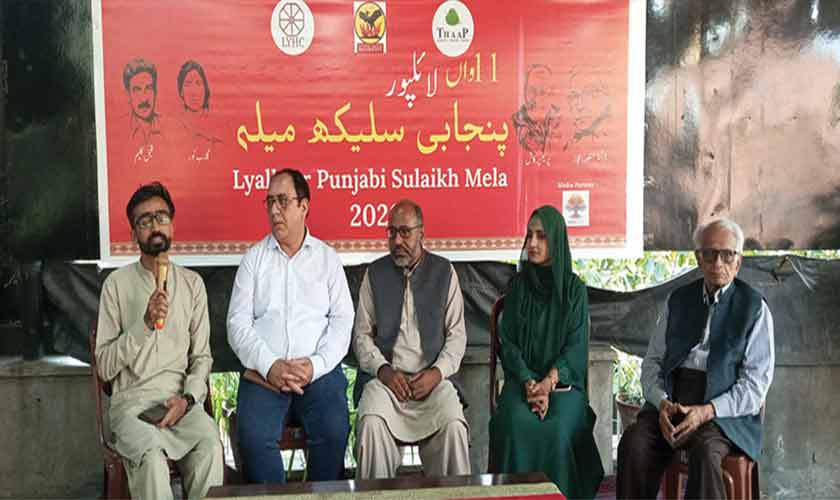
Bhatti gave a multimedia presentation about a standardised primer developed to accommodate the various dialects of Punjabi spoken across the region. He said that this shared framework could be easily adopted by Punjabi speakers from various areas. He said that teaching of Punjabi should go beyond formal instruction and become an integral part of cultural upbringing. Early childhood education, particularly in the first five years, should focus on teaching children how to understand life through their mother tongue.
The speakers also highlighted societal resistance to Punjabi as a medium of instruction. Recalling an experiment in schools in Kasur, they noted that while parents initially questioned the inclusion of Punjabi in the curriculum, children responded with enthusiasm, demonstrating a natural affinity for learning in their native language.
The concluding discussions of the festival were about the Punjabi language movement and its political dimension. The panel featured Aamir Riaz, Ahmad Raza, Mian Asif, Prof Zaheer Wattoo and Dr Tohid Chattha.
The speakers argued that schools and media have often been used to shape and control public consciousness. It was pointed out that until 1947, Education and Information Departments were administered under the Ministry of Interior.
Challenging the widely held belief that the British promoted education in the region, the panellists highlighted that prior to colonial rule, nearly 90 per cent of schools in the Punjab were locally run. Punjabi was taught in five scripts. These indigenous systems were dismantled under the British. Over time, the Gurmukhi script came to be associated exclusively with Sikh identity, while Urdu was introduced for Punjabi Muslims. This deepened the religious and cultural divisions in the region.
It was noted that since 2012, the Punjabi language movement in Pakistan had gained momentum, with social media playing a particularly significant role in raising awareness and mobilising support. The panellists said it was imperative to make Punjabi a formal medium of instruction in schools.
The Lyallpur Punjabi Literary Festival was started over a decade ago as a grassroots response to the longstanding neglect of Punjabi language and culture. In a conversation with The News on Sunday, Dr Tohid Ahmed Chattha, said the festival had been held annually since 2016.
He said as scheduled dates (April 5 and 6) approached, the organisers had not received an NOC from the district administration. Consequently, after consulting with colleagues, they had decided to move the festival online.
The Trust for History, Art and Architecture of Pakistan helped set up a dedicated studio facility at its head office. This enabled the scholars, speakers and other participants to engage with audiences seamlessly in a virtual format.
He said the transition reflected LPLF’s commitment to embracing innovative platforms for cultural dialogue. “The online format received an overwhelming response, with more than 20,000 participants joining digitally. The attendance was significantly higher than the typical physical attendance of around 2,000.”
In its successful transition to a digital platform and its wide-ranging intellectual engagement,
The writer has been associated with journalism for the past decade. He tweets @naeemahmad876