Print Story
X




A brilliant but imperfect detective sets out to solve a case
| T |
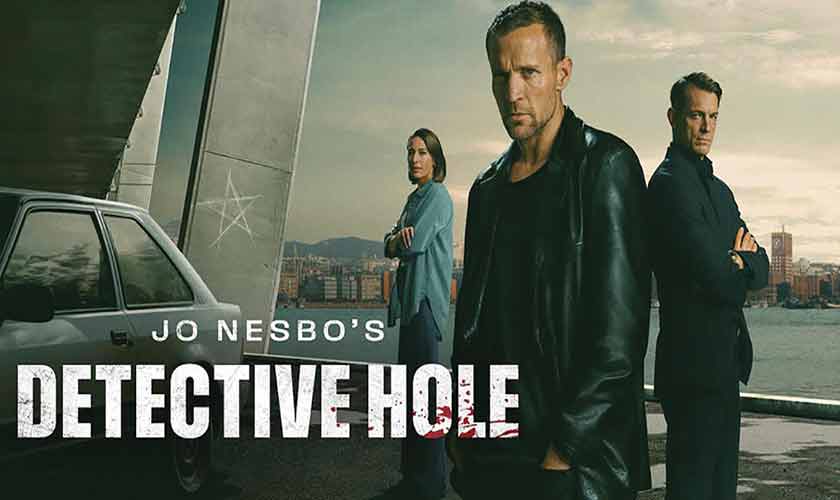
he 2026 Netflix series Jo Nesbø’s Detective Hole brings one of crime fiction’s most psychologically complex detectives to screen. Tobias Santelmann steps into the role of the deeply troubled investigator Harry Hole. Adapted from Nesbø’s novel The Devil’s Star, the show situates itself in the Nordic noir tradition—cold, brooding and morally ambiguous.
From its opening moments, the series establishes an atmosphere of unease. Oslo is not just a setting; it is a character in itself. The city’s grey tones, icy streets and dim interiors mirror Harry’s internal chaos. The visual storytelling is one of the show’s greatest strengths. It leans heavily into contrast: warmth exists, but only in fleeting glimpses—often tied to memory, love or things Harry is losing.
At the centre of it all is Santelmann’s compelling performance. His portrayal of the protagonist avoids the cliché of the ‘cool detective.’ Instead, Harry is presented as deeply flawed—addicted, obsessive and emotionally fractured. This aligns with the literary version of the character, who is as well known for his brilliance as his self-destructive tendencies. Santelmann doesn’t just act the role; he inhabits it, making Harry feel less like a fictional construct and more like a man barely holding himself together.

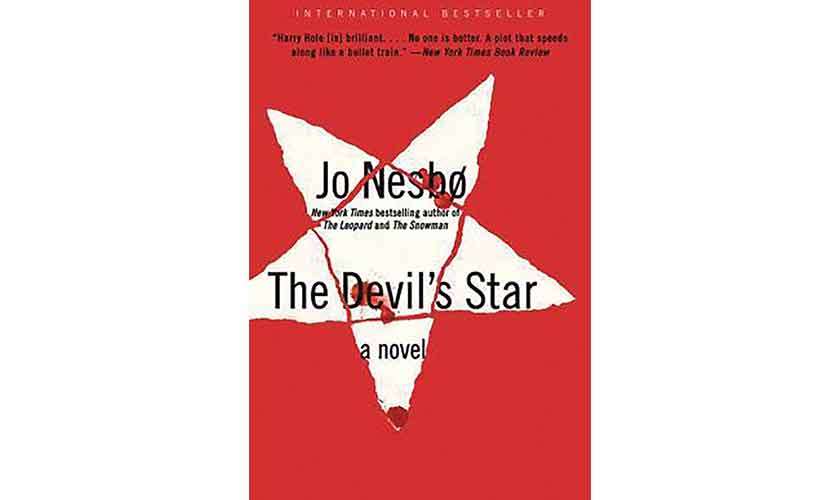
Adapted from Jo Nesbø’s novel The Devil’s Star, the show situates itself firmly in the Nordic noir tradition—cold, brooding and morally ambiguous.
The narrative revolves around a serial killer investigation intertwined with Harry’s conflict with his corrupt colleague, Tom Waaler, played by Joel Kinnaman. The dual conflict—external (the killer) and internal (Waaler and Harry’s own demons)—creates a layered storytelling structure. The show is not about just solving a crime; it is also about navigating moral ambiguity: who is truly good in a system already corrupted?
What makes Detective Hole stand out is its refusal to simplify these questions. The writing demands attention. It is the kind of show where missing a detail matters—where seemingly minor interactions become crucial later. Critics have noted that the plot can feel complex, even convoluted at times, but that complexity is part of its appeal. It rewards patient viewers, particularly those who enjoy piecing together narratives rather than being spoon-fed answers.
Psychologically, the show is rich. Harry’s character embodies themes of addiction, trauma and obsession. His pursuit of justice is not entirely altruistic—it often feels like a compulsion, a way to impose order on his chaotic world. This makes him fascinating but also unsettling. One is not always sure whether to root for him or fear what he might become.
The pacing can be uneven. Some episodes are tightly wound, filled with tension and revelation; others slow down considerably to explore backstories or emotional arcs. For some viewers, this may feel like a disruption; for others, it deepens the narrative. This inconsistency is perhaps the show’s biggest flaw—it occasionally struggles to balance momentum with introspection.
This series lingers, not because of the shocking twists alone, but also because of the unsettling questions it leaves behind about justice, morality and the human psyche.
Visually, the series excels. The cinematography is stark and deliberate, using lighting and framing to reinforce themes of isolation and moral ambiguity. Interiors often feel claustrophobic; outdoor shots emphasise emptiness and coldness. The use of silence is particularly effective—many scenes rely on what is not said, allowing tension to build organically.
A standout element is the show’s tone. Unlike American crime dramas that often lean into action or spectacle, Detective Hole is quiet and introspective. Violence is present, but rarely sensationalised. Instead, it is treated as something disturbing and consequential. This enhances the overall realism of the narrative.
The show is not for everyone. The slow-burn approach, heavy themes and an emotionally distant protagonist can be alienating. Viewers expecting fast-paced thrills may find it frustrating. But for fans of psychological crime dramas and Nordic noir, it delivers exactly what it promises: a dark, intricate and emotionally charged experience.
Jo Nesbø’s Detective Hole is a strong addition to the crime thriller genre. Anchored by Tobias Santelmann’s intense performance, it successfully captures the essence of Harry Hole—a man as broken as the world he is trying to fix. It is not always easy to watch, nor is it always easy to follow, but it is undeniably gripping. The series lingers, not because of shocking twists alone, but also because of the unsettling questions it leaves behind about justice, morality and the human psyche.
The writer has a degree in psychology with a minor in mass communication. She can be reached at [email protected]