Print Story
X




Curricular reforms must expand the breadth of skills imparted to learners
| W |
ith curriculum reform once again under discussion at the federal level and at recent provincial forums, Pakistan has a rare opportunity to move beyond technical exercises focused solely on rewriting standards. For any educational reform to be truly meaningful, it must translate into tangible improvements in students’ daily learning experiences.
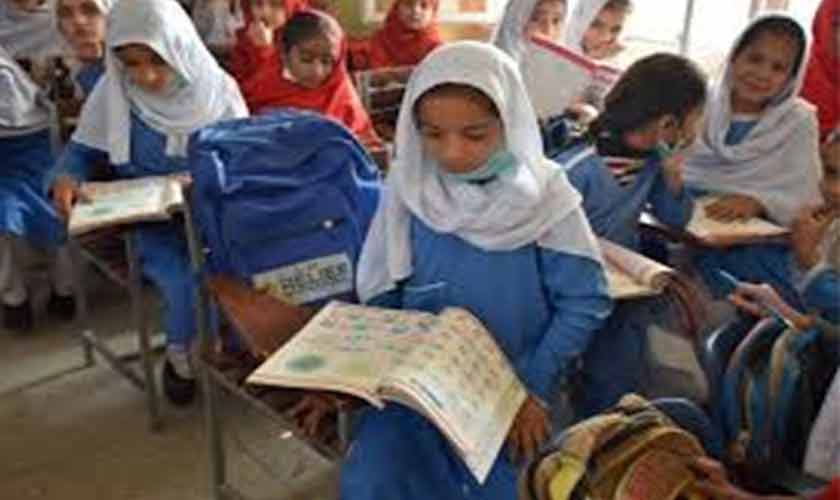
During a typical day in a public school in Pakistan, one can see teachers anxiously flipping through lesson plans, overwhelmed by crowded classrooms and an endless list of definitions to dictate, diagrams to reproduce and exercises to complete. This leaves little to no room for experimentation, discussions or curiosity-driven inquiry. Rote learning takes precedence where the entire academic effort is geared towards exam survival. Therein lies the dichotomy and stark disconnect between the curricular intentions and classroom reality.
One of the most pressing issues is a curriculum overload. Textbooks across grades are dense. Several subjects compete for limited instructional hours. Teachers are evaluated not on the depth of student understanding but on whether the syllabus is completed in time for examinations. Marginalised learners—girls, children with disabilities, students from poor or rural backgrounds and those learning in a non-native language—suffer most when classrooms move too quickly. They are often the first to fall behind or drop out. Streamlining the curriculum by prioritising depth over breadth, with an emphasis on foundational literacy, numeracy, reasoning and problem-solving skills, is essential for meaningful learning.
Inquiry-based learning, central to modern pedagogical frameworks, therefore struggles under the current system. Board examinations reward recall. Students memorise model answers to succeed. Traditional lecture-based instruction leaves little room for questioning, debate or active reasoning. Large class sizes further constrain interactive learning. As a result, curiosity and problem-solving skills critical for a 21st-Century workforce—remain underdeveloped. Real reform requires alignment: assessments must reward inquiry, textbooks must model it and teachers must be supported with continuous professional development. One-off workshops and policy directives are insufficient; teachers need coaching, peer networks and tools that allow them to implement inclusive and engaging practices in crowded classrooms.
The recently concluded study on Pakistan’s textbooks, to be publicly released soon, sheds light on another systemic barrier: exclusion embedded in the curricula. Reviewing 636 chapters across Urdu and English textbooks from the federal and provincial boards, the research found that only 13 per cent of the chapters featured female characters, compared to 41 per cent that highlighted male figures. Women comprised merely 16 per cent of credited authors. Religious minorities appeared in only three per cent of chapters. Learners with disabilities were almost invisible, featuring in less than one per cent of content. Visual content mirrored these trends: female images accounted for under 18 per cent, while male figures appeared in 37 per cent of images. Inclusive imagery—representing religious minorities or differently-abled learners—remained negligible. Across boards, these patterns consistently underrepresent women, religious minorities and children with disabilities, signalling systemic gaps in curricular equity.
Only through these coordinated,evidence-based efforts can Pakistan’s demographic dividend translate into genuine educational, social and economic gains.
Qualitative findings too highlight bias. Urdu textbooks, rich in literary heritage, remain largely traditional and heavily framed around religious narratives. Female characters, when present, appear symbolically or in relational roles. Men dominate both textual and visual content. English textbooks, particularly at higher grades, make comparatively stronger efforts to present girls as active participants in social, educational and professional contexts, with occasional attention to children with disabilities. History and Pakistan studies texts display the greatest imbalance, overwhelmingly highlighting male figureheads and rarely representing women or minorities meaningfully. Only a few exceptions, such as Punjab Board’s Grade 10 history chapters on women in the Pakistan Movement or Balochistan’s Grade 10 Pakistan studies textbook documenting minority contributions, demonstrate replicable approaches to inclusion. Across all subjects and grades, disability remains the least visible dimension, with sign-language illustrations or empathetic depictions appearing sporadically.
These patterns have profound implications for learning. When textbooks fail to reflect the diversity of learners’ lives and communities, children struggle to see themselves as capable, contributing members of society. Gender equity is not simply about enrollment; it is about representation in daily learning, showing girls and women as innovators, leaders and problem-solvers rather than confined to domestic or symbolic roles. Religious and ethnic minorities, as well as differently-abled learners, must be similarly visible to foster belonging and social awareness. When children feel the curriculum reflects their identities, they engage more deeply, strengthening both learning and social cohesion.
Beyond gender and social inclusion, curricular reform must expand the breadth of skills imparted to learners. Students should develop not only foundational literacy and numeracy but also competencies in critical thinking, creativity, digital literacy, civic engagement and life skills. English textbooks in higher grades offer glimpses of this approach, integrating life skills and civic participation into narratives. Such examples provide a roadmap for reform: curricula must prepare students not just to pass exams, but also to navigate complex social, economic and civic realities, enabling them to become active, thoughtful citizens.
Meaningful reform cannot remain confined to policy debates or ideological framing. It must reach the classroom, improving daily learning experiences for children across Pakistan. Curriculum overload must be addressed, inquiry-based pedagogy embraced, teacher support strengthened and inclusive representation embedded in textbooks, imagery and assessments. Only through such coordinated, evidence-based efforts can Pakistan’s demographic dividend translate into genuine educational, social and economic gains. By embedding gender equity, social inclusion and skill breadth into curricula, Pakistan can ensure that all children—regardless of gender, ability or background—have the opportunity to learn, thrive and contribute to a more equitable and prosperous society.
The writer is the executive director of the Society for Access to Quality Education, the national coordinator for Pakistan Coalition for Education and a Malala Fund education champion. She can be contacted at [email protected]