Print Story
X




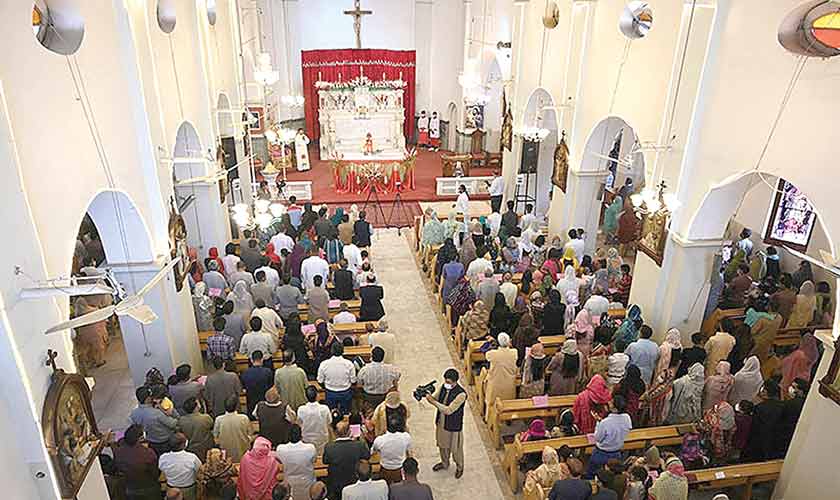
Most Pakistani Christians belong either to the Roman Catholic Church or to Protestant denominations.
| F |
or the Christian minority in Pakistan, the observance of Lent, Palm Sunday and Easter Sunday is a profound period for emphasising social justice through compassion, self-denial and active support for the downtrodden.
Lent is a 40-day period of fasting, prayer, humility, repentance and charity observed by Christians before Easter, the celebration of the resurrection of Jesus Christ from the dead. It commemorates the 40 days Jesus Christ fasted in the wilderness (Gospel of Luke, Chapter 4) before beginning His public ministry. Later, in the Sermon on the Mount (Matthew 6:16–18), Jesus taught about fasting, emphasising sincerity rather than public display.
Fasting during Lent is not simply about giving up food or comforts. It is a deeply spiritual practice rooted in transformation of the heart. It is a period of spiritual preparation for the resurrection, moving from repentance to renewal and entering into the mystery of Christ’s Passion. Through small sacrifices, Christians spiritually unite their lives with Christ’s self-offering on the Cross. For Christians, fasting is a voluntary practice of abstaining from food and other comforts for a spiritual purpose. It seeks to deepen one’s relationship with God through prayer, reflection and self-discipline.
Lent begins on Ash Wednesday and ends on Holy Saturday, just before Easter Sunday. Ash Wednesday is one of the most significant religious days for Christians, marked by special church services. During these services, priests place blessed ashes on the foreheads of believers in the shape of a cross as a sign of repentance. As Fr Faryad Munir OFM (Cap) explains, when the priest places ashes on our foreheads, it reminds us: “O man, you are dust, and to dust you shall return.”
Christians make up less than 2 percent of Pakistan’s population. Major Christian communities are located in Lahore, Karachi and Faisalabad. Prominent Christian localities include Essa Nagri in Karachi, Youhanabad in Lahore and Waris Pura in Faisalabad.
Most Pakistani Christians belong either to the Roman Catholic Church or to Protestant denominations, primarily the Church of Pakistan — a united Protestant body formed in 1970 through the merger of Anglican, Methodist, Scottish Presbyterian and Lutheran churches. There are also smaller evangelical and independent church communities.
Despite some theological differences and religious practices, all churches observe Lent in the true spirit of recognising humanity’s spiritual need for purification and a deeper connection with God.
As a minority community, Pakistani Christians often use Lent as a time to reflect on solidarity and justice within a wider religiously diverse society. The season highlights social responsibility, charity and care for the needy. It also broadens advocacy efforts for the rights of the underprivileged — not only Christians but people of all faiths. The fasting period becomes a time to reflect on poverty and religious values, where solidarity among Christians, Muslims and other minorities can help challenge unequal social structures and injustices.
Despite ongoing challenges, Lent and Easter remain deeply meaningful and widely celebrated by Christian communities with strong religious devotion. Many Christians observe fast by giving up certain foods, such as meat or sweat, others abstain from meat on Fridays. Physical hunger becomes a symbol of spiritual hunger. Fasting cultivates compassion, self-restraint and greater dependence on God. Like other non-Muslim minorities, many Christians belong to lower socioeconomic strata and face social discrimination, economic challenges and security concerns. As a result, Lenten charity initiatives across Christian denominations often focus on uplifting marginalised and economically vulnerable communities.
Throughout Lent, churches organise additional services and Bible study sessions to support spiritual growth. During church services, homilies often focus on forgiveness, repentance and care for the vulnerable. Moreover, sermons frequently emphasise the equality of all human beings before God, standing against injustice, defending persecuted communities and praying for victims of false accusations under discriminatory laws. Church leaders often connect the suffering of Christ with the suffering of marginalised Christians in Pakistan. Prayers also address concerns about religious freedom, discrimination in employment, social inequality and violence against minority communities.
The final week of Lent, known as Holy Week, holds particular significance. It begins with Palm Sunday, commemorating Jesus’ entry into Jerusalem. Good Friday marks the remembrance of His crucifixion. Holy Saturday concludes Lent and Easter Sunday celebrates the resurrection of Jesus Christ.
Churches are beautifully decorated in the final days of Lent. Due to security concerns, special arrangements are made in consultation with church administrations to ensure the safety of worshippers during Easter celebrations.
In the Pakistani context, Lent has developed a deep connection with social justice, interfaith harmony and community service. Charity has long been a core Lenten practice by Pakistani Christians despite their own economic pressures. It often includes food distribution in poor neighborhoods and financial assistance for the needy — including bonded laborers and sanitation workers. Churches and civil society organisations frequently collaborate with Muslim NGOs to distribute food packages, clothing and small cash assistance to marginalised groups. Such initiatives strengthen social harmony and encourage interfaith dialogue on poverty, justice and compassion.
This year, two sacred seasons began almost simultaneously: Ramazan, Islam’s month of fasting, and Lent, the Christian journey of repentance toward Easter. In Pakistan, Muslims and Christians move through parallel seasons of fasting, prayer, charity and spiritual discipline, shaping public life in meaningful ways.
Catholic Archbishop Joseph Arshad of Rawalpindi-Islamabad has called on churches and mosques to become “centers of compassion, peace and love” during these sacred seasons.
Lent is deeply rooted in Pakistan’s social and religious realities. The season serves as a reminder of Jesus’ teachings on human dignity and liberation. It calls believers to challenge systemic injustice, stand with the oppressed, and address poverty and exploitation in society. For many Christians in Pakistan, Lent is not only a spiritual journey but also a time of active charity, social welfare and community empowerment. Moreover, a call to promote justice, dignity and equality for all in a complex and diverse society.
The writer is a British-Pakistani freelance journalist based in Blackburn, UK, and a former executivesecretary of the Justice and Peace Commission of the Catholic Church in Pakistan. He can be reached at aftabmughal47 @hotmail.com.