Print Story
X




The Lady delivers a gripping story, but its pacing stumbles halfway through
Starring: Mia McKenna-Bruce,
Ed Speleers, Ella Bruccoleri, Mark Stanley, Sean Teale and Natalie Dormer
Directed by: Lee Haven Jones.
| B |
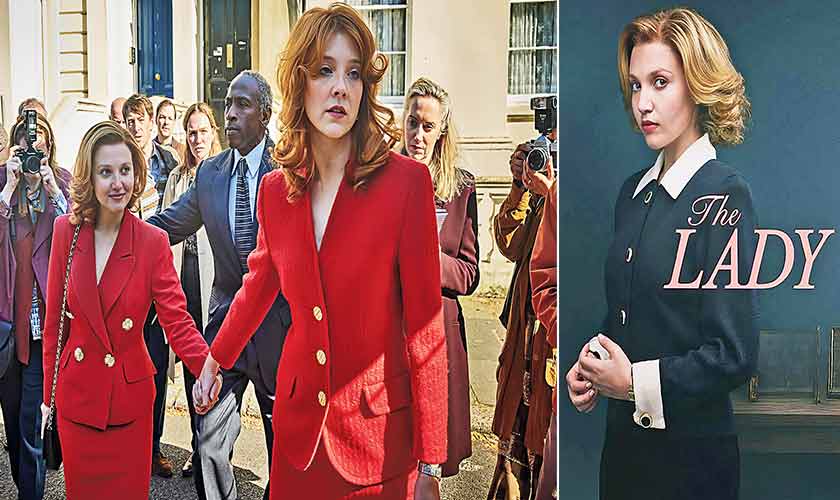
ritBox’s new true-crime drama The Lady isn’t actually centred on Sarah ‘Fergie’ Ferguson (Natalie Dormer), Prince Andrew’s ex-wife; instead, it follows her former dresser. Jane Andrews (Mia-McKenna-Bruce) came from humble beginnings, but her desire for a lavish lifestyle prompted her to apply to work for the Duchess of York, leading to a bond between the two women that lasted nearly a decade.
Although Andrews did get a taste of luxury by becoming a palace employee and accompanying Fergie on her high-society outings, she still wanted more. The ultimate goal involved finding her real-life Prince Charming, with Thomas Cressman (Ed Speleers) quickly becoming the man she had longed for. Yet, as passionate as their connection was, their relationship culminated in one of the UK’s most shocking murder cases, with The Lady depicting Andrews’ rise and fall over the span of four episodes.
The Lady opens with Jane as a teen sitting in front of the TV, starry-eyed over Princess Diana’s wedding. With a tiara on her head and a sketchbook of designs on the side, the character’s defining interests are immediately obvious. Once these two passions are established, the series reveals the moment when Jane’s dreams unexpectedly come true after she hears back from the palace about a job opportunity. The chance to leave her dull hometown behind comes at the perfect time after she’s been locked in the bathroom, crying over a cheating boyfriend. With nothing left to lose, Jane packs her bags and departs for a chance of a lifetime. From assistant dresser to personal assistant, she rises through the ranks in the same way that she wins over Sarah Ferguson. Her once voluminous curls are swapped for a slick hairdo and her mismatched outfits are replaced by a wardrobe that’s near-identical to Fergie’s. Jane isn’t just satisfied with working for a royal, she wants to be one, one way or another.
Similar to real-life events, Jane and Fergie become inseparable, especially once the Duchess decides to divorce her husband. Their bond, however, is disrupted from the moment Jane is let go from her duties. No longer reaping the benefits of her glamorous undertaking, Jane is devastated and ponders whether to take her own life. It is at this moment of desperation that she meets Thomas Cressman at a bar and a smile slowly returns to her face. As happy as they seemed in the beginning of their relationship, soon enough their partnership veers into toxicity. The aftermath of their union leaves Thomas dead and Jane imprisoned for his murder. With The Lady, the viewer is left to wonder where exactly things went so wrong for Jane.
“It’s challenging to inhabit a complex person like Jane Andrews without making her seem one-note, but Mia McKenna-Bruce toes this delicate line with ease. Although The Lady does add fiction to its narrative, the series aims to depict Jane’s desire for a better life and how that sentiment evolves to something more sinister. The Lady’s pacing also dwindles toward its latter half, particularly when it comes to the portrayal of Jane and Thomas’ relationship. Although onscreen interviews with family members and friends try to fill in the gaps of what viewers don’t get to see, there are certain instances when it feels like Jane was the only cause of friction in their union.”
It’s challenging to inhabit a complex person like Jane Andrews without making her seem one-note, but Mia McKenna-Bruce toes this delicate line with ease. The BAFTA-winning actress, who will soon play Maureen Starkey in Sam Mendes’ Beatles biopic, shows that she has what it takes to bring a real-life figure to the screen with care. Although The Lady does add fiction to its narrative, the series aims to depict Jane’s desire for a better life and how that sentiment evolves to something more sinister.
The BritBox original depicts her as an ingénue when she first lands her position at the palace, but her obsession with wealth and status only grows as her friendship with the Duchess of York deepens. Her relationship with the royal doesn’t ever cross the line in this dramatization, but Jane’s volatile behaviour is depicted through her romantic connections with her first husband (Mark Stanley), her affluent ex-boyfriend (Sean Teale) and Thomas Cressman. What makes McKenna-Bruce’s performance enticing is that, despite her character being glaringly problematic, you still feel for her in the moments where she is betrayed by the people she is closest to.
One of the series’ highlights is its use of wardrobe and hairstyling, with Jane’s fashion evolution resembling what dominated the headlines during her time working for Fergie. Although the outfits aren’t exact replicas, the series’ wardrobe successfully conveys the sense that Jane wanted to be like her employer on every level. Costume designer Emma Fryer helps to tell Jane’s story and how her motivations were represented through the way she dressed herself.
The Lady’s pacing dwindles toward its latter half, particularly when it comes to the portrayal of Jane and Thomas’ relationship. Although onscreen interviews with family members and friends try to fill in the gaps of what viewers don’t get to see, there are certain instances when it feels like Jane was the only cause of friction in their union. Several characters admit that Thomas also had his faults, but his limited depiction does make it seem like the series is favouring his portrayal much more than Jane’s. The series also struggles to navigate Jane’s mental health; although she is depicted in therapy before her trial, her borderline personality disorder (BPD) diagnosis following her incarceration is presented almost as a narrative device to explain her compulsive lying and mood swings. If The Lady wanted to dig deeper into this aspect of her, it should’ve been explored long before the finale.
Although The Lady is a compelling watch, with an exceptional performance from McKenna-Bruce and wielding the styling of the era to its advantage, its limited exploration of Thomas results in a one-sided recounting of events. It would’ve been interesting to see Ed Speleers get further screentime and truly offer a nuanced portrayal as opposed to a more sanitised version. The investigative side of the story isn’t well-developed over four episodes and could’ve easily been scrapped, along with interviews with characters we don’t get to know well enough to care about their perspectives on the couple at the heart of the story. A gripping true crime drama with a few narrative faults, The Lady will keep you engaged, if only for a moment.
– Courtesy: Collider.com
Rating system: *Not on your life * ½ If you really must waste your time ** Hardly worth the bother ** ½ Okay for a slow afternoon only *** Good enough for a look see *** ½ Recommended viewing **** Don’t miss it **** ½ Almost perfect ***** Perfection