Print Story
X




From Faisalabad to global runways - a Pakistani start-up is turning textile waste into sustainable high fashion
| A |
local start-up from the city is rapidly gaining recognition in the global fashion industry. Blending sustainability with innovation, the start-up is transforming textile waste into eco-friendly, contemporary high-fashion garments while also promoting local craftsmanship and cultural heritage on international platforms. Its work reflects not only fashion excellence but also environmental responsibility, the creative economy and youth-driven entrepreneurship.
Incubated in Cohort 7 at the National Incubation Centre, Faisalabad, HAS Handicrafts has made its mark despite limited resources, showcasing its unique sustainable garments at several prestigious international fashion events.
Speaking to The News on Sunday, founder Muhammad Yasir Bilal described HAS Handicrafts as a sustainable fashion brand focused on recycling, upcycling, plastic waste utilisation and circular design principles.
“We manage our designs through ‘cloth-ready’ technology. Since the industry is heavily driven by sampling, we use this approach to reduce costs by presenting virtual designs to clients. This allows them to visualise the final product without incurring high sampling expenses,” he said.
Bilal said the brand converts leftover and discarded fabrics into luxury fashion garments, many of which have been showcased at major global fashion weeks.
Hailing from the Nawan Lahore village in Toba Tek Singh, Bilal holds an MBA and a master’s in industrial management from Government College University Faisalabad. Co-founder Zakir Hussain, his younger brother, is a graduate in fashion design from the Institute of Art and Design at the same university. He is currently pursuing a master’s degree in clothing and textiles.
Bilal said that he was working in export marketing when he realised the global potential of his brother’s creative work. So he decided to leave his job and launch the start-up.
“At the time, he was working on his final thesis. The garments he created not only gained national recognition but also attracted international clients who supported our participation in London Fashion Week,” he said.
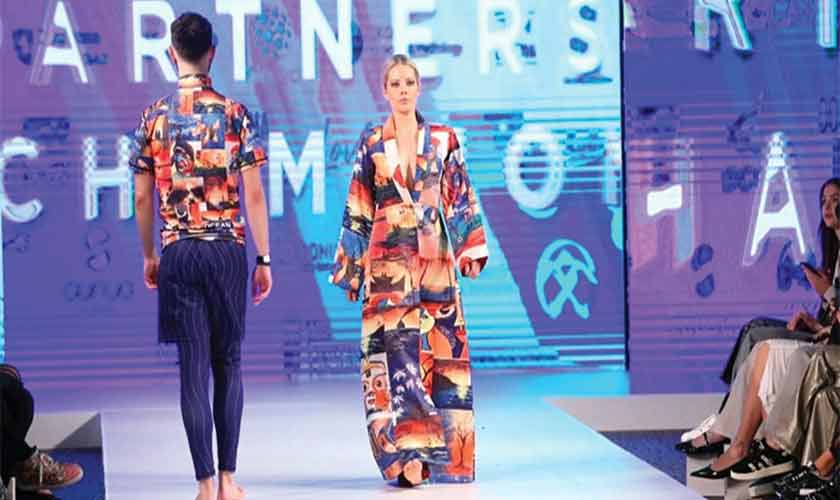
Since then, their designs have been featured at several renowned platforms, including House of iKons Fashion Week London, Aberdeen Fashion Week Scotland, London Fashion Week, Paris Fashion Week, Los Angeles Fashion Week, Miami Fashion Week and Cayman Island Fashion Week.
At London Fashion Week alone, the brand showcased 21 garments inspired by the Sustainable Development Goals.
“Our designs were worn by top international models and fashion industry CEOs. This exposure led to invitations from organisers of other global fashion weeks,” Bilal added.
He said their breakthrough came from his brother’s thesis project, inspired by the Indus Valley civilisation and themed around the historic Makli necropolis.
“The designs incorporated patterns, motifs, brickwork textures and architectural elements found in the Makli tombs,” he said. To create these garments, the team sourced leftover fabrics from the market, applied traditional tie-and-dye techniques and transformed them into sustainable fashion pieces.
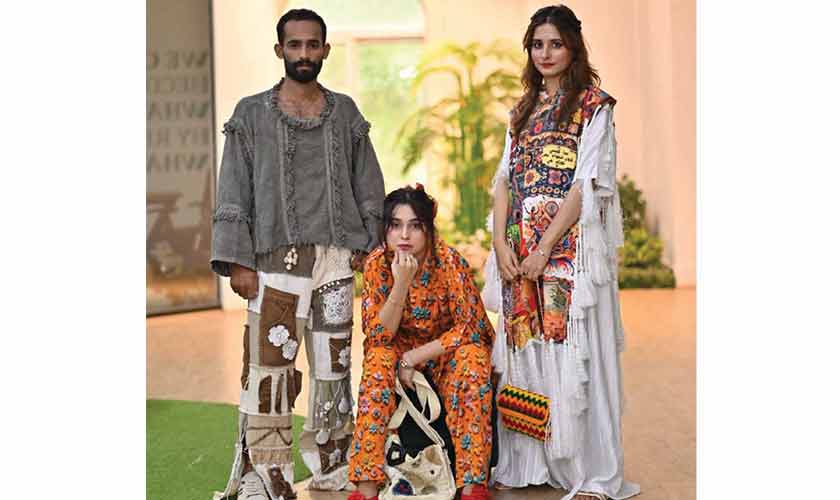
“The designs incorporated patterns, motifs, brickwork textures and architectural elements in the Makli tombs,” he said. To create these garments, the team sourced leftover fabrics from the market, applied traditional tie-and-dye techniques and transformed them into sustainable fashion pieces.
“We began by incorporating intricate procure work into the design,” Bilal explained. “Next, we integrated recycled wood waste, followed by the use of copper wire as a structural and aesthetic element.”
He further elaborated on their innovative use of materials: “We collected plastic wrappers, molded them and transformed them into lace. This lace was then applied across various elements of the garment, including the collar, sleeves and front panels. In addition, we reprocessed the plastic wrappers—compressing and reshaping them—and carefully embedded them by hand into areas where wood and copper detailing had already been applied.”
Bilal said the team was working on several major international projects, including showcases at Milan Fashion Week and New York Fashion Week, along with a potential collaboration opportunity from Hollywood.
Discussing their creative process, he said, “Every project begins with an idea, which evolves into a theme. That inspiration can stem from a social issue, a development challenge, or a broad concept. When we receive a client brief or an offer, we develop a narrative around it and then design garments that reflect that story.”
He emphasised that their brand is deeply rooted in sustainable fashion and actively promotes slow fashion.
“At the same time, we are committed to promoting local traditions and culture. We are working to empower artisans, especially women, by integrating their craftsmanship into the fashion industry,” he added.
Bilal said their startup had also created opportunities for students across leading Pakistani institutions, including the Pakistan Institute of Fashion Design (Lahore), National Textile University (Faisalabad), University of Agriculture Faisalabad, Government College University Faisalabad, GC Women University Faisalabad and The Islamia University of Bahawalpur.
“Our aim has been to bring together students from both rural and urban backgrounds onto a single platform. We assign them ideas and tasks. Their creative inputs are incorporated into our collections. These garments have been showcased at global platforms like London Fashion Week and Paris Fashion Week.”
According to Bilal, their designs have now been featured in seven major international fashion weeks. In addition, their work has appeared in globally recognised fashion publications such as Vogue, Harper’s Bazaar, The Time, Fashion & Media, Young Faces UK and Middle East Magazine.
He credited the National Incubation Centre, Faisalabad, with a pivotal role in the start-up’s growth. “They provided us with professional training, development support and networking opportunities. They helped us refine our processes and guided us on how to strategically position our brand in the global fashion market. This support enabled us to redefine our workflow and strengthen our branding.”
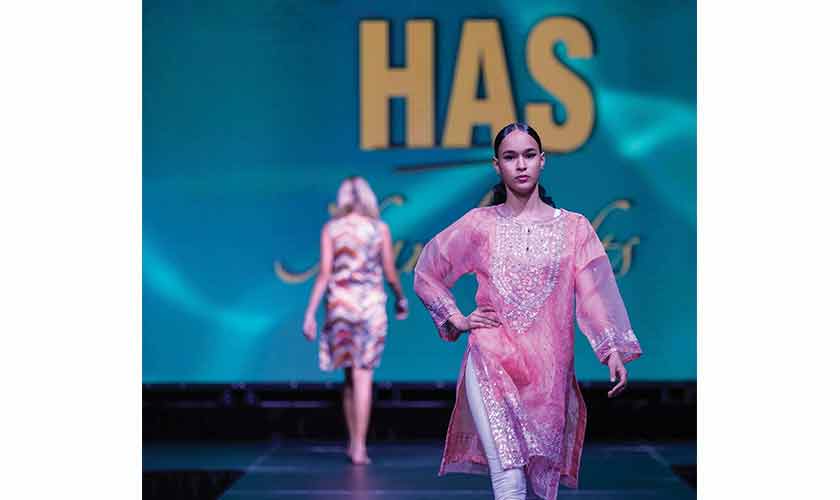
As global fashion increasingly pivots toward sustainability and ethical production, initiatives like HAS Handicrafts highlight the untapped potential in Pakistan’s textile ecosystem. With the right support, training and international exposure, such ventures can not only redefine the country’s image beyond traditional manufacturing but also position it as a hub of innovation in sustainable design.
The writer has been associated with journalism for the past decade. He tweets @naeemahmad876