Print Story
X




Lahore always surprises us with its ability to absorb policy without changing its pulse
| A |
s Lahore entered the last ashra (ten days) of Ramazan, it did so under an austerity drive announced by the government on March 9. The Section 144 prohibition of public gatherings was already about a month old. Lahore is no stranger to the consequences of a volatile geopolitical situation. At the time of filing this story, over 1,400 flights had been cancelled from Allama Iqbal International Airport alone due to airspace closures following the fallout of the US-Israeli strikes on Iran. However, even as so much disruption cut into the pockets of the city, people appeared determined to experience the traditional tranquility of the last ten nights of the holy month.
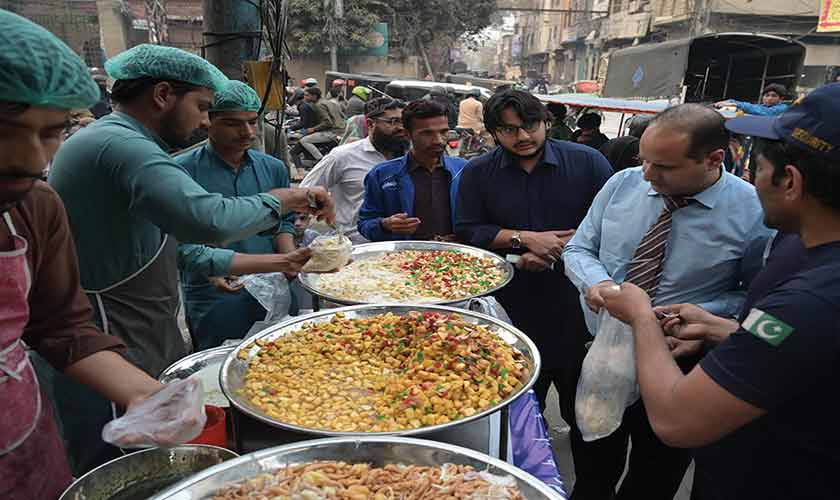
“There was no space to walk even though we had gotten there well before the typical sehri time,” said Farah, a university student who had gone for Spice Bazaar’s sehri buffet the previous day with her family. She was shocked because the never-ending loop of news on her Instagram feed had painted a completely different picture — one of closed shops and empty roads. But Lahore always surprises us with its ability to absorb policy without hurrying its pulse.
While exchanging niceties with a neighbour aunty, Shabana, a 50-year-old housewife was surprised to learn that the G-1 market in Johar Town had turned into a ghost town consisting of abandoned tractors and trenches. However, the place remains open to families rushing into the grocery stores for last-minute iftar items. Even though the March 9 mandate is clearly infiltrating daily lives, it shows up in the smaller, grittier details: the overhead streetlights dim to conserve the grid; shopkeepers round up the price of a kilo of sugar with a weary shrug that blames “the drive.”
Shabana had noticed the subtle shifts too, she said. The usual decorative fairy lights that draped the market’s storefronts during the last ashra were limited. Also, there were hushed, anxious debates over the rising cost of imported oil near the crates of imported fruits of the superstores that lined the streets. The people, however, continued to fill their iftar spreads with all sorts of varieties and have pleasant chats with relatives and friends over iftar tables before taraweeh prayers.
Sarah, a student at a local school, was a little startled by her uncle’s indifference when her cousin’s flight from Dubai had got delayed. She said she was “not particularly fond of this cousin but the thought of him being indefinitely stuck abroad doesn’t sit right with me.” Her uncle, on the other hand, read his message, conveyed it to everyone else in the room, and started talking about the sudden rise in temperature Lahore had experienced over the week.
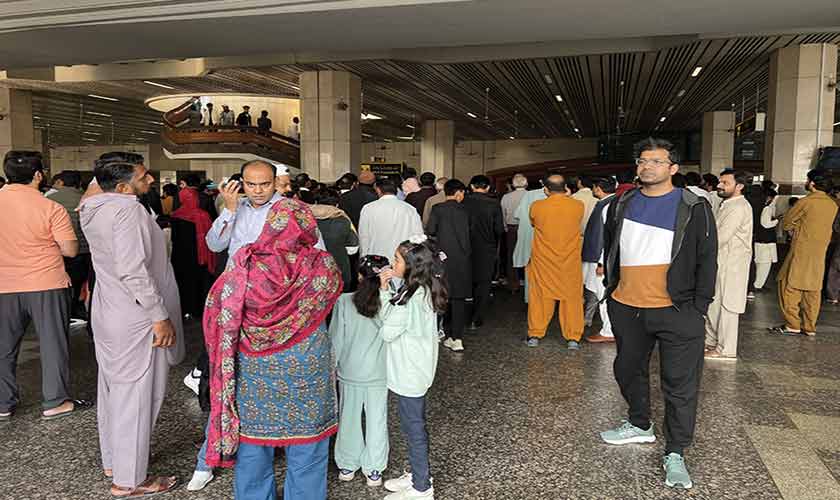
As the last echoes of taraweeh faded, Lahore’s ground-level reality offered a defiant roar of its own. In the narrow lanes of the Old City and the sprawling plazas of the DHA, the night shift began with familiar, stubborn electricity.
At the Jamia Masjid in W-Block, DHA, women of all ages filled the room as they had since the beginning of Ramazan. Some had digital tasbeehs in hand; others kept track of their zikr with the beads of their rosaries. An aged woman known to frequent the mosque throughout the year called out for everyone’s attention. Waving her hands in the air as her rosary made faint clinking sounds, she urged everyone to pray an extra set of rika’at for the safety of the country and that of the rest of the world.
Some women discussed how their husbands had decided to join the thousands of people in aitekaf at a mosque in Township. There was no discomfort in their tones, no sign of inconvenience to be detected in the way they discussed their Ramazan routines. The aged woman’s speech did prompt many women to pray extra, but whether they reflected on the reality of the situation was beyond any onlooker.
| S |
ixteen miles away, the runways at the Lahore airport remained dark and still. By 2am, the road outside the Township mosque was shoulder to shoulder. A man sold lassi from a cart with a hand-written price list taped over the old one. Two boys argued over the last shaami kebab at a stall that should have closed an hour earlier. Somewhere behind the masjid wall, the loudspeaker crackled into the first recitation of the night’s final rik’at. Nobody looked up.
Above the minarets, the sky remained an eerie, hollow void. But as the last echoes of taraweeh faded, Lahore’s ground-level reality offered a defiant roar of its own. In the narrow lanes of the Old City and the sprawling plazas of the DHA, the night shift began with familiar, stubborn electricity. Here, beneath a disrupted airspace, the gates of the city remained wide open.
Nadia Ahmed Uqaili is a content strategist with over five years of global agency experience. She also writes short fiction on Substack. She can be reached at [email protected]