Print Story
X




The spike in donations during Ramazan is due to both increased foot traffic and a heightened desire to give
| A |
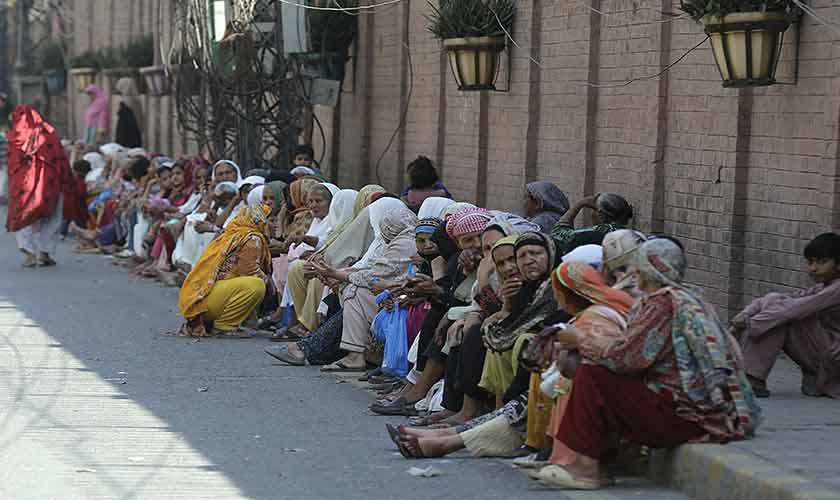
s the crescent moon ushers in the holy month of Ramazan, the spirit of generosity across Lahore becomes almost tangible. From the bustling aisles of Gulberg’s markets to the quiet corners of welfare centres, acts of kindness — both individual and collective — surge in a wave of religious devotion and social responsibility.
In Main Market, Gulberg, a simple donation box placed at a local pharmacy by a private educational institution serves as a litmus test for this seasonal shift. “Normally, the box fills up in about two weeks, but during Ramazan, we have to empty it twice a week,” says Ashfaq Ahmed, a young salesman at the pharmacy.
He attributes the spike to both increased foot traffic and a heightened desire to give. “Customers tend to donate much more generously during this month.”
This observation is backed by data and leadership within the philanthropic sector. Muhammad Bilal, CEO of the Al Wasiyo Welfare Foundation, notes that the religious significance of the month acts as a powerful catalyst. “In Ramazan, charity increases because people calculate their annual Zakat and prefer to distribute it immediately to seek greater spiritual rewards,” he tells TNS.
Bilal’s foundation has supported orphanages and senior homes since 2020. He points out that urban centres see the highest activity: “Where there is business, there is naturally more donation. Public trust and consistent activity are the engines that keep this support growing.”
The culture of giving isn’t limited to large-scale institutional donations. It permeates the city’s domestic life. Sughra Mai, who works as domestic help for five households in Gulberg II, says that her employers consistently provide an “extra salary” ahead of the two Eids every year.
“It helps us manage the month and the festivities,” she says. Her experience mirrors the findings of the 2021 Pakistan Giving Index, which revealed that roughly 84 percent of individuals give charity in some form, regardless of their income levels. Most of this aid is directed towards people known personally to the donor or to those in immediate need on the streets.
To ensure that generosity isn’t exploited, the Home Department maintains a strict watch. This year, authorities issued a list of 89 banned or unregistered organisations, warning that supporting proscribed groups is a criminal offence.
| W |
ith the massive influx of capital comes the need for oversight. To ensure that generosity isn’t exploited, the Home Department maintains a strict watch. This year, authorities issued a list of 89 banned or unregistered organisations, warning that supporting proscribed groups is a criminal offence under the Anti-Terrorism Act 1997.
Officials advise citizens to verify that their chosen charities are registered with the Punjab Charity Commission. Transparency, they argue, is essential to maintaining the public trust that fuels Lahore’s welfare ecosystem.
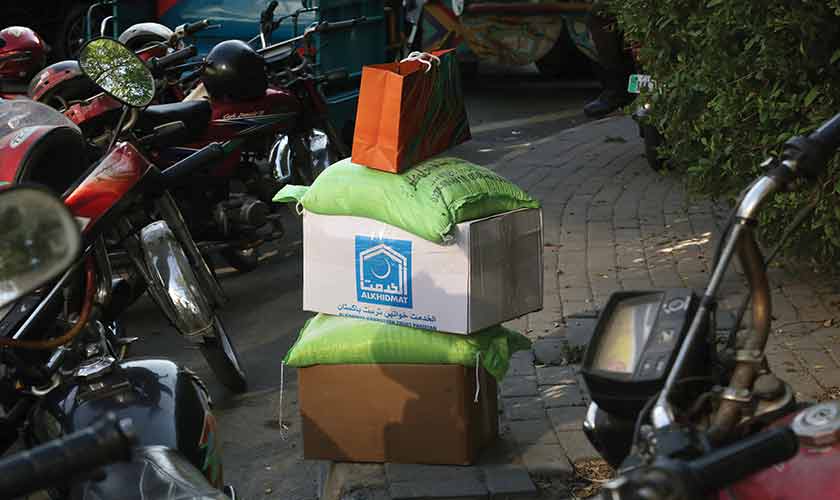
While many rely on public appeals, some organisations operate on a private-network model. Zahid Bhatti, founder of UKCAB — a community development provider active since 2006 — explains that their Ramazan operations are funded entirely through business partners.
This year, UKCAB distributed 500 food parcels before the first day of fasting. Their outreach included 1,000 parcels at Jamia Ashrafia and specific support for the Tahaffuz Darsgah, a school for transgender individuals.
“We have a system to ensure fair distribution,” Bhatti explains. Using ID cards to verify household sizes, they ensure that a family of four receives a parcel of sufficient quality and quantity, with logistics handled by their partner, Al-Fateh.
Whether through the formal calculation of Zakat or the quiet handing over of a food parcel, Lahore’s charitable landscape during Ramazan is a testament to the concept of sadaqah jariyah (perpetual charity). Despite ongoing economic pressures, the city’s donors seem undeterred.
As Bilal puts it: “Our work has expanded. As work increases, donations follow.” In a city defined by its heart, the month of Ramazan remains the time when that heart beats the loudest.
Ahsan Raza is the editor of Minute Mirror. He can be reached at [email protected]