Print Story
X




Ending child marriage requires more than legislation
| T |
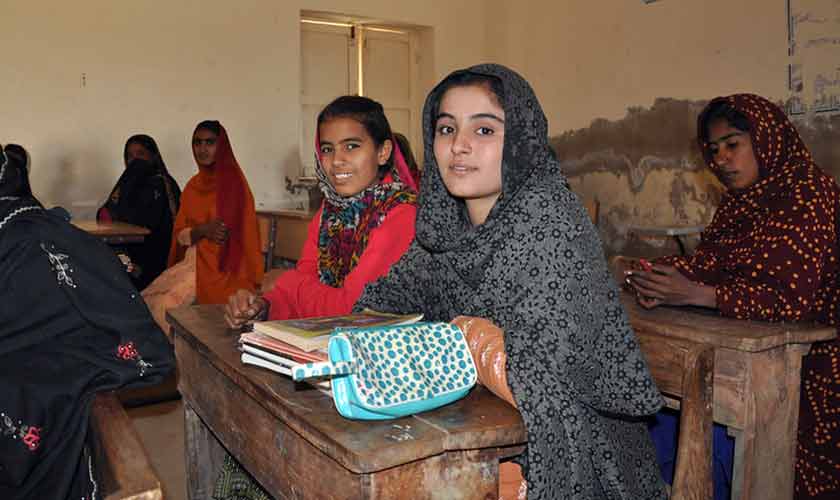
he classroom at Lahore College for Women University was unusually quiet that winter afternoon. Sunlight filtered through tall windows, catching rows of attentive first-semester students who had only just begun adjusting to university life. Some clutched notebooks; others simply listened, wide-eyed, as the discussion turned from textbooks to something far heavier — childhoods that ended too soon.
Child marriage in Pakistan is often discussed in policy papers, courtrooms and development reports. It is labelled as a human rights violation, a public health emergency, a socio-economic burden. But in that classroom on January 22, it was not a statistic. It was a story. A name. A memory someone carried with visible effort.
As part of my internship with Pakistan Justice and Rights Initiatives, which began on December 25, I had been assigned to conduct awareness sessions on child marriage — its legal consequences, its health risks and its social impact. I had delivered facts before: legal age limits, constitutional protections, provincial legislation. I had spoken about how girls forced into early marriages often leave school, face early pregnancies, and endure lifelong emotional and physical scars.
That day, I asked the students to share stories from their own communities.
For a moment, no one moved.
Then I noticed a girl in the third row — slight, composed, but visibly tense. Her name, I later learnt, was Mehnaz Anmol. She was just 19 and had come to Lahore from Khyber-Pakhtunkhwa to continue her studies. When I encouraged participation, her fingers tightened around the edge of her desk. She looked as if she were debating with herself.
When she finally stood up, her voice was barely above a whisper. She did not begin by citing a law or volunteering an opinion. She began with a girl’s name.
Bano had been her neighbour.
Mehnaz paused often, as though each sentence required permission from a place deep within her. She said where she came from, child marriages were not unusual. Girls were rarely asked what they wished for in life. Decisions were made around them, for them, about them.
Bano, she said, had been thirteen.
At thirteen, many girls worry about exams, friendships and ambitions not yet shaped. Instead, Bano was married. Mehnaz described a childhood that closed “like a book no one had finished reading.” The wedding was not a celebration for Bano, she said, it was a departure from everything familiar.
Her schooling stopped. Her world narrowed to the walls of a house where she was expected to behave like an adult without ever being allowed to grow into one.
Mehnaz did not use dramatic language. She did not need to. She spoke of constant fear, of anger in the household, of expectations Bano did not understand. Early pregnancy followed, bringing serious health complications her young body struggled to cope with. Medical care was limited. Emotional support was almost non-existent.
“She was always tired,” Mehnaz said quietly. “Not just physically. Tired in her heart.”
Over time, Bano’s health worsened. So did her mental state. Mehnaz described long silences, unexplained crying and a deepening withdrawal from everyone around her. Words like anxiety and depression are rarely spoken openly in many communities. Yet the signs were there — heavy, visible and ignored.
The consequences extend far beyond individual households. Child marriage increases health risks for young mothers, fuels school dropouts, limits women’s participation in the workforce and perpetuates poverty. It is not only a personal tragedy but also a national development crisis.
Eventually, the weight of violence, illness and isolation became unbearable.
Bano took her own life.
The classroom fell so silent that even the hum of the ceiling fan seemed loud. Mehnaz sat down, as if relieved and frightened by her own courage. Her hands trembled, but her face held something else too — the fragile strength of someone who had decided that silence was no longer protection.
I had never met Bano. Yet in that moment, I felt her presence — not as a headline, but as a life interrupted.
Her story is not an isolated tragedy. Across Pakistan, thousands of girls face similar fates. Child marriage persists for many reasons. Poverty pushes some families to see marriage as financial relief. Illiteracy prevents awareness of legal protections and health risks. Social pressures tied to ‘honour’ and ‘reputation’ rush some parents into early decisions. Deep-rooted patriarchal norms view girls primarily as future wives and mothers, not individuals with independent aspirations.
Religion, too, is invoked, but mostly through cultural interpretation rather than informed understanding. Scholars have repeatedly said that Islamic principles stress consent, maturity, justice and protection of rights. Yet selective readings are sometimes used to defend practices that deny girls agency and safety.
Legally, the framework exists. Pakistan’s constitution promises dignity and equality. Provincial laws, including amendments to the Child Marriage Restraint Act, set minimum age requirements and prescribe penalties for those who facilitate underage marriages. Courts can intervene to stop such unions. Fines and imprisonment are written into the law.
But laws on paper do not always reach village courtyards or remote neighbourhoods. Enforcement remains inconsistent. Birth registration gaps make age verification difficult. Families lacking financial resources rarely approach courts. For many, survival outweighs legality.
The consequences extend far beyond individual households. Child marriage increases health risks for young mothers, fuels school dropouts, limits women’s participation in the workforce and perpetuates cycles of poverty. It is not only a personal tragedy; it is a national development crisis as well.
In that classroom, the issue did not feel abstract or systemic. It felt like Mehnaz standing with shaking hands. Like a friend she could not save. Like a question hanging in the air: how many more stories are never told?
As someone working in human rights advocacy, I cannot accept the idea that early marriage is a tradition beyond challenge. Girls are not burdens to be transferred or responsibilities to be rushed. They are citizens with rights — to education, to health, to safety, to choice.
Ending child marriage requires more than legislation. It demands accountable institutions, community awareness, accessible justice systems and economic support for vulnerable families. It requires religious and community leaders to speak clearly about consent and protection. It requires schools to remain open doors, not brief interruptions before adulthood is imposed.
Most of all, it requires listening — truly listening — to voices like Mehnaz’s because sometimes change begins not in parliament or courtrooms, but in a quiet classroom, when one young girl decides that a story too painful to tell is still worth telling.
The writer is a freelance contributor