Print Story
X




As Pakistan Idol moved into Episodes 31 and 32, you could feel the shift straight away. Strong vocals were no longer enough. The show wanted meaning. It wanted awareness.

| B |
y Episodes 31 and 32, Pakistan Idol stopped being a str-aightforward singing contest. You could hear it in the song choices and feel it in the judging. These episodes asked contestants to think harder about what they were singing and why those songs mattered.
Music stays with you because it carries memory. It is a scientific fact that lyrics can and do help cognitive memory, just like playing an instrument helps with muscle memory. Within songs, our ways of speaking and expression echo daily life. When you hear a folk song that’s been passed down through generations, you’re hearing how people once lived and what they cared about. When someone sings that song today, they’re keeping it in circulation. That connection matters and these episodes leaned into that idea.
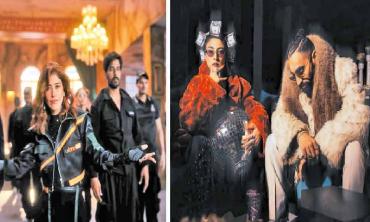
With Fawad Khan absent, Bilal Saeed stepped in as guest judge, quickly altering the dynamic. He spoke to the contestants like working musi-cians, not as a person in a position of power who could hand out final verdicts with indifference. What came next weren’t polished speeches but honest, grounded conversations. You could feel the pressure ease slightly without the competition losing its edge.

Waqar Hussain stood out with his version of Bilal Saeed’s ‘Adhi Adhi Raat’. Few attempt this modern pop piece with real feeling, either over-thinking it or playing it too safe. Waqar let the song unfold naturally. Hints of traditional vocals slipped in, soft alaaps floating through but never crowding the melody. His strength lay in timing, knowing when to hold back and when to push forward. Every decision was deliberate and it showed.
Maham Tahir followed with Arif Lohar’s ‘Jugni’, performing while unwell. Not every note landed cleanly, but that didn’t matter as much. A showcase of sheer vocal power had been accomplished before. This was about going beyond a display of seven notes collectively known as the sargam, which all the judges are well-versed in. Tahir’s performance was rooted in folk tradition and she performed a song originally made popular by Alam Lohar and later popularised by his son Arif Lohar. Taking this intergenerational folk number, she pushed forward with determination.
There was resolve in the way she sang and a genuine effort, because ‘Jugni’ is not an easy song to sing. I have seen and heard its recordings built around modern arrangements and it is a monumental task. For Tahir to get through the song was a marvellous accomplishment.

Rouhan Abbas chose Bilal Saeed’s ‘Khair Mangdi’, shaping each note with instinct. Without a single slip in timing or pitch, everything stayed tight. Still, warmth never really caught on. While voices around him leaned into bold choices, he stepped back instead. Risk was nowhere near. There was polish, perhaps too much, as though the edges had been sanded down one time too many. Was it because Bilal Saeed was present as a judge watching the performance? Perhaps.
Tarab Nafees brought confidence to Hadiqa Kiani’s ‘Intehai Shauq’. She moved comfortably between the various notes, recognising its softer emotional moments. ‘Intehai Shauq’ is a very difficult song for anyone to perform. For any contestant to choose it is a gamble.
However, Tarab showed that age can sometimes be just a number with her impressive performance. The way this song had been arranged helped, especially the flute section and com-bined, it felt like a song from a live set rather than one sung for a slot in a national competition.
When eliminations arrived, Muha-mmad Minam and Rouhan Abbas exited the show. The decision made sense based on how their performance levels had been falling short over time. The show handled it quietly, keeping the focus on progress rather than departure. Episode 31 worked because it treated nostalgia seriously. Some performances lacked strength where it counted and those who faded here couldn’t sustain the pressure as the stakes continued to rise.
Episode 32 stepped away from the usual competition format, instead embracing celebration centred around Basant. From Shafaq Ali’s warm welcome to the vibrant yellow and green stage design, the tone was distinctly festive. While acknowledging the complex public perception of Basant, the episode still made space for light-heartedness and joy.
Shazia Manzoor joined as guest judge and brought an ease that filled the space effectively than any rulebook. Her presence served as a reminder that musical careers extend far beyond the timeline of a reality show. She didn’t position herself as an endpoint others must reach, but as an example of artistry and staying power, proof that staying matters more than arriving.
The emotional core of the evening was the all-female Basant medley. No one tried to stand above the rest as they moved between folk roots, classical lines and pop pulses. Each voice found a place beside another, never pushing forward. The music felt genuinely shared, perfectly matching the spirit of the occasion.
Merab Javilin performed Shazia Manzoor’s ‘Batiyan Bhujai Rakkhdi’ with a pleasant delivery, smooth yet forgettable. At this point in the season, competence alone wasn’t sufficient.
The performance played it safe, showing little growth and the judges offered mild but clear feedback. What stuck wasn’t the voice, but the silence after.
Muhammad Nabeel took a bolder approach with Mansoor Ali Malangi’s ‘Ek Phool Motiya Da’. Rough edges showed, yet something real landed. Emotion moved through every line, not despite the cracks but because of them.

Folk music allows such unfiltered expression and this performance captured it fully. Words blurred at times but the meaning remained clear. What mattered stood out without needing translation.
Hira Qaiser followed with Madam Afshan’s ‘Guddi Wangu Sajna’. It wasn’t a fully controlled vocal delivery but she certainly tried and that effort showed. Mistakes slipped in, yet she conveyed the song’s emotional nuances effectively. It fit naturally within the Basant theme without feeling forced.
The house band deserves credit as well. Throughout the season, music has had solid ground because of them. That stability allowed singers to attempt bigger songs and take risks. The often overlooked house band therefore deserves applause.
Shazia Manzoor closed things out by singing ‘Main Neel Karaiyan’. It wasn’t about judging or numbers, though. It was a simple celebration, a sense of people coming together as the contestants joined her on stage and danced with her. By the end, they brought the judges on stage as well and everyone danced together. There was no real choreography, just genuine emotion, togetherness through music and pure joy to witness.
By the end of these episodes, Pakistan Idol began to feel like more than a national vocal contest. The standout performers weren’t just skilled, they shone because they grasped the emotion behind each note. They made old melodies feel current without force.
Meaning grew where effort once dominated. A stronger sense of purpose settled in. What mattered became easier to hear. Clarity replaced noise. What started out as a talent hunt contest has now become home to new artists. Winning certainly matters. But these singers can go anywhere from here. It will not be easy, but it will be easier than starting without a national profile.