Print Story
X




Karachi’s cultural life over the first two weeks of February unfolded across strikingly different industries within pop culture, yet it asked the same basic questions. Who is art for? How does it last? What keeps it alive? You saw it in a Ghalib tribute at the Arts Council, in conversations on storytelling at the Karachi Literature Festival, in music performances at NAPA and in Spotify’s latest growth figures.
| A |
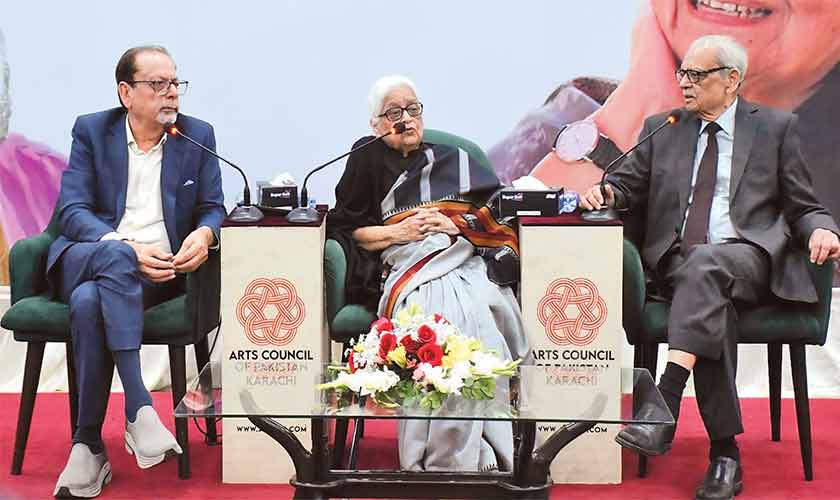
t the Arts Council of Pakistan Karachi, attention turned to memory and language thro-ugh Biyad-e-Ghalib, an event dedicated to Mirza Ghalib, the poet who continues to define Urdu’s intellectual and emotional vocab-ulary. The Arts Council held this event on Monday evening, February 9, to mark the death anniversary of Mirza Asadullah Khan Ghalib, observed on February 15.
Moderated by Arts Council Presi-dent Muhammad Ahmed Shah, the evening brought together poet Zehra Nigah and scholar Dr. Khurshid Rizvi before an audience of writers, critics, cultural figures and inquisitive individuals.
Zehra Nigah spoke of Ghalib not as a monument but as a living challenge. When you open his Diwan, she said, you still need patience and focus, even after decades of reading and teaching poetry. His words do not settle easily. She spoke about Ghalib’s unfulfilled desires, including his wish for recognition, the status of a Nawab and the disappointments that followed him through life. These experiences sharpened his writing. They did not weaken it. His letters, she added, bring you close to history, especially the shock and loss of 1857 and the collapse of the world he knew.
That Ghalib remained under-appreciated in his lifetime only makes his later stature even more striking. “As long as new thoughts continue to emerge, Ghalib will remain alive,” she remarked.
Dr. Khurshid Rizvi approached Ghalib from a critical lens, describing him as a figure whose intelligence cannot be neatly dissected but must be experienced. He pointed to Ghalib’s ability to compress entire narratives into a single couplet, a skill that continues to set him apart from his contemporaries and successors. Rizvi highlighted the restlessness of Ghalib’s thinking, recalling Allama Iqbal’s view that his ideas never came to a stop. His prose, particularly his letters, feel direct and natural even now. His command of Persian widened what Urdu could be in his time.
Muhammad Ahmed Shah closed the session by placing Ghalib as the first stylistic poet of Urdu. He said Ghalib moved away from inherited patterns and shaped a way of writing that still guides poets and prose writers today. The evening ended with bouquets presented to Zehra Nigah and Dr. Khurshid Rizvi on behalf of the Arts Council.
-----------------------------------------------
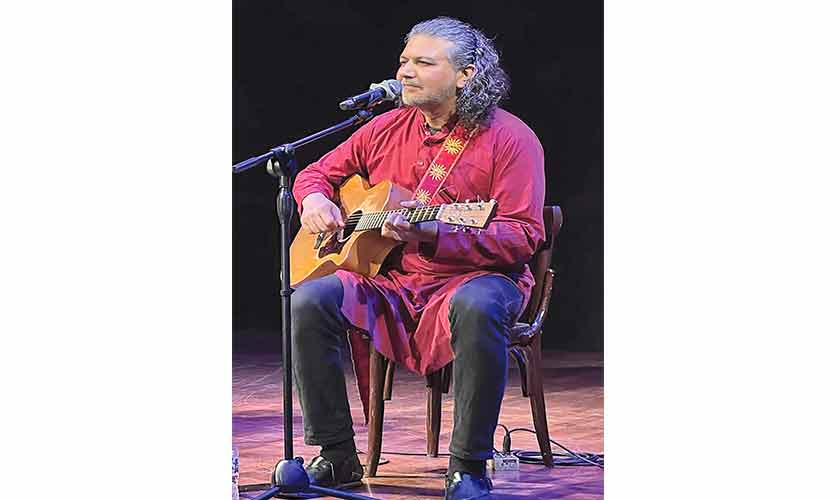
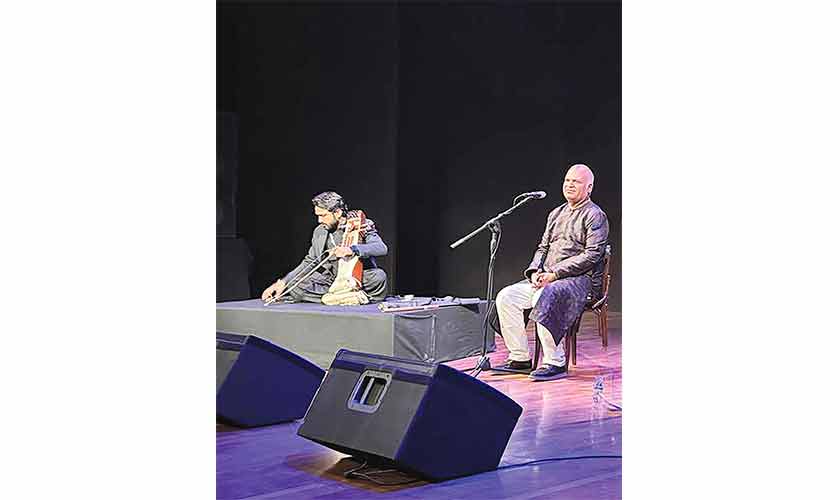
Music and performance gave the week a different rhythm. At the National Academy of Performing Arts (NAPA) in Karachi, Qalandar Journey: Songs Without Borders, was presented to a dynamic audience, offering a contemporary reworking of Sufi and folk traditions. Arieb Azhar led this Sufi music concert and was accompanied by Joshua Amjad on dhol, Akmal Qadri on flute and Gul Muhammad on sarangi.
Azhar moved between verses by Bulleh Shah, Faiz Ahmed Faiz, Waris Shah and Khwaja Ghulam Fareed, then shifted to Leonard Cohen and traditional Bosnian and Irish songs. He did not treat the material as museum pieces. He reshaped it, introducing his own variations to familiar compositions, letting the music unfold with grace and purpose.
A brilliant performer, Arieb and his fellow musicians built a shared mood of devotion and defiance, with energetic dhamaals that drew an enthusiastic response from the audience.
The following week, music was replaced by theatre as NAPA offered audiences a quieter experience with Rumi: Unveiling of the Sun. Written by Amrit Kent and directed by ShahNawaz Bhatti, the play followed the tension between Jalaluddin Rumi and Shamsuddin Tabrizi. It traced Rumi as a man in conflict, pulled apart and changed by love and loss. Performances by Mujtaba Zaidi, Sarfaraz Ali and Zubair Baloch kept the focus on that inner struggle. As the first stage play written on Rumi’s life, the production pointed to a growing interest in retelling spiritual histories through contemporary performance.
-----------------------------------------------
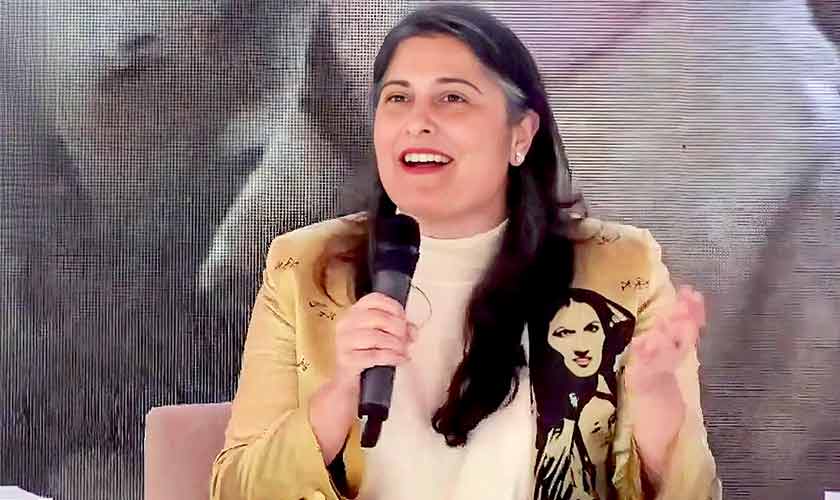
If the Arts Council event looked to the past to understand literary foundations, the Karachi Literature Festival stayed firmly in the present. Speaking on the festival’s second day, filmmaker and Academy Award-winner Sharmeen Obaid-Chinoy discussed how and why some stories work while others fail to land.
She argued that research matters, but it does not work on its own. If a story does not connect with its audience, it goes nowhere.
Drawing on her work addressing hate violence, climate change and social injustice, Obaid-Chinoy stre-ssed the importance of relevance. “After extensive research on hate violence, we focus on content that resonates with the audience. There is no point in creating material that fails to engage people,” she said, adding that awareness alone does not change anything.
She also spoke about hope and its importance, admiring those who live amid uncertainty and describing hope as both fragile and powerful. “There are many people who are surviving solely on hope, believing in miracles. I am inspired by everyday Pakistanis. Hope is a wonderful thing. If you have hope, you will create change.”
Her team’s work on climate change, including 18 films and children’s books distributed to hundreds of schools, was framed as long-term cultural work that takes time to show results. Crucially, she emphasised the need to build strong creative institutions in Pakistan, noting that Patakha Pictures has funded dozens of women filmmakers to date.
That kind of progress, she said, is only possible through institutions working together.“It is impossible to do this without collaboration between institutions.”
-----------------------------------------------

Step outside Karachi’s stages and seminar halls and you see the numbers tell a strong story about growth at the intersection of music, audio and technology. This came in the form of an announcement by audio stre-aming giant Spotify, who unveiled fourth quarter of 2025 as its strongest yet. The platform now counts 751 million monthly active users. Pre-mium subscribers grew 10 per cent year on year to 290 million. Revenue climbed 13 per cent in constant currency to €4.5 billion while oper-ating income reached €701 million.
Company leadership focused less on streaming and more on what comes next. You can hear it in how they talk about discovery and connection. Artificial intelligence and new ways of interacting with content sit at the centre of that plan.
Daniel Ek, Founder and Executive Chairman, said, “What we’ve really built is a technology platform for audio and increasingly for all the ways creators connect with audi-ences. The next wave of technology shifts, AI, new interfaces, wearables and new ways of interacting with content, will reshape how people discover and experience audio and media.”
Alex Norström, Co-CEO, high-lighted momentum and ambition, “We closed out what we dubbed the Year of Accelerated Execution with another solid quarter. We’re framing 2026 as the Year of Raising Ambition. We were founded to solve what felt like the impossible and ambition will be a guiding principle of our next chapter.”
Gustav Söderström, Co-CEO, said, “We consider ourselves the R&D department for the music industry. The entire industry stands to benefit from this AI paradigm shift but we believe those who embrace this change and move fast will benefit the most.”
As technology continues to change how audio is discovered, Spotify is betting on 2026 as a turning point. Whether this broader vision of a creative platform delivers on its promise will only become clear with time.
-----------------------------------------------
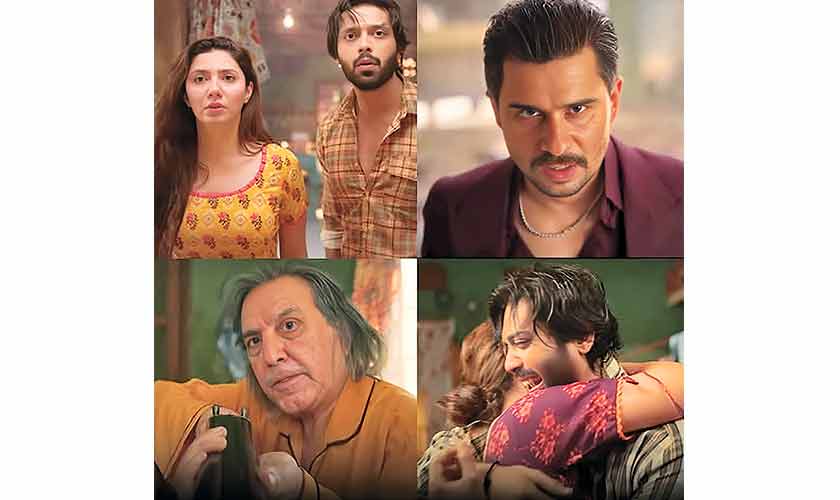
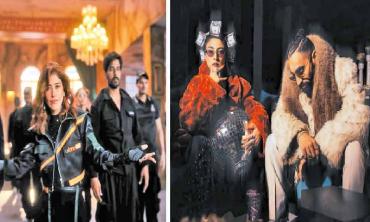
The trailer for Aag Lagay Basti Mein (ALBM), starring Mahira Khan and Fahad Mustafa, is finally out and wastes little time announcing its worldview. Set in Karachi and steeped in crime and chaos, the film presents itself as a darkly comic caper on the surface. Beneath that, it looks closely at what desperation does to ideals of honesty and survival. The film is set to release this Eidul Fitr. Directed by Bilal Atif Khan, Aag Lagay Basti Mein subscribes to the belief that nice guys don’t just finish last, they barely finish at all.
Fahad Mustafa plays Barkat, an honest and hard-working man whose refusal to cut corners feels less like a virtue and more like a liability. Mahira Khan’s Almaas, his wife, has little patience for her husband’s principles that do not pay the bills. Together, they form a familiar Karachi pairing where decency gets squeezed and frustration slowly takes over. The trailer sketches a simple beginning that quickly spirals. Barkat and Almaas work as cleaners and barely get by. Small-time crime enters as a way to survive. The shift feels practical at first. Then things escalate. Bigger players appear. Guns follow. Power games take over. Once the line is crossed, the film suggests there is no safe way back. Karachi presses in as more than a backdrop. It sets the rules.
The supporting cast sharpens the tone. Javed Sheikh plays a crime boss, though an unfortunate styling choice makes his look more distracting than intimidating. Tabish Hashmi appears as a smiling threat. Shehzaadi Samra, known for the viral “accha jee, aisa hai kya” clip, makes a cameo. One striking image shows Mustafa in a torn prison jumpsuit, hinting that Barkat’s choices lead to imprisonment, not freedom from rising inflation.
The trailer’s humour sits alongside harder ideas. Hunger runs deeper than food. When Barkat insists he is not a thief, it sounds less like denial and more like a final claim to selfhood. Class and power sit in the background throughout. Those in charge lecture easily. Desperation trickles down to those with the least power.
If the film holds this balance, it could land as a sharp Karachi story that treats crime as an outcome rather than spectacle, not simply as a choice but one shaped by lack of opportunities in a sprawling urban jungle of a city that can abandon you as easily as it adopts you.