Print Story
X




The idea of festivals driving economic activity is well established
| B |
uying a bus ticket from Islamabad to Lahore the night before Basant was near impossible. Additional buses had been added to the route, yet the demand far outstripped supply. At the station, acquaintances told me they hadn’t visited Lahore in years but were desperate to be part of the festival’s revival. Thousands were converging on the city, compressing weeks of economic activity into a few days.
Basant, in economic terms, is a demand shock with a deadline. This year, Lahore felt every bit of it. The festival is estimated to have generated Rs 6 billion. Tracking where that money flows makes clear why Basant is worth protecting as a cultural tradition and as a serious economic engine.
The skyline was a joy to watch. The scorching sun overlooked the city, with kites of the brightest colours being a salient feature of the day. The city was buzzing with an energy not witnessed before. Whole households hyped up the best kite flyer.
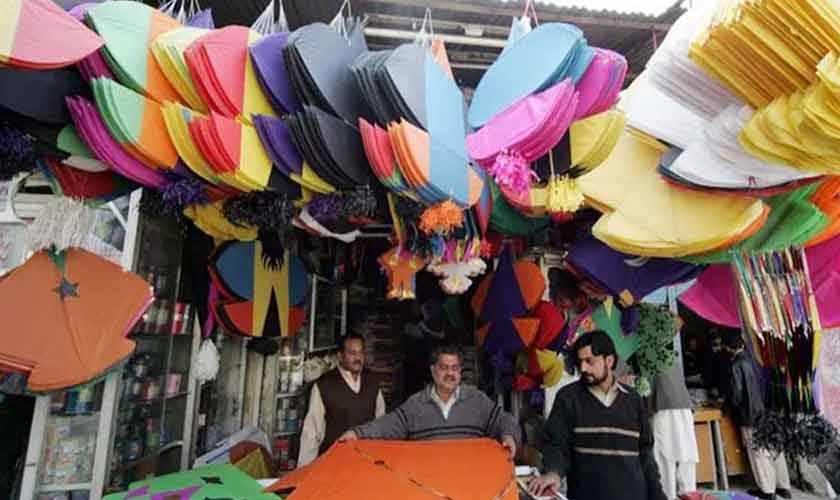
Amid the festivity, the economics of Basant extended well beyond kite sales. Ask any Lahori, and they will tell you how they struggled to find kites in the days leading up to the festival. The demand was relentless.
A kite is not a stand-alone product. It requires paper, dyes and cane, meaning every kite sold stimulates several other industries along the way. Economists call these backward linkages the supply chains activated by a single product.
This trickle-down effect supports thousands of workers. Many of them are engaged overtime. Extra shifts are organised to meet the hard deadline of the festival. For the workers, Basant is a livelihood, before it is a celebration.
Basant is as much about food and gathering as it is about kites. Having spent my own Basant feasting over pilaf and chicken roast, I realised, staring at my empty plate that the festival’s economic impact runs well beyond the sky. Economists call these forward linkages the business generated downstream from an event.
Throughout the festival, rooftop restaurants offered deals combining space, views and buffets, capitalising on the one thing every kite-flyer needs, a clear line of sight to the sky. Hotels across the city were fully booked, many charging premium rates, as tourists from across the country and abroad poured into Lahore. The hospitality sector experienced the kind of boom that months of regular business struggle to match.
The festival’s value, though, is not only economic. Basant reinforces Lahore’s identity as a city of joy and resilience, projecting a positive image both nationally and internationally. Kites were flown across many neighbourhoods, uniting communities that rarely overlap and bringing families together on rooftops across the city.
The demand is there; the economic case is overwhelming; and the cultural hunger runs deep. What is needed now is not enthusiasm - Lahore has plenty of that - it is a framework that lets the festival grow safely, year after year.
This is what economists call cultural capital. It is harder to quantify but no less real. Basant returned this year after a 25-year ban. I was two years old when it was last held, far too young to have learnt anything. This year, like many people my age, I picked it up for the first time. My dad taught me how to fly a kite, my mom showed me how to launch one properly. An uncle showed me how to do a paicha. Three generations on one rooftop, passing down something that had been all but lost.
The idea of festivals driving economic activity is well established. The Carnival in Rio de Janeiro, Oktoberfest in Munich, Mardi Gras in New Orleans and Diwali in India depict how cultural and celebratory gatherings catalyse economic growth through immediate spending, job creation and the long-term cultural capital that strengthens tourism and investment.
Brazil’s Carnival attracts millions of international tourists and generates billions in revenue. Munich’s Oktoberfest brings in over €1 billion annually by attracting 6 million visitors. Both showcase how cultural events, when sustained and regulated well, become permanent economic infrastructure. Basant is smaller in scale, but the underlying mechanics are the same, and the potential is real.
These festivals offer a roadmap. The Carnival sustains year-round employment across Rio’s hospitality, transport and creative industries, jobs that outlast the event itself. Basant drives a similar ecosystem in Lahore through kite makers, food vendors and transport providers. Nearly all of it remains informal. With better planning, that could change.
Moreover, the Carnival is Brazil’s global identity. Basant could become Lahore’s, branding the city as a sky of colourful kites and a haven of joy. However, scaling up demands regulation. Oktoberfest thrives because safety, licencing and branding are tightly controlled.
Basant’s challenge is to strike that balance of protecting the citizens and visitors without strangling the freedom that makes the festival worth celebrating in the first place.
Getting that balance right matters because what Basant brings to Lahore is hard to replicate. A few months ago, the city was engulfed in smog. The sky was grey and the mood matched. Fast forward to the festival and that same sky was a canvas of bright colours, cut through by a scorching sun and a soft breeze that reminded the city why spring belongs to Lahore. Basant’s return after 25 years proved what many already knew.
The demand is there; the economic case is overwhelming; and the cultural hunger runs deep. What it needs is not enthusiasm - Lahore has plenty of that, it is a framework that lets the festival grow safely, year after year, so that the next generation does not have to wait for another 25 years to learn how to fly a kite.
The writer, a UCL and LUMS alumnus, works at Oxford Policy Management and is a co-founder of HamSukhan, a community-based learning platform.