Print Story
X




Why women must be central to Pakistan-US economic engagement
| W |
hen Pakistan’s ambassador to the United States recently called for a renewed economic dialogue with Washington, the emphasis was clear: the relationship must move beyond security and geopolitics toward trade, investment and long-term economic cooperation. The statement reflected a broad policy shift toward geo-economics that could reshape Pakistan’s development trajectory. However, a critical question remained largely unanswered: where do women fit into this evolving economic partnership?
For decades, Pakistan’s participation in the global trade milieu has produced uneven results. Export growth has been narrowly concentrated; job creation has been disproportionate to the youth bulge; and women have remained largely excluded from formal economic activity. If the proposed Pakistan-US economic engagement is to be transformative rather than transactional, women’s economic participation must move from the margins to the centre of policy design.
Pakistan has one of the lowest female labour force participation rates in the world. Only about a quarter of working-age women are part of the labour force. An overwhelming majority of women workers is employed in informal, low-productivity sectors, including agriculture and unpaid family work. This is not merely a gender issue; it is a macroeconomic constraint as well.
Economists have consistently pointed out that countries with low female labour participation forgo significant growth potential. For Pakistan, where fiscal stress, external imbalances and unemployment remain persistent challenges, expanding women’s participation in productive economic activity is essential. Trade and foreign investment, paired with the right policies, can play a catalytic role in this shift.
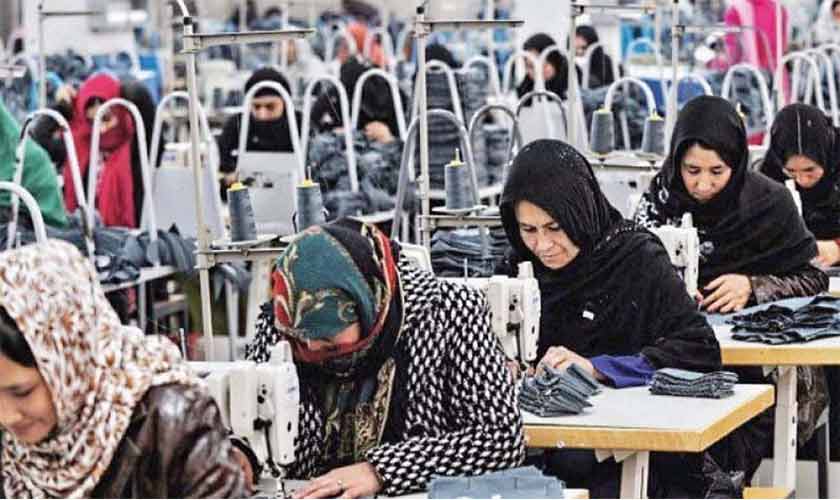
Pakistan’s exports to the United States remain heavily concentrated in textiles and apparel. The sector does employ women, but mostly in low-wage, low-mobility roles. While safeguarding textile market access remains important, a forward-looking trade strategy must go beyond the narrow base, especially if it aims to generate quality employment for women.
Several sectors offer strong potential for women’s participation in a diversified trade framework. The first among them is the IT and digital services sector, where women are increasingly entering freelancing, software services, digital marketing and platform-based work. These career paths are less constrained by mobility and offer direct access to global markets.
Healthcare and education have traditionally been major female participation sectors. These services could become exportable through telemedicine, online education and professional services. Creative and cultural industries, including handicrafts, fashion, design and artisanal production, where women entrepreneurs already operate but lack scale, branding and market access could greatly benefit from a trading relationship with potential exporting markets.
The success of Pakistan’s geo-economic pivot will ultimately be judged not by the number of dialogues held or memoranda signed, but by who benefits from the effort. Bringing women meaningfully into the equation will not only be socially just, it will also be economically smart.
Agri-processing and value-added food exports, where women play a substantial role in production but remain disconnected from formal value chains, must also be taken into consideration. A Pakistan–US trade dialogue that supports diversification into these areas will not only reduce export vulnerability but also align trade policy with women’s economic realities.
Women-owned small and medium enterprises (SMEs) sit at the intersection of trade, employment and inclusion. They face layered barriers including limited access to finance, weak integration into supply chains, regulatory complexity and restricted exposure to international buyers. This is where bilateral economic engagement can make a tangible difference. Preferential market access, buyer–supplier matchmaking, export readiness programmes and targeted financing mechanisms, if designed with women entrepreneurs in mind, can help bridge the gap between local enterprise and global trade.
Pakistan is not starting from zero. Platforms such as the Pakistan Women Entrepreneurs Network for Trade (WE-NET) and women chambers of commerce have laid important groundwork by advocating for women traders, supporting capacity building and facilitating linkages. On the US side, initiatives like the Academy for Women Entrepreneurs (AWE) have demonstrated an appetite for collaboration. What is missing is institutional scale and continuity.
As economic engagement with the US is recalibrated, there is a strong case for institutionalising a Pak–US Women in Business and Trade Forum as part of the dialogue architecture. Such a platform can serve several critical functions, such as elevating women entrepreneurs’ voices within trade and investment policymaking; connecting Pakistani women-led firms with US buyers, investors and accelerators; supporting integration of women-owned SMEs into global value chains; and generating gender-disaggregated data to inform trade and industrial policy.
This forum should not be a symbolic gesture. International experience shows that when women are included in trade frameworks, the results are more sustainable, more diversified and more resilient to shocks.
Pakistan’s call for deeper economic engagement with the United States not only comes at a time of acute economic stress but also of opportunity. Global supply chains are shifting, services trade is expanding and digital platforms are lowering entry barriers. Women are already participating in these spaces informally; policy must now catch up.
If trade negotiations and investment frameworks continue to be gender-blind, they will reinforce existing inequalities. If they are designed with inclusion in mind by supporting women’s skills, enterprises and access to markets, they can become powerful tools for structural transformation.
The success of Pakistan’s geo-economic pivot will ultimately be judged not by the number of dialogues held or memoranda signed, but by who benefits from the effort. Bringing women meaningfully into the equation will not only be socially fair, it will be economically smart as well.
The writer is a research associate at the Economic Growth Unit of the Sustainable Development Policy Institute. She can be reached at [email protected]