Print Story
X




Dr Ziaullah Bangash will be remembered for his balanced political approach
| D |
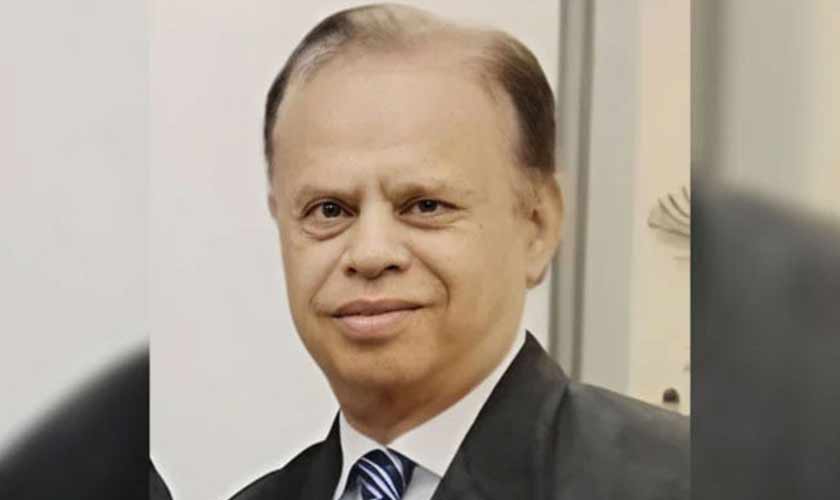
r Ziaullah Bangash, the veteran Pakistan Peoples Party leader and a former member of the Provincial Assembly has passed away after a lifetime devoted to democratic politics and public service. He belonged to a generation of selfless political workers who helped shape Pakistan’s mainstream political culture through perseverance, ideological commitment and institutional engagement.
Dr Bangash’s political career began at the grassroots. He was first elected a member of Lahore Baldia (district council) in 1979. In 1987, he was re-elected. In 1987, Benazir Bhutto nominated him for Lahore mayor. Subsequently he served as opposition leader in the Municipal Corporation (Baldia Uzma). His dedication to the party was again recognised in 1988 when he was awarded a PPP ticket in the general elections and was elected an MPA. He also served as general secretary of the Lahore PPP from 1987 to 1991.
Dr Bangash’s political career was marked by personal sacrifice. During Gen Zia-ul Haq’s reign, he was imprisoned several times, including stints in Kot Lakhpat Jail and Sahiwal Jail. He was also detained in solitary confinement at the Lahore Fort.
Dr Bangash was again arrested during the Pervez Musharraf era, including during the 2002 referendum, in 2004 and 2005, and during the 2007 Movement for the Restoration of the Judiciary. He did not flinch.
Dr Bangash was associated with the PPP since its formative years. He was widely regarded as a devoted and disciplined worker who stood by the party through decades of political upheaval. Inspired by the vision of Zulfikar Ali Bhutto, he had embraced the PPP’s principles of democracy, social justice and parliamentary supremacy. He was to remain steadfast in upholding these ideals throughout his life.
His wife, Tal’at Bangash, too, was politically engaged. She was elected a general councillor in the 2001 elections and later as a member of the Lahore Baldia Uzma in 2005. The family thus had a role in both local and provincial politics.
Over the years, Dr Bangash served the party in various organisational capacities. In the end, he was elevated to the PPP’s Federal Council. He was known for a calm temperament, institutional memory and emphasis on party unity. Senior colleagues regarded him as a voice for continuity that urged discipline, cohesion and ideological clarity at times when the party faced internal and external pressures.
As a parliamentarian, his his conduct reflected his belief in democratic institutions and parliamentary norms. He was never given to confrontational or media-driven politics. Instead, he focused on constituency matters, legislative responsibilities and principled participation in assembly proceedings. Fellow lawmakers consistently described him as courteous, prepared and respectful of parliamentary decorum. These qualities had earned him respect across party lines.
Despite his unquestioned seniority in the party, Dr Bangash maintained a low public profile. He was not inclined to personal glory or political spectacle, preferring instead to remain accessible to party workers and his constituents. His residence often functioned as an informal gathering place for PPP activists, local leaders and youth members seeking guidance. Many in the party recall his role as a mentor, noting his patience, realism and willingness to listen to everybody.
Dr Bangash was a representative of the party’s old guard — leaders and activists who built political movements exemplifying organisational discipline, patience and sacrifice rather than personal ambition.
His public career was defined by collective tragedy and personal resilience. He lived through the removal from office and execution of Zulfikar Ali Bhutto, the imprisonment and exile of Benazir Bhutto and her assassination. These events deeply affected him, yet they did not diminish his faith in democratic struggle. He believed that politics demanded endurance and that democratic continuity could only be preserved through sustained institutional engagement.
Funeral prayers for Dr Bangash were offered in Lahore. These were attended by a large number of PPP leaders, party workers, activists and citizens from various walks of life. The turnout reflected the respect he had commanded in political and public circles. Following the funeral prayers, he was laid to rest amid scenes of tremendous grief, as party workers and community members remembered his steadfast loyalty and long association with the PPP. Quran khwani and condolence gatherings followed. A steady stream of visitors at his residence offered prayers and shared memories of his dedication, kindness and mentorship.
Senior PPP leaders expressed grief over the loss of a loyal and experienced party worker. Bilawal Bhutto Zardari conveyed condolences to the bereaved family and acknowledged Dr Bangash’s longstanding association with the party, recognising his role as a principled ideological worker who remained committed during difficult times. President Asif Ali Zardari, too, expressed sorrow over his demise and acknowledged his contribution as one of the party’s dedicated grassroots leaders who had served the PPP with consistency and discipline.
Governor Sardar Saleem Haider Khan visited the residence of the late Dr Bangash to offer condolences to the bereaved family. He was received by members of the family, including Dr Bangash’s sons, Dr Arghuman Bangash and journalist Faizan Bangash. The governor prayed for the departed soul and paid his tribute to Dr Bangash’s political services, acknowledging his loyalty to the Pakistan Peoples Party and his contribution to democratic politics.
A number of PPP leaders, elected representatives and party workers also visited the family to express their sympathies. They remembered Dr Bangash as a representative of the party’s old guard — leaders who built political movements through organisational discipline, patience and sacrifice rather than personal ambition.
Beyond party circles, Dr Bangash was respected for his personal integrity, modesty and moderation. He avoided polarising rhetoric and believed in resolving political differences through dialogue and democratic processes. Political colleagues and opponents alike acknowledged his courteous conduct and his preference for institutional solutions over street confrontation. He was also remembered as a mentor who inspired younger activists to pursue public service with dedication and honesty.
Dr Ziaullah Bangash’s death has prompted reflection within the Pakistan Peoples Party on the importance of preserving institutional memory and recognising the contributions of those who laboured quietly to sustain democratic politics.
In an era increasingly shaped by transactional politics and media-driven narratives, Dr Bangash’s career is a reminder of a different political ethic — one rooted in loyalty, patience and belief in democratic continuity.
The writer is an award-winning investigative journalist and the editor-in-chief of The Scoop, a digital platform. He can be reached on X @HassanNaqvi5.