Print Story
X

| P |
ower in autocratic systems has always had a curious dual character: it looks absolute while actually resting on a narrow, unstable foundation. The strongman appears unchallengeable precisely because he has dismantled the institutions through which authority could peacefully pass to someone else. The ruler becomes the state, but in becoming indispensable he also becomes vulnerable, for no human being can permanently embody a political order.
Niccolò Machiavelli warned in The Prince that “men sooner forget the death of their father than the loss of their patrimony.” His meaning was analytical rather than merely cynical: political loyalty rests on interest, not affection. Dictatorships therefore do not end through orderly succession; they end when the balance of fear changes. Sometimes the change comes from generals, sometimes from crowds, sometimes simply from time and mortality. Across modern history three patterns recur — elite defection; popular mobilisation that paralyses coercion; and death in office — with occasional negotiated exits when rulers recognise the inevitable. The careers of Napoleon, Bismarck, Stalin, Salazar, Franco, Ayub Khan, Suharto, Marcos, Pinochet, Zia-ul Haq, Idi Amin and Pervez Musharraf illustrate the anatomy of political decline.
Autocracy does not function by one man alone, even when it claims to. It functions through a coalition of military officers, administrators, financiers and party figures whose careers depend upon proximity to the ruler. Political scientist Bruce Bueno de Mesquita described this circle as a “selectorate coalition,” a group whose loyalty is purchased through privilege and protection. Autocrats survive not because they are admired but because they remain useful to those who guard them. The moment usefulness declines, loyalty evaporates. This insight explains why dictators rarely fall solely because people protest. Popular anger is a constant in authoritarian societies. The decisive factor is whether the armed forces obey orders. Every revolution, quiet or dramatic, ultimately turns on a silent question: not “Are people protesting?” but “Will the army shoot?” When soldiers hesitate, the regime is already mortally wounded.
Napoleon Bonaparte’s fall demonstrates the decisive importance of elite abandonment. His rule depended on charisma and military success. France and the army became psychologically inseparable from his person. Yet the catastrophe of the Russian campaign in 1812 destroyed not merely troops but confidence. His marshals concluded that loyalty meant national suicide. Talleyrand and other insiders defected; Napoleon abdicated and was exiled to Elba. His dramatic return during the Hundred Days confirmed the same principle: after Waterloo the army ceased to believe in victory and the empire dissolved almost instantly. Posterity remembers him ambiguously, conqueror and tyrant to some, legal moderniser and national hero to others, but his career established the rule of personalist regimes: charisma creates authority, yet military confidence sustains survival.
Otto von Bismarck’s removal presents a subtler form of displacement. He governed Germany through manipulation, censorship and emergency powers, yet his fall came not from rebellion but from a higher sovereign. Kaiser Wilhelm II desired personal control and dismissed him in 1890. Bismarck’s bitter observation — “One cannot resign; one is dismissed” — revealed that even dominant figures depend upon formal authority structures. His legacy remains paradoxical: architect of German unity and modern administration, yet also a creator of a political culture inclined toward obedience rather than participatory politics.
Some rulers escape overthrow simply because they never leave power. Death becomes their exit. Joseph Stalin’s regime rested on pervasive fear so intense that initiative itself became dangerous. When he suffered a stroke in 1953, subordinates hesitated to assist him without orders. The terror he built immobilised the state. He died not overthrown but isolated. Churchill captured the paradox: “Stalin found Russia with the wooden plough and left it equipped with atomic weapons.” Industrialisation and wartime victory coexisted with purges, famine and mass imprisonment. His regime reveals that ideological dictatorships — communism in this case — can generate extraordinary mobilisation, but also extraordinary brutality.
Across these diverse experiences, ideology matters less to immediate survival than coalition stability, yet ideology often determines the intensity of both rule and ruin. Monarchists, nationalists, communists, fascists and military rulers persisted so long as the inner circle of generals, party officials, financiers and security chiefs believed their fortunes were safer inside the regime than outside it. When elites calculated the opposite, collapse followed with astonishing speed. The ideological fervour of a regime might mobilise millions, but it cannot compensate for the withdrawal of military confidence or the exhaustion of resources. Fascist Italy under Benito Mussolini and Nazi Germany under Adolf Hitler demonstrate this with tragic clarity: both regimes wrapped themselves in totalising ideology; both fell when war destroyed the coalition that sustained them.
Mussolini’s dictatorship was built on spectacle, nationalism and the promise of restored Roman grandeur. Fascism provided an ideological narrative that fused state, leader and nation into a single mythic entity. Yet beneath the rhetoric lay a conventional authoritarian structure dependent on military performance and elite loyalty. As long as Mussolini delivered prestige and avoided catastrophic defeat, the Italian monarchy, industrial elites and armed forces tolerated — even benefited from — his rule. But by 1943, military failures in North Africa and the Allied invasion of Sicily had shattered confidence. The Fascist Grand Council, once an instrument of Mussolini’s authority, turned against him. King Victor Emmanuel III had him arrested. The dictator who had boasted of imperial destiny fell not through popular revolution but through elite calculation. Later rescued by German forces and installed as head of a puppet regime in northern Italy, Mussolini’s authority was hollow. In 1945, as the regime disintegrated, he attempted to flee and was captured and executed by Italian partisans. His public display in Milan symbolized not merely defeat but moral repudiation. Violent overthrow ensured that historical memory would treat him harshly: ideology magnified both ambition and disgrace.
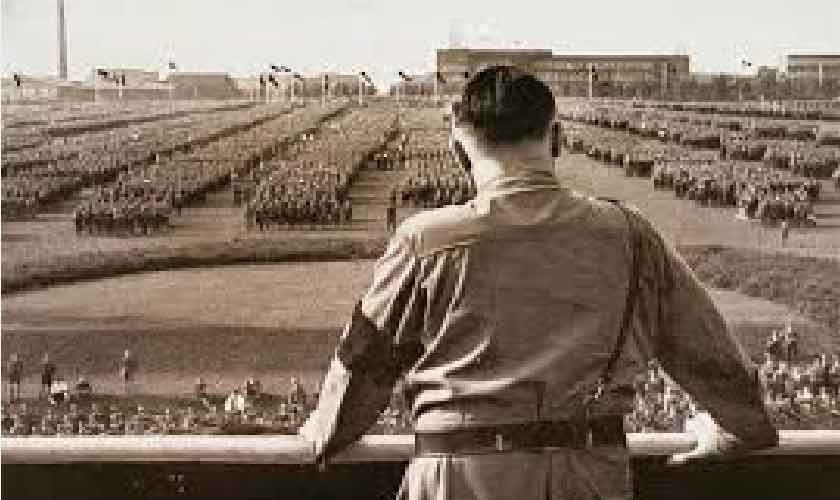
Hitler’s downfall followed a parallel but even more catastrophic trajectory. The Nazi regime was among the most ideologically driven autocracies in history, mobilising society through racial doctrine, total war and charismatic authority. Hitler fused party, state and military into a singular command structure in which loyalty to him personally superseded institutional norms. For years, military victories and economic revival reinforced elite allegiance. But as World War II turned decisively against Germany, the regime’s coalition began to fracture.
The failed July 20, 1944 plot by German officers revealed that segments of the elite no longer believed survival possible under Hitler’s leadership. Nevertheless, fear and indoctrination prevented a successful coup. Ultimately, the regime collapsed not from internal reform but from external military destruction. As Soviet forces entered Berlin in April 1945, Hitler committed suicide in his bunker. His death marked the literal annihilation of a regime that had tied its destiny entirely to an individual and an apocalyptic ideology. The Allied occupation dismantled the Nazi state; unlike Franco’s Spain or Salazar’s Portugal, there was no negotiated transition, no institutional continuity. Violent defeat ensured lasting moral condemnation. If Mussolini’s execution dramatised repudiation, Hitler’s suicide amid ruin symbolised total ideological bankruptcy.
The cases of Mussolini and Hitler underscore an important theoretical distinction between ideological autocracies and purely personalist regimes. Ideological systems often penetrate society deeply, building party structures, propaganda networks and paramilitary organisations. This can prolong survival because belief supplements fear. Yet when defeat comes, it tends to be absolute. The very totality of ideology leaves little room for compromise or negotiated exit. Personalist dictators like Marcos or Musharraf could retreat into exile; ideological dictatorships tied to war and existential struggle often end in destruction.
Francisco Franco in Spain and António Salazar in Portugal pursued longevity through controlled repression rather than revolutionary fervour. They maintained censorship and political police but avoided reckless wars and attempted to institutionalise succession. Franco restored the monarchy before dying in 1975, enabling Spain’s gradual democratisation. Salazar suffered a stroke in 1968 and was quietly replaced while remaining unaware of his removal. Their regimes lacked grand universal ideology; instead they promoted order, religion and stability. Consequently, their reputations remain contested rather than universally condemned.
Late Twentieth-Century authoritarianism increasingly fell through popular mobilisation combined with elite hesitation. Ferdinand Marcos faced this in 1986 when election fraud triggered the People Power Revolution. Millions gathered in Manila, yet the decisive moment was military neutrality. Once segments of the armed forces refused repression and external support shifted, Marcos fled to Hawaii. The spectacle of lavish wealth symbolised lost legitimacy. Indonesia’s Suharto fell similarly after the 1997 financial crisis undermined economic confidence. Student protests spread, but what ended his rule was the withdrawal of military backing. He resigned in 1998, neither imprisoned nor executed, demonstrating how elites sometimes prefer stability over retribution.
The writer is a professor in the Faculty of Liberal Arts at the Beaconhouse National University, Lahore