Print Story
X




One woman on a scooter has inspired many others to reconceptualise the city, mobility and freedom. Her perseverance has also set the record straight; the roads belong as much to women as to men
| O |
n the busy streets of Peshawar, where traffic moves slowly and horns never stop honking, a woman riding a scooter still catches attention. It is not because of speed or noise, but because of what the scene represents. For many, it is a simple ride. For others, it is a quiet challenge to old habits and fears.
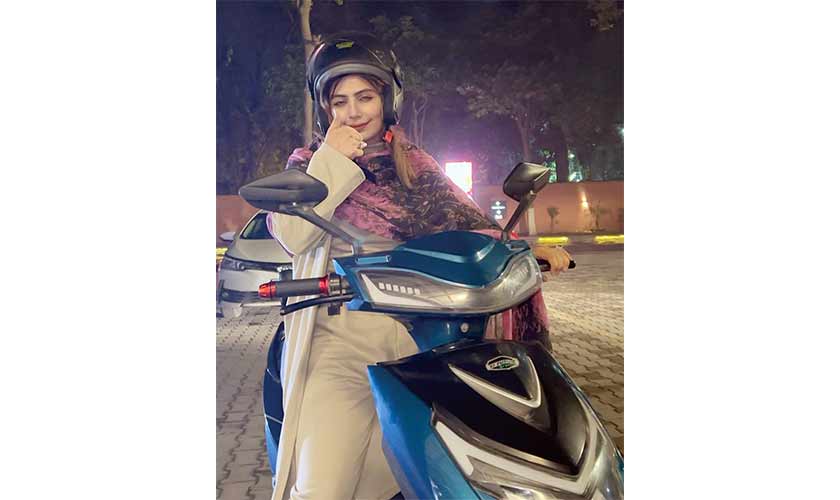
This is the story of Saba Yamin, a resident of Peshawar, who chose a scooter to solve her daily problems. In the process, she inspired many other women to reconceptualise the city and what it means to be mobile and fearless.
Saba is a content creator by profession. Her work requires her to travel to meetings, appointments and events in different parts of the city. Like many working women, she wanted to manage her time better and reach these places on schedule.
At first, she used her car for the daily commute. But Peshawar’s traffic is a serious problem. Roads are crowded. Congestion, traffic jams and bottlenecks often cause delays. Even short trips could take hours. Being stuck in traffic caused stress and made her late for work. Over time, this became part of her daily routine.
Public transport was not a real solution either. In Peshawar, BRT buses and wagons are often overcrowded. The female commuters on board complain that pushing and shoving is common. Another issue is lack of personal boundaries. Then, there is harassment. For many women, traveling this way is uncomfortable. Saba saw these problems not only in her own life but also in the lives of women around her.
“I saw women struggling every day,” she says, “it felt unfair.”
During this time, Saba started noticing something else. On social media, she saw women riding scooters in Lahore and Islamabad. In those cities, scooters had become a normal and useful way for women to travel. They were easy to ride and cost-effective.
This inspired Saba, but she realised that, in Peshawar, women riding scooters was still rare. The idea had not caught on. If women can do this in other cities, why not in Peshawar? The answer to the question was transformative.
Saba says deciding to ride a scooter in Peshawar was not easy. The city is often described as traditional and conservative. Women’s movements in public spaces are closely watched. A woman riding a scooter would attract undesirable attention. Saba knew she would face criticism. She did.
When she first started riding her scooter, some people asked questions and made comments. A few warned her that it was unsafe. She was told that such things were “not done” in Peshawar.
“There were days when the comments were very discouraging,” Saba recalls. “Some people tried to scare me, but I wouldn’t stop.“
Instead, Saba focused on her purpose. She followed traffic rules, wore a helmet and rode carefully. She made riding a scooter part of her daily life. Slowly, things began to change. People started seeing her regularly riding her scooter. Other drivers became more respectful. The shock was replaced first by curiosity and, eventually, acceptance.
Saba says the image of Peshawar as a “backward” city is outdated. The city is changing. More women are now working and visible. Opportunities are still limited, but growing.
“Peshawar has clearly not stagnated. It is moving forward,” she says. “The mindsets are changing. It will take time, but it is definitely changing.”
She says she wanted to show the world through her blog that Peshawar was peaceful and its women strong and capable. The response surprised her. Women from Peshawar and other parts of the country started sending her messages. Many said her example had inspired them. Some shared their fears. Others said they had wanted to ride a scooter too but had been waiting for social acceptance.
“For me, these messages meant everything,” she says. “They showed that many women were watching and thinking about doing the same thing.”
She says that most of the encouragement came from women who praised her courage. Some told her that they planned to buy a scooter, once it becomes more common.
On the road, Saba says, most people give her space. Some still act surprised, but she ignores them. “I focus on my ride and safety,” she says. “I don’t let negative reactions bother me.”
Saba is careful to add that riding a scooter entails responsibility. “If women want to be accepted on the road, they must show responsibility,” she says. “Safety comes first.”
She also says the government can help normalise the sight of female motorists. She says it should support women by providing free or subsidised scooters.
“Mobility is empowering. It can completely change lives. When women can move freely, they can work, study and grow.”
Saba says life does not grow easier on its own. Women must take steps to improve their lives, even when the path seems difficult.
As she continues to ride her scooter through Peshawar’s streets, for many she has become a symbol of change, confidence and hope.
Her story is no longer just about a woman riding scooter. It is also about a city changing, about women finding new ways to claim space and about a future where mobility is not a privilege, but a right.
“Every woman faces life’s challenges,” she says. “Courage helps us move forward.”
Saba says Peshawar’s women are brave, talented and capable. All they need is support from their families and the society.
A little encouragement, she says, can lead to big changes. “When you support one woman, you help many.“
The writer is a multimedia producer. He tweets @daudpasaney.