Print Story
X




PTF hosted Pakistan’s first-ever ATP Challenger event; Pakistan recognised as Asia’s fastest-growing tennis nation
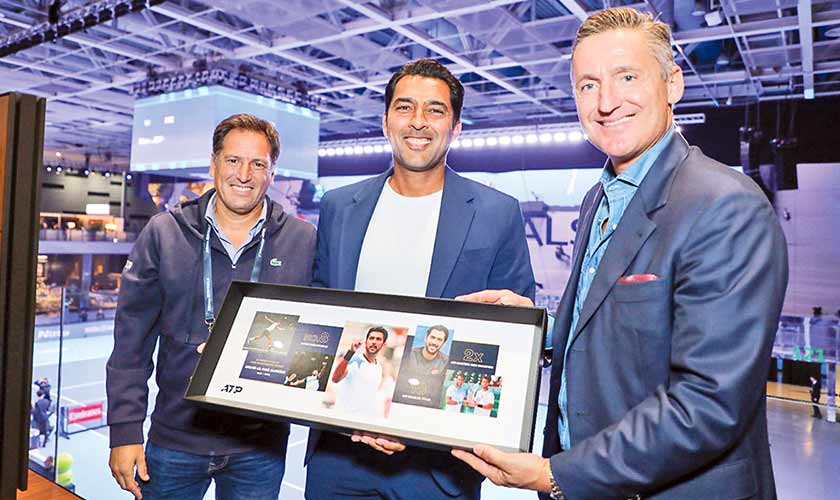
In the long and storied history of Pakistan’s sporting landscape, 2025 will be etched as the year the racket regained its resonance. Under the visionary leadership of President Aisam-ul-Haq Qureshi, the Pakistan Tennis Federation (PTF) has undergone a metamorphosis, evolving from a regional participant into a continental powerhouse. This was not a year of mere participation; it was a year of systemic triumph, record-breaking silverware, and a relentless pursuit of excellence that saw the Asian Tennis Federation (ATF) officially crown Pakistan as the fastest-progressing tennis nation in Asia.
The year began with a resounding statement of intent in the junior circuits. In Kuching, Malaysia, the Under-16 Davis Cup Junior team, led by the formidable trio of Mikaeel Ali Baig, Abubakar Talha, and Hamza Roman, delivered a masterclass in poise, remaining undefeated to clinch the Gold Medal after dismantling Indonesia in the final. This momentum surged forward to the ATF 12-and-Under South Asian Championships in Sri Lanka, where Pakistan’s youngest gladiators secured another Gold, most notably toppling arch-rivals India in a high-stakes semi-final that signaled the depth of the country’s burgeoning talent pool.
The success was not limited to the youth. In a historic debut at the ITF Masters 45+ World Tennis Championships in Turkey, the legendary pairing of Aisam-ul-Haq Qureshi and Aqeel Khan, alongside Shehryar Salamat, proved that class is permanent. The veteran squad returned with a haul of two Gold Medals and one Bronze, marking the first time Pakistan has asserted such dominance on the world veterans’ stage. Parallel to these feats, the Pakistan Wheelchair Tennis Team, led by the resilience of Asif Abbasi and Fida Hussain, secured a Bronze Medal at the BNP Paribas World Team Cup Qualifiers in Colombo, ensuring that the spirit of triumph was inclusive and universal.
Beyond the trophy cabinet, the PTF has fortified the very foundations of the sport. In a landmark administrative victory, the federation resolved a decade-long lease dispute with the Capital Development Authority (CDA) worth PKR 100 million, securing the long-term future of the PTF complex. This stability allowed for the construction of state-of-the-art multi-purpose courts, introducing Padel and Mini-Tennis to the youth of Islamabad, a move aligned with global trends to lower the entry barrier for aspiring athletes.
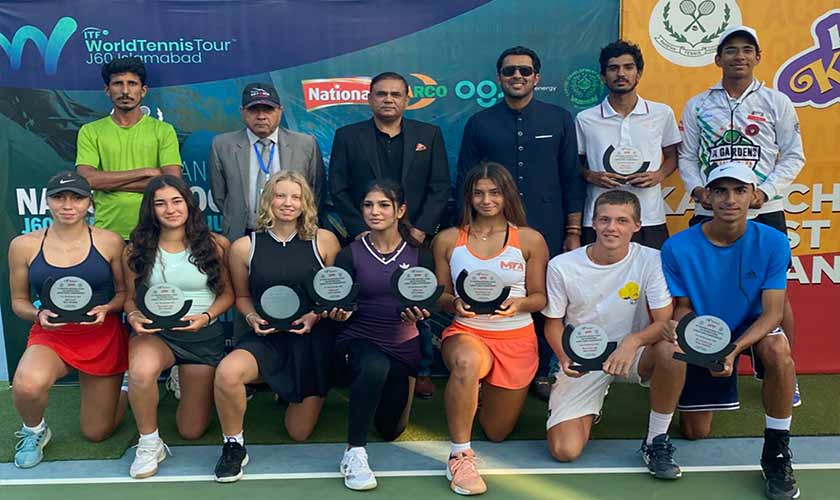
Diplomacy has played an equally pivotal role. The PTF successfully negotiated 21 international wild cards through strategic alliances with federations in Kazakhstan, Saudi Arabia, and Tunisia. These “golden tickets” provided rising stars like Ahmad Nael Qureshi and Muzammil Murtaza direct entry into the grueling ITF Pro Circuit and Men’s Futures, granting them the invaluable currency of international exposure. This diplomatic reach was further highlighted by the successful hosting of Pakistan’s first-ever ATP Challenger in Islamabad, an event that brought 25 world-class foreign professionals to the capital, forever altering the domestic perception of professional tennis.
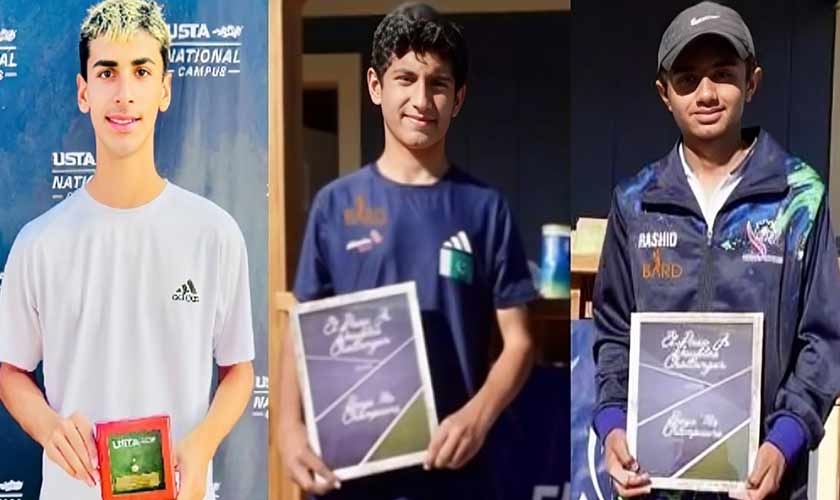
The individual accolades of 2025 read like a roll of honor. Mikaeel Ali Baig emerged as a generational talent, capturing a staggering 12 ITF titles (6 Singles, 6 Doubles). Meanwhile, the resurgence of women’s tennis found its face in Soha Ali, who became the first Pakistani female in six years to reach an ITF Junior final, doing so in Harare, Zimbabwe.
The federation’s commitment to the female game was further solidified with the formation of the Pakistan Women Tennis Association (PWTA) in April, a dedicated body aimed at dismantling barriers for women in sport.
Grassroots sensations like Hassan Usmani and Shayan Afridi have also become household names. Usmani’s triumph at the ATF 14-and-Under Championship in Saudi Arabia was made legendary when the trophy was presented to him by the “King of Clay” himself, Rafael Nadal, a moment that served as a symbolic passing of the torch to the next generation of Asian talent. Afridi mirrored this excellence in Colombo, clinching the ITF Asia 14-and-Under regional title and proving that Pakistan’s scouting systems are identifying world-class potential at an early age.
The PTF has recognized that talent without support is a flame without oxygen. In a bold move to professionalize the circuit, the federation distributed a record-breaking PKR 35 million in prize money over the 2024-25 season. This financial injection ensures that players can focus on their craft rather than their expenses. Furthermore, the National Tennis Centre (NTC) in Islamabad has become a year-round hub of elite performance, offering free-of-cost coaching to top-tier players across all age brackets.
Technical standards have been elevated through the introduction of international expertise. The federation invited renowned foreign coach Robert Davis and elite strength trainer Eduardo Vicencuo Lalovic to lead high-performance camps, exposing local players to the rigorous standards of modern sports science. Additionally, the appointment of a dedicated sports physiologist has shifted the focus toward mental conditioning, ensuring that Pakistani players are as psychologically resilient as they are technically gifted.
The pursuit of excellence extended to the sidelines. 2025 saw a concerted effort to upgrade the pedigree of Pakistani coaches and officials. Sara Mansoor made history by becoming the first Pakistani woman to achieve ITF Level 3 coaching certification in Spain, while several other coaches and umpires were sent to international schools in Bahrain, Lithuania, and Hungary. This “train the trainer” philosophy ensures that the knowledge gained at the highest levels of the sport is trickled down to every tennis club in the country.
As the sun sets on a historic 2025, the Pakistan Tennis Federation is already looking toward a more ambitious 2026. With plans to host seven ITF Junior events and expand the Serena Hotels Master Cup to underserved regions like Quetta and Gilgit, the roadmap is clear. The PTF has moved beyond the “compromise” era; it now operates on a strict motto of merit and discipline. Under this new regime, the racket is no longer just a piece of equipment in Pakistan, it is a symbol of national pride, a tool for diplomacy, and a bridge to a future where Pakistani athletes stand atop every podium in the world.