Print Story
X




In losing actors Eric Dane and James Van Der Beek, television lost two men who made feelings feel less embarrassing.
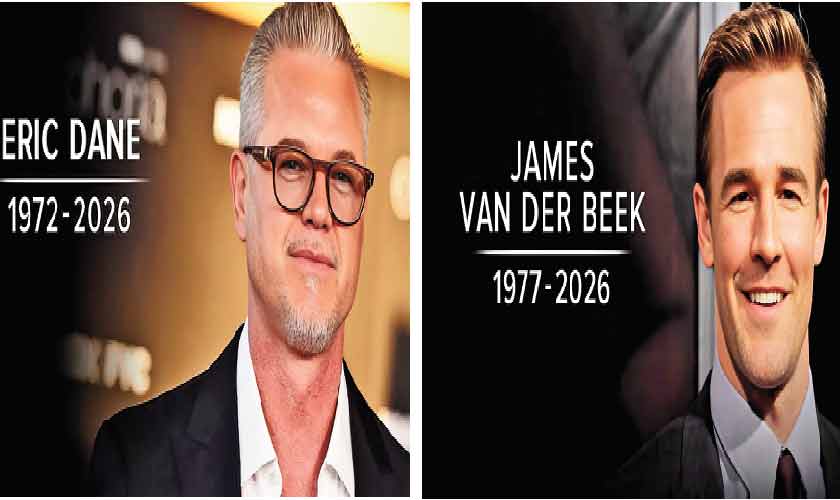
Within days of each other, Eric Dane and James Van Der Beek, who shaped the same era of television were gone. It would be easy to treat that as coincidence. But placed side by side, their stories reveal something common: a commitment to emotional honesty and careers that evolved without apology. They respected their audiences. They should have had more time. Their death is a reminder that the work they leave behind still matters.
Eric Dane
| S |
ome television characters you remember. Others feel like you grew up with them. For many of us, Eric Dane was the latter. When he first walked into Seattle Grace Hospital as Dr. Mark Sloan
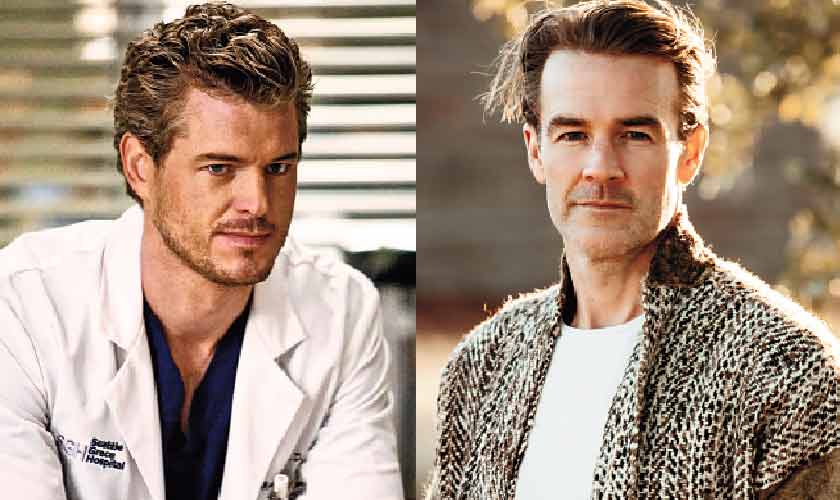
in the second season of Grey’s Anatomy, he was introduced as a complication. The man earned the nickname “McSteamy” before he pro-perly settled in. But what followed was more than a nickname. Over the years, Mark Sloan became one of the show’s emotional anchors: flawed, charming, wounded, funny and mag-netic. He proved that charisma and vulnerability could exist in the same person.
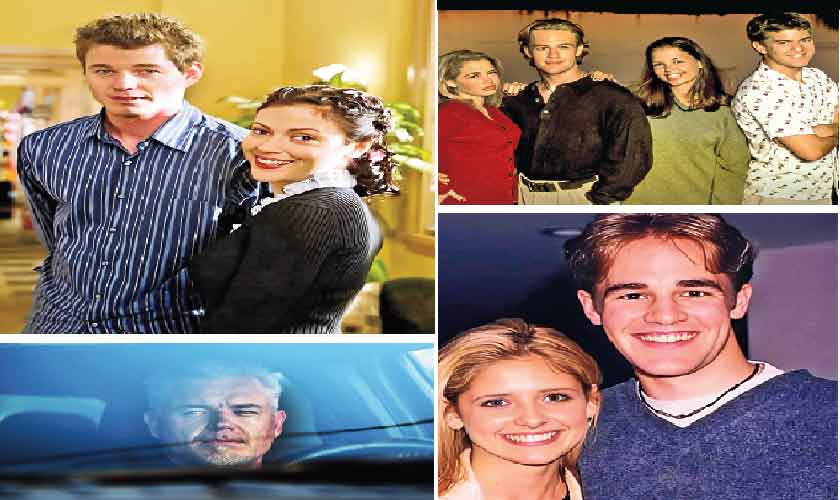
Dane’s death on February 19 just last month, at the age of 53, following a public battle with ALS (amyotrophic lateral sclerosis, also known as Lou Gehrig’s disease), feels particularly cruel because of what he represented. He wasn’t just a heart-throb, but an actor who understood that the most compelling characters are rarely uncomplicated.
For millennials and late Gen X viewers, Grey’s Anatomy was more than background television. It was appointment viewing. With doctors navigating love, attraction, ambition, rivalry and loss, Mark Sloan stood out because he was a brilliant example of how human beings can and do change. He began as eye candy. He stayed as something deeper.
Dane played the character with ease. There was always humour in his delivery, but when the scripts deman-ded heartbreak, especially in his arc with Lexie Grey (Chyler Leigh) and later in the family tensions involving Callie (Sara Ramirez) and Arizona (Jessica Capshaw), he delivered a softness that made you forget you could ever write him off. That was Dane’s gift. He made redemption believable.
Before Seattle Grace, he appeared as Jason Dean in Charmed, slipping easily into the world of the Halliwell sisters. Back then, television felt smaller and more intimate. Actors built careers through consistency, not viral moments. Dane belonged to that era, but he never stayed stagnant.
His portrayal of Cal Jacobs on Euphoria revealed an actor unafraid of discomfort. Cal was nothing like Mark Sloan. He was brittle, disturbing and deeply flawed, a patriarch suffo-cating under secrets. It would’ve been easy to stay in the comfort of nost-algic affection. Instead, Dane moved into darker territory and refused to be defined by a nickname.
His public battle with ALS added another layer to that legacy. In inter-views following his diagnosis, he spoke with candour that mirrored the vulnerability he brought to his roles. No melodrama. Just honesty. He advocated for awareness, research and dignity in illness with the same steadiness he brought to his work.
In the days following his passing, tributes poured in from colleagues across his 35-year career. Kate Walsh admitted she was “at a loss for words,” recalling his early nerves during his first episode. “He was so handsome and I thought ‘but can this guy act?’ and of course he could, and did, and the rest is history.” She remembered his “sensitivity and vulnerability,” calling him a source of support and love.
Patrick Dempsey reflected on their friendship, “We hit it off because there was never really any competition. It was just this wonderful mutual respect. The real loss is for us who don’t have him anymore.”
Chyler Leigh said, “Eric had a heart of gold. His humour and, especially, his laugh was infectious.”
Shonda Rhimes called him “a beloved member of the Shondaland and Grey’s Anatomy families, truly a gifted actor whose portrayal of Dr. Mark Sloan left an indelible mark.”
Others echoed similar sentiments of warmth, intelligence and loyalty, including Alyssa Milano, who remembered his “razor-sharp sense of humour,” Nina Dobrev, who called ALS “a cruel and unforgiving disease,” and Euphoria creator Sam Levinson, who described working with Dane as “an honour” and their friendship as “a gift.”
He is survived by his wife, Rebecca Gayheart, and their daughters Billie and Georgia.
There is something unsettling about losing actors tied to your formative viewing years. It reminds you that the faces you associate with comfort and late-night rewatches are not immune to real life. If you grew up with Mark Sloan, you already know what’s been lost.
May he rest in peace.
James Van Der Beek
| T |
here was once a teenage boy standing on a dock in Capeside, trying to articulate his feelings with almost painful sincerity. This was before irony dominated pop culture. Before self-awareness became a defence mechanism. That boy was Dawson Leery. The actor who brought him to life, James Van Der Beek, became the emotional barometer of a generation.
When Dawson’s Creek premiered in 1998, it shifted the quality of teen drama. The dialogue was verbose and self-aware. These were teenagers who analysed their feelings in real time and treated heartbreak as existential. At the centre was Dawson, and Van Der Beek played him without cynicism.
In an era that could easily have mocked such earnestness, he committed to it. Dawson was idealistic, sometimes exasperatingly so. He was prone to overthinking, grand gestures and romanticising life. But he was also achingly sincere.
That mattered, particularly for boys watching. At a time when male vulnerability was often softened with irony or humour, Dawson cried, over-analysed and spoke about love with-out embarrassment. Van Der Beek never flinched from that openness. He played sensitivity not as weak-ness, but as a strength.
This was pre-streaming television. Episodes unfolded weekly. You waited. You discussed. Dawson’s longing glances and monologues became part of adolescence. His friendships with Joey (Katie Holmes) and Pacey (Joshua Jackson) sparked debates about loyalty and desire that felt enormous at 15 and surprisingly relevant, years later.
As culture shifted and irony took hold, Dawson’s Creek was occasion-ally revisited through affectionate teasing. The earnest speeches be-came memes. The cry-face became shorthand. But the show withstood it because Van Der Beek believed in it, and no amount of retrospective ribbing could undo that.
Rewatching it now, you notice the heightened language and romantic excess. But you also notice the courage. The courage to let teenage boys be openly emotional.
His death on February 11, also last month, at 48, following a battle with colorectal cancer, feels especially poignant because of the chapter it ends. He had evolved from teen idol to character actor, from heart-throb to a father of six.
His public reflections on illness were marked by perspective rather than self-pity.
Tributes from the Dawson’s Creek family were immediate and emo-tional. Katie Holmes remembered his “bravery, compassion, selflessness and strength.” In a handwritten note, she wrote: “To share a space with your imagination is sacred, breathing the same air in the land of make-believe and trusting that each other’s hearts are safe in their expression. An appreciation for life with the integrity that life is art, creating a beautiful marriage, six loving children, the journey of a hero. I mourn this loss with a heart holding the reality of his absence and deep gratitude for his imprint on it.”
Busy Philipps, another cast mem-ber from Dawson’s Creek shared, “James Van Der Beek was one in a billion and he will be forever missed and I don’t know what else to say. I am just so so sad.”
Mary-Margaret Humes, who port-rayed his mother on Dawson’s Creek, called him “my gracious warrior. You fought a hard battle against all odds with such quiet strength and dignity.”
Krysten Ritter remembered him as a “beautiful human inside and out. Smart, funny, empathic, kind, talented and just pure magic.”
Chad Michael Murray described him as “a giant. His words, art and humanity inspired all of us.”
Sarah Michelle Gellar wrote that while his “legacy will always live on, this is a huge loss not just to your family but the world.”
Jennifer Garner called it a “heart-breaking loss,” while Melissa Joan Hart remembered him as “truly a nice guy, a great father and a wonderful actor,” recalling their early onsceen moments.
He is survived by his wife Kimberly and their six children: Olivia, Joshua, Annabel, Emilia, Gwendolyn and Jeremiah.
James Van Der Beek didn’t outgrow Dawson Leery. He showed that the boy on the dock wasn’t a phase to grow out of. He was a foundation to build on. The next time you watch Dawson’s Creek, you may find yourself watching a little more carefully. Not just for nostalgia, but for the permission it gave you to feel.
May he rest in peace.