Print Story
X




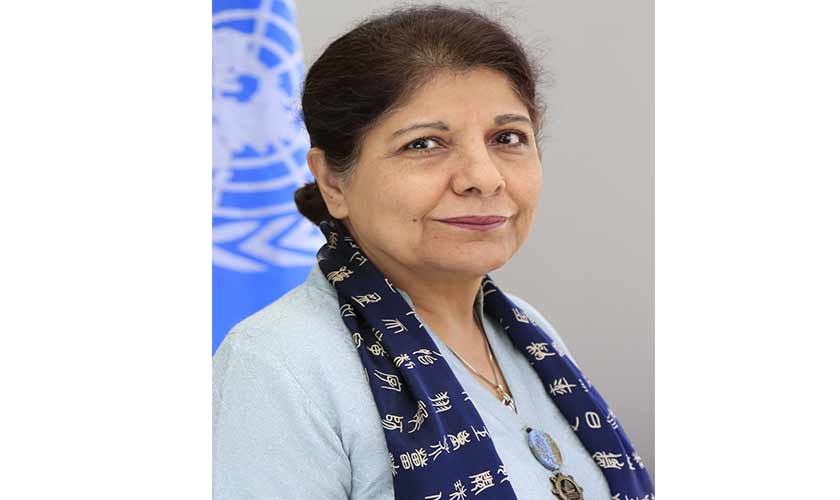
Dr Shamshad Akhtar belonged to a group of technocrats who believed in ethical governance and institutional credibility
| P |
akistan has lost one of its most distinguished economists and public servants. Dr Shamshad Akhtar, a globally respected economic leader and stateswoman of rare moral clarity, passed away on December 27, at the age of 71. Born in 1954 in Hyderabad, Sindh, she had devoted her life to public service, institution-building and a disciplined pursuit of economic integrity.
Dr Akhtar belonged to a group of technocrats who believed that competence, ethical governance and institutional credibility were the cornerstones of national stability. She did not seek applause or cultivate political theatre. Authority followed her because she embodied seriousness of purpose, intellectual rigour and restraint.
Her academic and professional journey reflected the discipline that defined her public life. Educated in Pakistan and the United Kingdom, she went on to build an international career that placed her among the most respected Pakistani economists of her generation. Over the years, she held leadership positions at the World Bank, the Asian Development Bank and the United Nations, where her work on development finance, governance reform and regional economic cooperation earned her enduring respect. Following her passing, the president of the Asian Development Bank described her as a development leader whose integrity and intellect had left a lasting imprint on the global policy community, hoping that her contributions would continue to shape development thinking long after her departure.
Dr Akhtar made history in January 2006 when she became first woman governor of the State Bank of Pakistan. Her tenure coincided with global financial uncertainty and domestic economic pressures, yet she strengthened regulatory frameworks, defended central bank autonomy and insisted on institutional discipline at a time when political interference posed challenges. The State Bank, in a condolence message, described her leadership as exemplary and acknowledged her role in strengthening the institution’s credibility and professionalism.
She later returned to public office during moments of acute national fragility, serving as federal minister for finance in caretaker governments. Those appointments reflected the trust placed in her impartiality and competence. At times when stabilisation demanded unpopular but necessary measures, she prioritised long-term economic credibility over short-term political comfort.
Following her death, Finance Minister Muhammad Aurangzeb described her as a dignified figure in Pakistan’s economic history whose integrity and professionalism set her apart. President Asif Ali Zardari and Prime Minister Shahbaz Sharif, in their messages of condolence, paid tribute to her lifelong service and acknowledged her contributions to strengthening Pakistan’s financial architecture during difficult periods.
She exercised power without spectacle, authority without ego, and conviction without compromise. In an environment often driven by expediency, she remained firmly principled, never conflating popularity with purpose.
The chief of army staff expressed sorrow over the loss of a public servant who had served Pakistan’s economic interests with distinction and dedication.
Her influence extended quietly through mentorship, counsel and example rather than public display. That personal dimension of her life has been captured most poignantly in an exclusive reflection by Muhammad Azfar Ahsan, Pakistan’s former minister for investment:
“Dr Shamshad Akhtar’s passing has created a loss that is deeply personal for me and profoundly consequential for Pakistan. Only weeks ago, she was at my home, composed, incisive and gracious, with a clarity of thought that never faded. To me, she was not only a globally respected economic leader, but also a mentor and trusted friend whose counsel was consistently anchored in principle and intellectual honesty.
“Professionally, Dr Akhtar was a defining figure of her generation. As Pakistan’s first woman governor of the State Bank and first woman federal minister for finance, she dismantled entrenched barriers through competence, institutional rigour and quiet authority. Her leadership at the World Bank, Asian Development Bank and the United Nations earned her rare international credibility, yet she carried these distinctions with humility and restraint.
“What distinguished her most was moral courage. She exercised power without spectacle, authority without ego and conviction without compromise. In a system often driven by expediency, she remained firmly principled, never conflating popularity with purpose. At one of Pakistan’s most fragile economic junctures, she made difficult, stabilising decisions that restored international confidence, guided by her belief in institutions, process and ethical governance.
“Beyond public office, she was a devoted daughter, sister and the moral centre of her family, placing duty above recognition. Dr Shamshad Akhtar owed Pakistan nothing, yet gave it everything. Her absence will be keenly felt, but her legacy of integrity, courage and disciplined leadership will endure.”
As a woman operating in male-dominated financial and political structures, Dr Akhtar did not rely on symbolism or rhetoric. She broke barriers through competence alone, setting standards that rendered gender secondary to capability. She mentored younger economists, advised policymakers across divides and remained intellectually generous even toward critics.
In her private life, she was deeply devoted to her family, placing responsibility above recognition and private duty above public acclaim. Those closest to her recall her as thoughtful, steady and morally grounded — qualities that mirrored her public conduct.
At a time when Pakistan continues to grapple with economic uncertainty and institutional strain, Dr Shamshad Akhtar’s absence will be felt deeply. Her legacy endures in strengthened institutions, restored credibility and the example she set for future generations of public servants.
The writer is an award-winning investigative journalist and the editor-in-chief of The Scoop, a digital platform. He can be reached on X @HassanNaqvi5