Print Story
X




Akhter Ahsen’s inimitable therapy for a traumatised world
| H |
ave you ever witnessed a roadside accident or had a deeply upsetting encounter? Do you remember how those moments kept flashing back in your mind, almost like watching a movie? When these flashbacks occur, the physical sensation you had during the event often returns. This is one of the major symptoms of post-traumatic stress disorder (PTSD). Because these feelings are painful, most of us try to block them out. But what you’re experiencing is what psychologist Akhter Ahsen called an eidetic image—a vivid mental picture that holds the memory of the event.
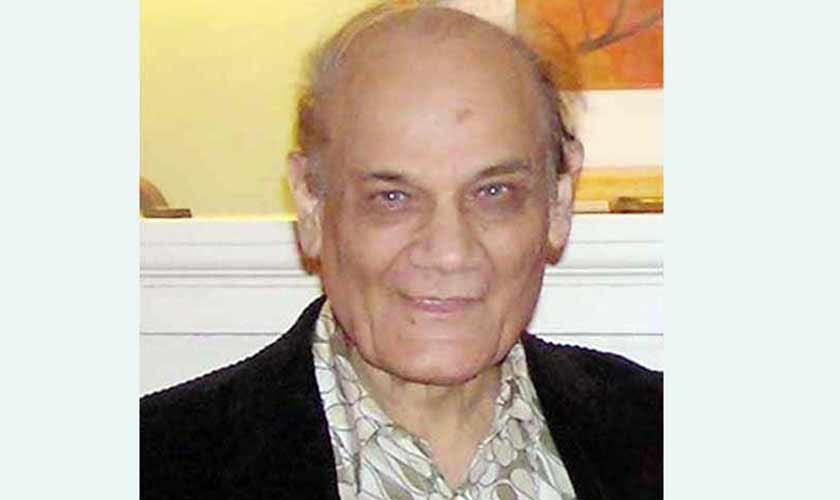
Akhter Ahsen (1933-2018) was an American psychologist of Pakistani origin who developed the first—and still the only—psychotherapy model based on eidetic imagery. His approach was revolutionary: he believed that traumatic experiences are stored as vivid, repeatable mental pictures that carry a unified triad of image, soma (body) and meaning (cognition). He called this the ISM model.
Ahsen suggested that these images don’t just represent events; they embody the entire experience in consciousness. They evoke bodily sensations (soma) and the meanings (thoughts) attached to the experience. Healing happens when we work directly with these images—helping the body calm down and reshaping the meaning of the event.
Ahsen clinically demonstrated that emotionally significant experiences are stored in the brain in a multisensory form, predominantly visual. These images can reproduce sensory details (sight, sound, touch, smell, taste) and the bodily state at the time, making trauma experientially accessible and transformable through precise image work. He observed that every negative experience follows a pattern similar to PTSD: intrusive flashbacks, avoidance of traumatic memories, anxious thought patterns and persistent hypervigilance.
Back in the 1960s—when Freudian psychoanalysis and Skinner’s behaviourism dominated and cognitive therapies were yet to emerge—Ahsen asserted that trauma is stored in the body. At that time, few believed him. Traumatic images (flashbacks) naturally surface to initiate healing, but individuals often suppress them to avoid pain and distress. This avoidance keeps trauma active, influencing body, thoughts and behavior. If left unresolved, it can lead to deep-seated personality changes.
Ahsen’s pioneering theoretical discovery was his ISM model. It explains the psychological processing of emotionally loaded experiences, such as trauma. In his model, I is an image that has been registered by the senses; the S (soma) is the physiological and emotional response to a particular experience; and the M (meaning) is an understanding that emerges from seeing and feeling together, i.e., cognition.
By treating these as inseparable, the ISM model provides a direct way to alter bodily states through imagery and release traumatic fixations by re-viewing and re-feeling the image until the soma settles and new meaning can consolidate.
We must recognise what this visionary achieved in the history of psychology and psychotherapy, and how his work can help a world more traumatised than ever before.
This unified triad anticipated today’s body-focused trauma therapies—such as Gabor Maté’s compassionate inquiry, Peter Levine’s somatic experiencing, Pat Ogden’s sensorimotor psychotherapy, Bessel van der Kolk’s holistic trauma work, and Stephen Porges’s polyvagal theory. They all emphasise the body’s role in trauma. Ahsen was the first psychologist to develop a replicable psychotherapy model based on imagery and focused on physiology. Historically, Wilhelm Reich was the first to recognise the body’s role in psychological disorders. However, his methods were controversial and never practiced. Ahsen, by contrast, created a scientifically grounded, replicable model now supported by growing empirical evidence.
Crucially, Ahsen argued that the body is neither the cause nor the source of cure, as psychiatry suggested. Rather, the body is the victim of experience and therapy aims to relieve it. For Ahsen, the therapist is to facilitate clients seeing a traumatic experience eyeball to eyeball, using the image as the repeatable experiential nucleus of change. It does not rely solely on interpretation or exposure protocols detached from spontaneous trauma flashbacks. Distressing images, when therapeutically engaged, become remedial: proper management of related distress and reluctance to see, repetition and careful manoeuvring of the eidetic scene allow the body to overcome the trauma and discharge fixation, instead of avoiding it and remaining stuck.
Over decades, Ahsen and his followers developed structured assessments and treatments for various traumas. His definition of trauma extended beyond the narrow scope of PTSD in diagnostic manuals. Over the years, eidetic psychotherapy has been formulated for various forms of trauma, which the diagnostic systems have yet to include and describe.
The Eidetic Parents Test assesses and addresses the developmental trauma and attachment issues. The Age Projection Test is meant to resurface the experiential sources of complex trauma, where the causes are diffused and most of the time unidentifiable. His Accident Trauma Model has been adapted in a brief version for people from war-affected regions who do not suffer from post-traumatic stress disorder but persistent trauma. Eidetic Model of Growth uncovers trauma in individuals with intellectual disabilities and provides an evidence-based therapeutic resolution.
Each of these techniques operationalises image work to elicit somatic shifts and cognitive restructuring. Emerging empirical literature shows that eidetic methods reduce PTSD symptoms among survivors of domestic violence; sufferers of war and terrorism; and disturbing conditions like phobias, OCD, depression, insomnia and psychosomatic problems, underscoring that image-driven somatic processing yields measurable outcomes.
Adaptations of Ahsen’s theory for special populations, such as EMG for individuals with intellectual disabilities, demonstrate that imagery can bypass language limitations inherent in talk therapy while still mobilising emotional regulation, behavioural change and cognitive restructuring—reinforcing the claim that trauma is encoded and accessible via image-body pathways.
On Akhter Ahsen’s seventh death anniversary, we must recognise what this visionary achieved in the history of psychology and psychotherapy, and how his work can help a world more traumatised than ever before.
The author, a principal clinical psychologist, can be contacted at [email protected]