Print Story
X




As the PSL prepares to expand to eight teams, the league stands at its most important crossroads since inception
| W |
hen twelve investor groups from across five continents formally line up to bid for two new franchises, it is no longer a story about ambition. It is a verdict. A verdict delivered by the global sporting marketplace that the Pakistan Super League (PSL) is no longer an emerging product, it is a proven one.
This is, without exaggeration, the most defining commercial and structural moment in the PSL’s history. The Pakistan Cricket Board’s confirmation that investors from the United States, Australia, Canada, the UAE, and Pakistan have entered the bidding process is not merely encouraging; it is transformational. In global sport, capital is never sentimental. It chases credibility, sustainability, and growth potential. The PSL is now ticking all three boxes.
For those of us who have lived the league from the inside, from the uncertain early seasons played in the UAE to packed houses at Gaddafi and National Stadiums, this moment feels deeply personal. It is the culmination of years of persistence, resilience, and belief.
When the PSL was launched in 2016, it was born under extraordinary circumstances. Pakistan cricket was rebuilding its global trust, international teams were hesitant to tour, and the league itself was viewed by many as an experiment rather than a certainty. Yet even in those early days, one thing was clear: the talent was undeniable, and the passion was real. Fast forward to 2025, and the PSL stands on an entirely different pedestal.
The decision to expand from six teams to eight, effective from the 11th edition beginning March 26, 2026, is not cosmetic. Expansion in franchise sports is a calculated risk. It is undertaken only when the ecosystem can support deeper competition, stronger commercial returns, and broader fan engagement. The PCB’s willingness to take this step tells us that the numbers make sense, the interest is real, and the confidence is earned.
What exactly has changed? First, consistency. Over the years, the PSL has delivered competitive cricket, packed stadiums, and reliable broadcast numbers. In an era where T20 leagues are mushrooming worldwide, reliability is currency. Second, player development. The PSL has become Pakistan’s most effective high-performance incubator. Babar Azam, Shaheen Shah Afridi, Haris Rauf, Shadab Khan, these are not coincidences. The league sharpened them under pressure, in front of global audiences, against international talent.
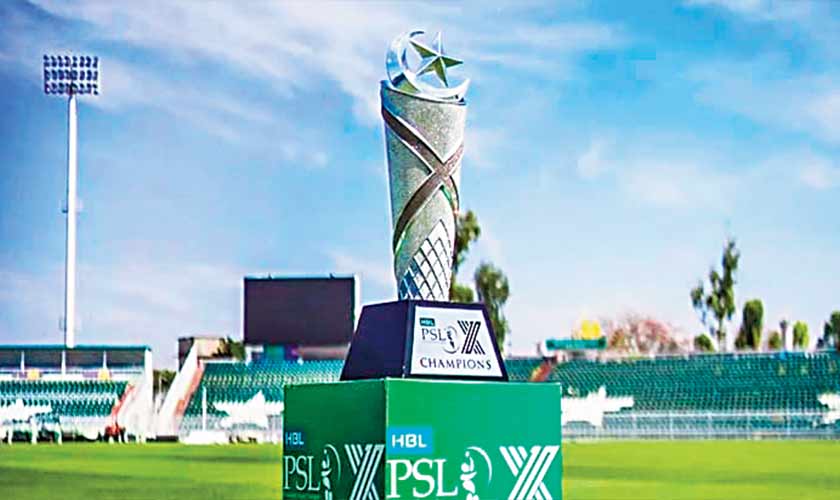
Third, brand correction. The successful hosting of full PSL seasons in Pakistan has reshaped perceptions. Cricket returned home not through slogans, but through execution. Investors noticed. And finally, global intent. Taking the PSL trophy to Lord’s, The Oval, and Times Square was more than symbolism. It was a declaration that the league is thinking beyond borders. Sports properties that aspire to global relevance must show up in global spaces, and the PCB has done exactly that.
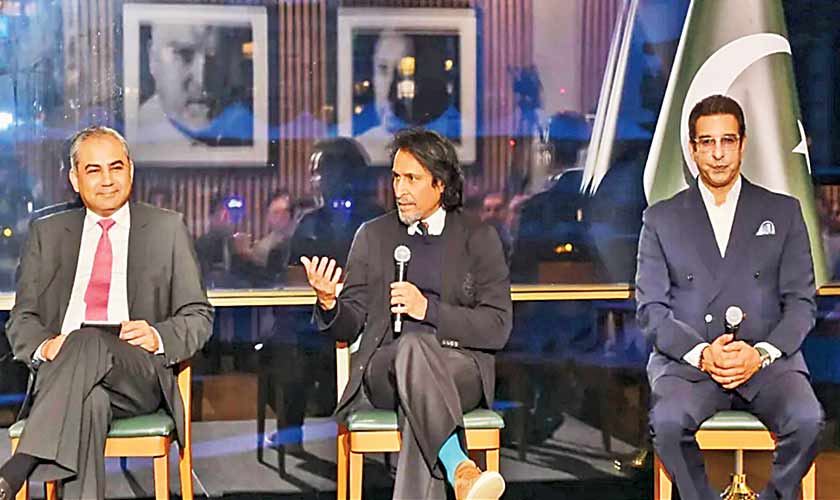
The London roadshow at Lord’s Cricket Ground was particularly significant. Lord’s is not just a venue; it is cricket’s conscience. To present the PSL there, alongside legends like Wasim Akram and current stars like Babar Azam, sent a powerful message. What impressed many investors was not just nostalgia or celebrity presence, but the clarity of vision. The PCB presented the PSL as a mature commercial product with scalable opportunities, media rights growth, franchise valuation upside, and long-term city-based engagement.
The New York roadshow amplified that momentum. The United States is cricket’s next frontier, and the PSL positioned itself early in that conversation. The presence of Pakistan’s current Test and white-ball leadership gave the league authenticity, not hype. It is no coincidence that the bidding deadline had to be extended multiple times. Serious investors do not rush; they assess, audit, and align. Twelve parties completing the process speaks volumes.
Perhaps the most exciting element of this expansion is the opportunity to bring new cities into the PSL fold, Hyderabad, Faisalabad, Rawalpindi, Gilgit, Muzaffarabad, and Sialkot. These are not just names; they are cricketing cultures.
Faisalabad’s industrial backbone, Sialkot’s global sporting goods legacy, Rawalpindi’s cricketing history, and the symbolic inclusion of Gilgit and Muzaffarabad can transform the PSL into a truly national league. The emotional and commercial upside of this move cannot be overstated. Franchise cricket thrives on identity. The more regions feel represented, the stronger the league becomes.
The PSL’s March 26 to May 3 window means overlapping with the Indian Premier League for the second consecutive year. Some view this as a disadvantage. I see it differently. Competing with the IPL is not about imitation; it is about differentiation. The PSL has carved its own space, fiercer competition, unpredictable outcomes, and raw intensity.
The fact that several international players have chosen the PSL over other leagues speaks to its credibility as a cricketing contest, not just a payday. No league grows by hiding. The PSL’s willingness to stand tall in a crowded calendar shows maturity.
Leagues are ultimately remembered by moments. Sikandar Raza’s extraordinary journey to play the PSL 2025 final for Lahore Qalandars is one such moment that transcends statistics. From a Test match in England to lifting the PSL trophy in Lahore within 24 hours, that story traveled the world. It reminded everyone that the PSL is not just organized cricket; it is emotional, dramatic, and deeply human. Those moments are priceless for a league’s global narrative.
The PSL’s expansion is not just about two new teams. It is about confidence in Pakistan’s cricketing economy, belief in its administration, and faith in its audience. For players, it means more opportunities. For fans, it means broader representation. For investors, it means entry into a league that has survived adversity and emerged stronger.
As someone who has captained Pakistan and led teams under pressure, I know that real success is not measured by applause, it is measured by trust. And right now, the world is trusting the PSL. That may be the league’s greatest victory yet.