Print Story
X




From reviving folk traditions to shaping contemporary soundscapes, Zeb Bangash’s journey reflects a lifelong commitment to curiosity and craft. As a judge on Pakistan Idol, she brings empathy, experience and an artist’s instinct to the task of recognising voices with genuine potential.
| Z |
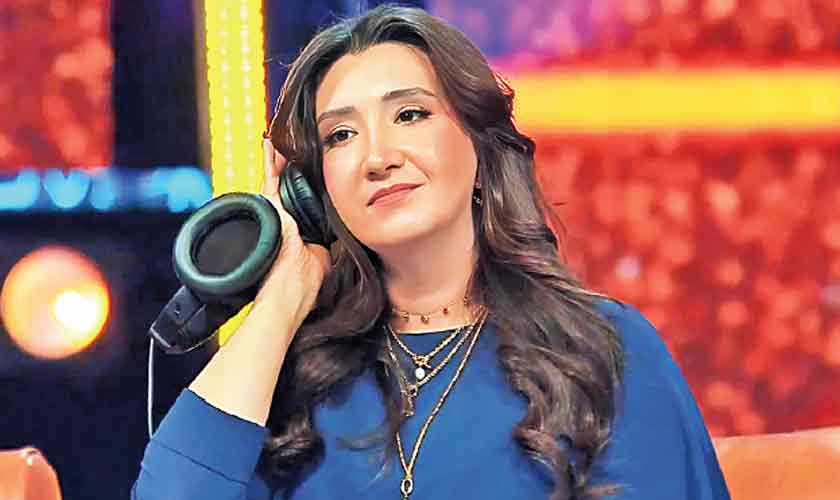
eb Bangash is a voice that becomes the listener’s heartbeat while awakening centuries old traditions with fresh sonic flair. From the glow of live performances to recording studios across multiple borders, wherever melody, softness and sincerity converge, her name resonates.
Born in Lahore and rooted in the musical heritage of Khyber Pakhtun-khwa, Bangash first stepped into the global spotlight alongside her cousin, the late Haniya Aslam, as part of the duo Zeb & Haniya. Their 2008 album Chup introduced a rare simplicity and emotional depth that would come to define her artistry and marked a landmark moment in Pakistani pop music.
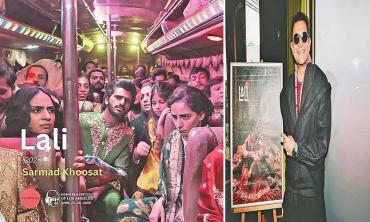
A major milestone followed when Bangash became the first Pakistani artist to serve as music director for a Bollywood film called Lipstick Under My Burkha. The film won 18 inter-national awards, carrying her work to new audiences worldwide. Singing in Urdu, Pashto, Punjabi, Persian, Turkish and Saraiki, her voice does more than traverse languages, it carries cultures. From ‘Bibi Sanam Janem’, ‘Chal Diye’, ‘Tann Dolay’ and ‘Roshe’ to the soundtracks of Diyar-e-Dil, Ho Mann Jahaan, Manto and Parwaaz Hai Junoon, she has consistently created immersive musical worlds.
Despite performing at festivals and concerts across continents, Bangash retains a gentleness and sincerity that mirror her sound. Her admirers span Pakistan, India, the Middle East, Europe, the US and across Asia. Music is not merely her profession, it is her way of being. Even after her marriage in 2017, her relationship with music remains unchanged, grounded in truth, tied to tradition and constantly moving forward.
Today, Bangash plays a pivotal role as a judge on Pakistan Idol, where she is invested in discovering and nurturing the country’s finest voices. In an exclusive conversation with Instep on the show’s platform, she reflects on her journey, her approach to judging and the evolving landscape of Pakistani music.
Instep: What initially drew you to take on the role of a judge on Pakistan Idol?
Zeb Bangash (ZB): I was initially reluctant to take on the role. I have always seen myself as someone who wants to keep learning, not someone eager to impose opinions. My focus has been my own artistic growth and curiosity, so it took time to come on board. Once I reframed the role, it felt more natural. I do not see myself as a judge in the conventional sense. I see myself as an artist sharing experiences that may help others. Music is subjective and deeply personal, so my aim is to offer constructive feedback rather than judgement.
Instep: How has your overall experience on Pakistan Idol unfo-lded so far?
ZB: It has exceeded my expec-tations. I always believed Pakistan had a wealth of strong, rooted and technically gifted voices, yet I was still surprised by the level of excellence, particularly among younger singers. Someone like Minaam, at 19, sings with a maturity that surpasses many seas-oned performers. What I value most about Pakistan Idol is its inclusivity. It brings music to the forefront in a way that feels participatory and closely connected to people’s aspirations. Being part of that energy has been truly remarkable.
Instep: How would you define the strength of Pakistani talent today?
ZB: I struggle with the word “talent” because it oversimplifies creative expression. Singing requires intelli-gence, hard work, skill and perspective. What we truly have in Pakistan is a powerful creative expression shaped by centuries of cultural and musical history. Ironically, the absence of a hyper-commercial industry has pre-served a sense of originality and authenticity that stands out in today’s commercialised global landscape. Many artists create from genuine passion rather than assured financial success, and that sincerity is audible in our music. I hope we never lose that edge.
Instep: What are your thoughts on young singers who perform well without formal training?
ZB: It depends on how they sing. Formal training is not essential if someone sings well, but many traditional forms are complex and difficult to master without guidance. I pursued serious training after becoming a pop artist because I wanted to expand my range. Training deepens craft, even if it is not the only path.
Instep: Do you see any difference in creative ability between male and female singers?
ZB: Creative capacity is not divided by gender. What truly differs is access to opportunity and the confidence to claim space. I was encouraged to see many young women learning quietly, some within musical families and others independently online. When given equal opportunities, both men and women thrive equally.
Instep: Why do you think Pakis-tan still lacks structured platforms for music training?
ZB: Our musical tradition is largely oral and rooted in the Ustad-Shagird (master–student) relationship. It can not be replicated without genuinely supporting the masters themselves. Over the past two decades, commercial involvement has increased, but exce-llence still depends on long-term men-torship and respect for tradition. Until systems reward artistic depth rather than only commercial success, mean-ingful training platforms will remain difficult to sustain. Even after 15 years in the industry, I cannot predict what will become popular, which reflects how unpredictable and shifting the system is. Strengthening our traditions and uplifting our masters is the only way to truly nurture the next generation.
Instep: How important is conti-nued learning for these emerging artists?
ZB: Everyone needs more learning, myself included. Growth comes from curiosity and desire. Many contestants such as Rawish, Minaam and Hassan are doing a strong job of balancing visibility with a deep commitment to their craft. People often describe themselves as “God-gifted” but the real divine gift is the opportunity to learn and the presence of a good teacher. That is what enables an artist to truly understand their instrument and express themselves.
Instep: Can structured educ-ation meaningfully shape artistic growth?
ZB: Learning of any kind always helps. It expands technique, vocabulary and expressive range. The more an artist learns, the richer and more nuanced their creative reservoir becomes. Curiosity about life, literature and other art forms also strengthens an artist’s voice. Multidisciplinary learning has always been part of our tradition and remains essential today.
Instep: Do you see yourself taking on a teaching role in the future?
ZB: No, I am not interested in becoming a teacher. I am happy to share my experiences as a fellow artist. I am a working musician and, most importantly, still a student myself who continues to learn and evolve. In creative fields, age is irrelevant. What matters is depth of expression. I am more interested in creating spaces where learning can happen.
Instep: Was there any moment on the show that stayed with you?
ZB: What stands out most, and what stayed with me, is the psychological journey of the contestants. Self-belief and emotional resilience are essential. Those who understand their voices, remain open to learning and stay true to themselves are the ones who truly shine. Observing this has been deeply inspiring and has also prompted me to reflect on my own artistic practice.
Instep: What do you feel these kids are still discovering about themselves?
ZB: I do not see them as kids. They are artists, and some of them are exceptionally developed. Our language around talent and young artists is often shaped by commercial frameworks rather than artistic ones. No one is perfect and every artist, myself included has room to grow. What many contestants need is a deeper under-standing of their own voices, parti-cularly because training opportunities are limited. Exposure is another area where growth can occur. Some cont-estants possess strong musical inte-lligence and curiosity, yet their listening experience remains limited. With broader exposure, they may discover new pathways for their voices, if they choose to pursue them. Each of them has something distinctive. Every contestant carries an X factor that is entirely their own.