Print Story
X




The deteriorating law and order situation has created a tense political environment in Khyber Pakhtunkhwa
| P |
olitical uncertainty has deepened in the Khyber Pakhtunkhwa as it faces a resurgence of terrorism. The appointment of a new chief minister, his opposition to military operations and the military’s warnings about the deteriorating security have created a tense political environment in the province.
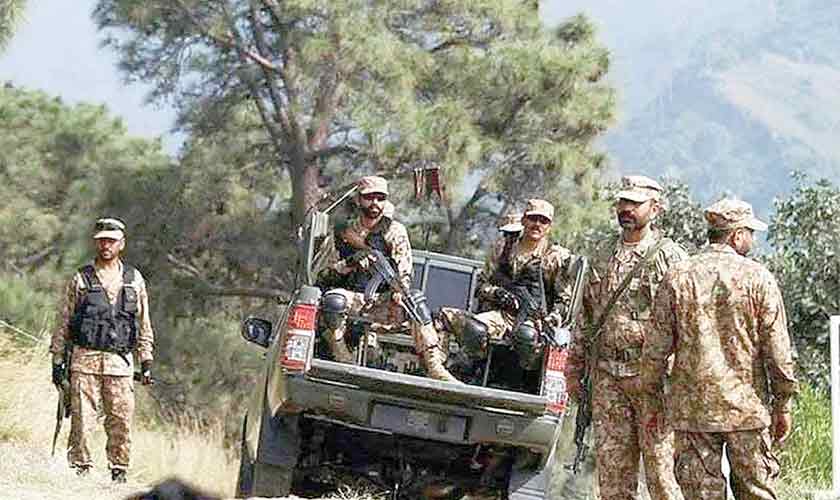
Over the past few months, parts of the province, particularly its tribal districts, have witnessed a rise in targeted attacks on security forces, political leaders and civil society activists. The killings of local elders, security personnel, journalists, frequent ambushes and the re-emergence of militant groups have revived memories of the dark days between 2008 and 2015. Yet, unlike that period, the political response has been hesitant and fragmented.
As the KP grapples with a resurgence of terrorist attacks, political instability and conflicting narratives of the provincial leadership and the establishment have deepened the crisis. The appointment of Sohail Afridi, a PTI loyalist from the conflict-ridden tribal belt, as chief minister, has added a new dimension to the political landscape. His nomination signals Imran Khan’s continued defiance of the military establishment, amid growing calls from the security apparatus to launch targeted operations against terrorists’ hideouts in the province’s volatile districts.
If Afridi adopts an openly anti-establishment stance, reflecting PTI’s broad political posture, he could find himself in direct confrontation with the military, potentially isolating his government. In his first speech on the Provincial Assembly floor, Afridi clearly said that he will follow Imran Khan’s directions. Friction with the federal institutions may further paralyse governance in the KP, delay security coordination and weaken public confidence in both the civilian and military leaderships. Politically, Afridi’s defiance might strengthen his populist image among PTI supporters and tribal constituencies, but it could also provoke institutional backlash and deepen Pakistan’s civil-military divide at a time when unity is most needed to counter the escalating militant threat.
Afridi has inherited not only a fragile economy and a disillusioned bureaucracy but also a worsening security landscape. His cautious remarks, reflecting PTI’s broad approach, suggest an awareness of the political cost of endorsing full-scale counterterrorism campaigns. It may be recalled that Afridi’s nomination was opposed by the federal government. He was seen as an anti-establishment figure and accused of being pro-Taliban.
Opposition to military operations has become a defining feature of Imran Khan’s political messaging. While condemning terrorism, he continues to stress dialogue with the militants over force and has accused the establishment of using military operations for political engineering. This stance resonates with parts of KP’s electorate, especially in the former FATA regions, where residents still feel betrayed by unfulfilled promises of integration, compensation and development. Critics, however, argue that such posturing can undermine national consensus. “Political polarisation is giving terrorists the space they thrive in,” says senior security analyst Rifat.
Amid this landscape, leaders of the anti-merger movement and former FATA Grand Jirga members have voiced their perspectives, highlighting local apprehensions about renewed operations. Bismillah Khan Afridi, a prominent tribal leader, has said that military campaigns risk displacing communities without addressing the underlying grievances. Malik Khan Marjan and Azam Khan Mehsud have echoed similar concerns, warning that heavy-handed operations could further alienate locals and fuel militancy.
Afridi has inherited not only a fragile economy and a disillusioned bureaucracy but also a worsening security landscape. His cautious remarks reflect the PTI’s broad approach suggesting an awareness of the political cost of endorsing full-scale counterterrorism campaigns.
Malik Waris Khan Afridi, a former PPP minister from ex-FATA, has stressed the need for political consultation and development initiatives before any action. Mir Afzal Mohmand has urged the authorities to consider tribal sensitivities to avoid repeating past mistakes.
Political hesitation in KP stems from populist considerations and public fatigue with war. After decades of conflict, many communities feel that they have paid the highest price in terms of displacement, destruction of their homes and psychological trauma, while seeing little improvement in governance or security. Local politicians, particularly from the tribal districts, are wary of endorsing another campaign that could again displace thousands of people. “People are tired of being collateral damage in a war they did not start. When the public sees a government and opposition locked in perpetual conflict, it erodes the legitimacy of any state action even in their own interest,” Brigadier Saeed Nazir (retired) says.
The resurgence of militancy has coincided with deepening political divides. The PTI’s confrontational politics and the federal government’s attempts to reassert control leave little room for bipartisan consensus.
“Counterterrorism is not about hust guns and operations,” says Sudhir Ahmad Afridi, a senior journalist and writer. Journalist Iqbal Khattak says that the army will now have to face both the Tehreek-i-Taliban Pakistan and Sohail Afridi. He notes that Afridi has already said that he will not allow military operations in the tribal areas. According to Khattak, a direct confrontation could cause further deterioration in Pakistan’s political and economic situation.
The question now arises whether Afridi can assert provincial autonomy and push back against the military’s approach in the merged districts. While local popularity gives him a strong political mandate, confronting the establishment on security operations is an uphill battle in Pakistan’s power structure. Most observers believe that Afridi will likely focus on advocating for greater civilian oversight, community-sensitive approaches and rehabilitation programs rather than seek a direct confrontation, which could jeopardise both security coordination and his political standing.
Meanwhile, the position of other political parties in Khyber Pakhtunkhwa will be crucial in shaping Afridi’s room for maneuver. Pakistan Peoples Party and Jamiat Ulema-i-Islam (Fazl) may either align with Afridi on developmental and civil governance issues or side with the establishment to safeguard their influence in the province. The unfolding political dynamics will determine whether Afridi can emerge as a strong provincial leader capable of asserting his vision for the tribal districts.
In Khyber Pakhtunkhwa, especially in the merged tribal districts, militants exploit weak governance and under-resourced policing. Target killings and extortion have returned. Reforms promised at merger, judicial integration, policing and economic uplift, remain incomplete. Poor governance and rivalry between the provincial and federal governments have also helped terrorists, criminals and drug traffickers. A considerable rise in street crime has been recorded in 2025. Several tribal elders who supported peace initiatives have been targeted. Journalists face mounting threats for reporting militant activity. “The fear is back,” says Mehrab Afridi, a journalist from Khyber district.
For PTI’s provincial leaders, openly challenging the militants risks alienating the voters who view military operations as oppressive. Yet silence carries its own cost. If the perception grows that the provincial government is unable or unwilling to protect citizens, public confidence will erode. Observers note that this is perhaps Imran Khan’s most difficult balancing act. He has to maintain his anti-establishment narrative while representing a province once again under siege.
Experts say that sustainable solutions must combine political consensus with socioeconomic investment. Uncertainty, joblessness, poor education facilities and justice delayed remain the biggest drivers of radicalization and terrorism that attract youth towards unlawful and anti-state activities. KP’s political leadership must move beyond rhetoric and take ownership of security challenges, requiring honest dialogue with the federal government and a willingness to spend political capital in the interest of peace and socioeconomic development.
Khyber Pakhtunkhwa stands at a crossroads. Between ghosts of past wars and new threats, the province’s leadership must decide whether to pursue politics as usual or confront the growing danger with greater clarity and resolve. The choice is not merely about operations but whether the state can reclaim its moral authority in a region that has long felt forsaken. Until that happens, terrorists will continue to exploit the cracks in Pakistan’s politics and every act of hesitation will be another victory for those who thrive on division.
The writer is a freelance journalist and social worker. Afridi has inherited not only a fragile