Print Story
X




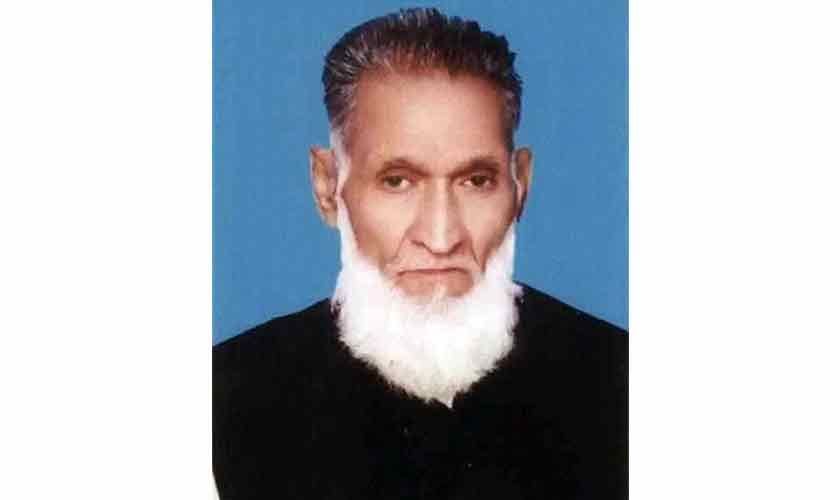
Qazi Ghiasuddin Janbaz is remembered for raising his voice for the masses
| H |
e was one of the political workers who sacrificed enormously in the struggle for an egalitarian, democratic society in the country. He and many others like him dreamt of a Pakistan where poor workers, farmers, labourers, etc, wouldn’t be denied their rights and their future would be safe. His devotion to these ideals took a heavy toll on his life as he had to spend several years in jail on frivolous charges. He was none other than Qazi Ghiasuddin Janbaz, who died years ago in Toba Tek Singh, his ancestral town.
He was born in Sirhind (Indian Punjab) in a Shaikh family in 1940. The family settled in Toba Tek Singh after 1947. His father, Qazi Naseeruddin Sirhindi, was a Jamaat-i-Islami activist who later shifted to Karachi and ran a cloth shop there for a while. After a few years, the family returned to Toba Tek Singh, where Ghiasuddin attended school. The political background, although his father belonged to the right, must have piqued his interest in politics. He soon started taking part in local politics. In the meantime, he also became a correspondent for The Pakistan Times and Imroz. Later, he moved to Faisalabad and joined an Urdu daily, Wafaq. In those days, the newspaper he worked for supported Ayub Khan. He disagreed with the policy and used to file news stories in support of Fatima Jinnah. This led to his ouster from the newspaper. He didn’t care too much as he was already supporting left-wing politics, which began with his association with Mian Iftikharuddin and the Azad Pakistan Party.
When the famous Kisan Conference was planned, he was one of its leading organisers. The conference, held on March 23, 1970, in Toba Tek Singh, was a mammoth success. With it the Left achieved a spectacular milestone in Pakistan. The interaction with stalwart Bengali leader Maulana Abdul Hameed Bhashani and other comrades instilled a new spirit in the leftists. Qazi Ghiasuddin Janbaz reached Lahore and launched his daily, Sangram. The paper started with much fanfare but petered out due to the lack of financial resources.
Till his last breath, he stood for the rights of common people in his area and helped secure jobs and facilitated thousands of them in a selfless way. He was neither a landlord nor an industrialist; he contested elections without spending much, with the support of the people.
He was among the founding members of the Pakistan Peoples Party. Due to his Spartan and blunt demeanor, he grew close to Zulfikar Ali Bhutto. As a dedicated worker, he stood out when the Bhutto government was ousted in a military coup. Thus started a long and excruciating struggle for Janbaz. He remained behind bars for five years. He was also detained at the Lahore Fort. In the end he was released due to the efforts by journalist Nisar Osmani.
A close companion of Begum Nusrat Bhutto and later Benazir Bhutto, Janbaz wielded immense influence in the party. He was among the outspoken workers who called a spade a spade and fought for workers’ rights. He contested Provincial and National Assembly elections on the PPP ticket and polled thousands of votes, but did not win even once. But in a city which was and still is a bastion of a strong Arain community the fact that he fought the elections tooth and nail and polled so many votes speaks highly of his influence in the city. He was a member of the Central Executive Committee of the PPP and on occasion bluntly criticised the party’s policies. This, at times, incensed the party high-ups. This ultimately created differences, and he left the party in sheer anger and disgust. He later joined other parties - the Millat Party (Farooq Leghari), the MQM and later on the PTI in its initial days. But the seasoned political leader and livewire had lost the old touch due to advancing age.
Till his last breath, he stood for the rights of common people. He helped secure jobs and facilitated thousands of them in a selfless way. He was neither a landlord nor an industrialist; he contested elections without spending much, with the support of the people. He was among the few political workers and leaders who came from a middle-class background. Given his influence in the power corridors, he could have minted money, but he didn’t. Nobody could accuse him of fiscal corruption. He spent ten years in jail, during Ayub Khan’s era as well as under Zia’s dictatorship. He died in 2013 in Toba Tek Singh. With his passing a chapter of our political history ended.
The writer is a freelance contributor